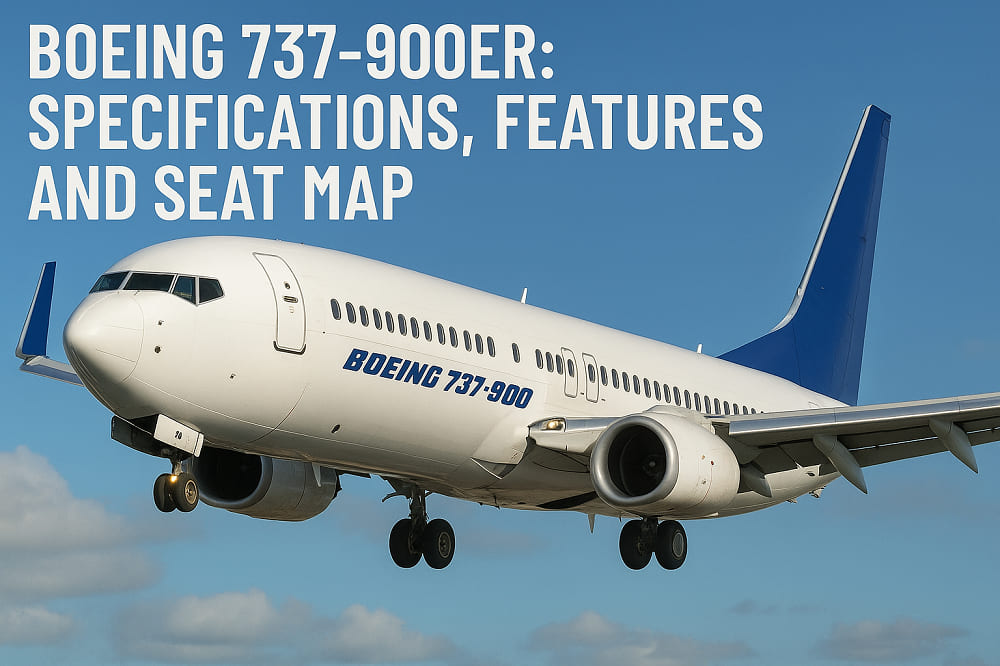
Boeing 737-900ER: Specifications, Features, and Seat Map
Discover the remarkable Boeing 737-900ER, a game-changing aircraft that has revolutionized commercial aviation. This comprehensive guide explores its specifications, innovative features, and how it stands out in today’s competitive market.

Overview of the Boeing 737-900ER

The Boeing 737-900ER emerges as a crucial player in commercial aviation, effectively filling the void left by the Boeing 757-200’s discontinuation. This extended-range variant directly challenges the Airbus A321, offering airlines a versatile solution for their fleet requirements. Its impressive combination of capacity and range has made it a preferred choice for both short and medium-haul operations.

  • Seating capacity: 180 passengers (two-class configuration)
  • Maximum capacity: 220 passengers (high-density layout)
  • Market position: Direct competitor to Airbus A321
  • Primary use: Short to medium-haul routes
  • Configuration flexibility: Adaptable to various operational needs

Aircraft Engine Stands Lease

Introduction to the Boeing 737-900ER

As the longest variant in the 737 Next Generation series, the Boeing 737-900ER represents a significant evolution in aircraft design. Its enhanced capabilities combine increased passenger capacity with extended range, featuring aerodynamic refinements and structural improvements. The aircraft has demonstrated its versatility by successfully operating routes to diverse destinations including Tel Aviv, Stockholm, and Bucharest.

History and Development

The Boeing 737-900ER’s journey began in July 2005, responding to market demands for an enhanced 737-900 variant. The development timeline showcases Boeing’s engineering excellence:

  • Official launch: July 2005
  • First flight: September 2006
  • Initial delivery: April 2007 (to Lion Air)
  • Commercial service introduction: 2007

Engine Stand CFM56-7B

Specifications of the Boeing 737-900ER

Technical Specifications

DimensionMeasurement
Wingspan35.80 meters
Length45.12 meters
Height12.60 meters
Engine TypeCFM56-7B turbofan (2x)
Engine Thrust117 kN each

Performance and Range

The aircraft demonstrates exceptional performance capabilities with a cruising speed of 850 km/h, efficiently balancing speed with fuel economy. Its extended range capabilities enable airlines to explore new route possibilities while maintaining competitive schedules and optimal operational costs.

Features of the Boeing 737-900ER

Design and Comfort

The 737-900ER’s design emphasizes both efficiency and passenger comfort, featuring:

  • Enhanced aerodynamics for improved fuel efficiency
  • Larger overhead bins for increased storage capacity
  • Modern LED lighting system for improved cabin ambiance
  • Specialized seat configurations with unique characteristics:
    • Seat 21D: Partially blocked underseat storage
    • Seat 12A: Enhanced room in Comfort+ section
    • Seats 15A and 16A: Solid and partial wall features

Technology and Innovations

The Boeing 737-900ER showcases advanced technological features that significantly enhance its operational capabilities. As part of the Next-Generation 737 family, this aircraft incorporates several key innovations:

  • Blended winglet technology – reduces fuel consumption by up to 4% compared to earlier models
  • Enhanced aerodynamic design for improved efficiency
  • Advanced reliability systems for consistent performance
  • Optimized fuel management technology
  • Environmental sustainability features

CFM56-7B Bootstrap Kit

Boeing 737-900ER Seat Map and Configuration

The Boeing 737-900ER delivers exceptional flexibility in seating arrangements, accommodating various airline business models. Its versatile configuration options include:

Configuration TypePassenger Capacity
Two-class layout180 passengers
Single-class layoutUp to 220 passengers

Seating Layout and Capacity

The aircraft’s interior design maximizes space efficiency while maintaining passenger comfort. In comparison to the Boeing 737-800, which typically accommodates 160 passengers, the 737-900ER offers:

  • Additional capacity for up to 20 more passengers
  • Flexible business class section sizing
  • Customizable economy cabin configuration
  • Optimized space utilization

Passenger Experience

The Boeing 737-900ER enhances travel comfort through strategic seat placement and innovative cabin design. Notable seating features include:

  • Interactive seat selection systems
  • Exit row seats with specific storage configurations
  • Comfort+ section with enhanced legroom
  • Privacy-enhanced seats with solid or partial walls
  • Varied window view options

CFM56-7 TR Hold Open Equipment

Airlines Operating the Boeing 737-900ER

Since its 2007 introduction, the Boeing 737-900ER has established itself as a versatile aircraft capable of serving diverse route networks. Its ability to partially replace the Boeing 757-200 while competing with the Airbus A321 has made it particularly attractive to airlines worldwide.

Major Airlines Using the 737-900ER

Several prominent carriers have integrated the 737-900ER into their fleets:

  • United Airlines – extensive domestic and international operations
  • Delta Air Lines – network efficiency enhancement
  • Alaska Airlines – West Coast route network
  • Lion Air – launch customer and high-density configuration operator
  • Turkish Airlines – extensive European and international routes

Global Reach and Popularity

The Boeing 737-900ER’s worldwide success stems from its operational versatility and efficiency. The aircraft serves diverse markets across multiple continents, demonstrating its adaptability in various operating environments and route structures. Its continued relevance in airline fleets worldwide reflects its successful design and operational capabilities.

Comparison with Other Aircraft

The Boeing 737-900ER occupies a distinctive position in the commercial aviation market, combining enhanced capacity with impressive range capabilities. This extended-range variant effectively bridges a crucial gap in Boeing’s lineup, serving as both a successor to the discontinued Boeing 757-200 and a direct competitor to the Airbus A321.

Performance Aspect737-900ER Characteristics
Market PositionMedium-haul route specialist
Range CapabilityOptimized for medium-distance routes
EfficiencyHigher than wide-body aircraft for specific routes

Comparing the 737-900ER with Other Boeing Models

Within the Boeing family, the 737-900ER represents a significant evolution in aircraft design. Compared to its predecessor, the 737-900, this extended-range variant offers enhanced capabilities and numerous improvements:

  • More powerful and efficient engines than earlier 737 models
  • Enhanced wing and tail section designs
  • Modernized cockpit systems
  • Extended range capabilities
  • Improved fuel efficiency compared to the 757-200

Advantages and Disadvantages

The Boeing 737-900ER offers several compelling advantages that have contributed to its market success:

  • Extended range capabilities for challenging routes
  • Superior fuel efficiency through advanced engine technology
  • Lower operating costs for airlines
  • Simplified crew training due to commonality with other 737 models
  • Streamlined maintenance procedures

However, the aircraft does present certain limitations. These include higher noise levels compared to newer models and a narrower fuselage that can feel more confined than alternatives like the Airbus A321, particularly in high-density configurations. Despite these considerations, the 737-900ER maintains its strong market position through its balanced combination of efficiency, capacity, and range capabilities.

Read more:

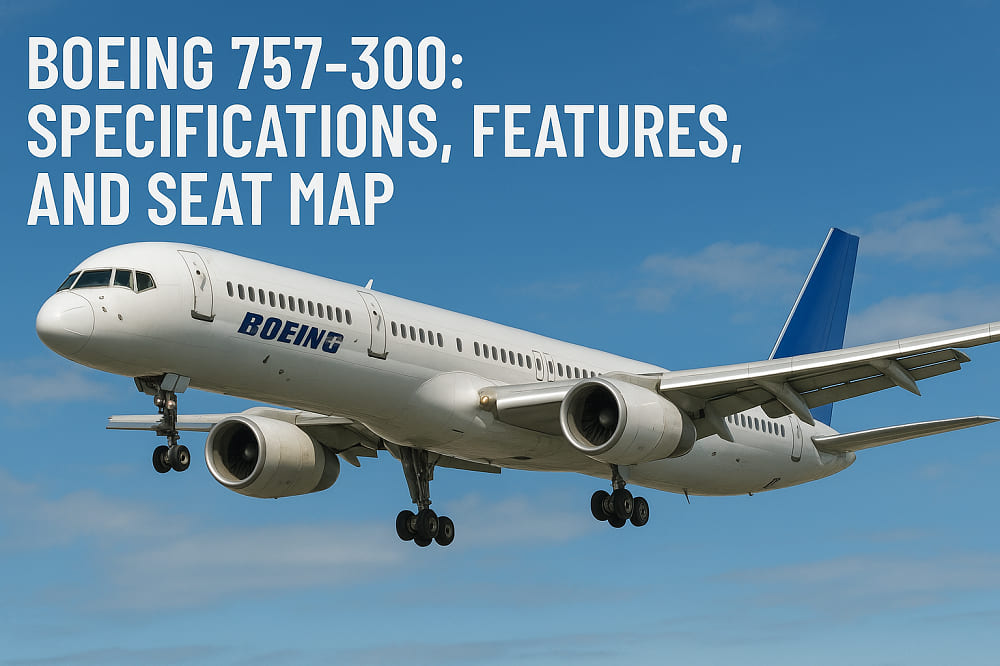
Boeing 757-300: Specifications, Features, and Seat Map
The Boeing 757-300, a remarkable achievement in aviation engineering, represents a significant leap forward in single-aisle aircraft design. Let’s explore this impressive aircraft’s specifications, features, and what makes it stand out in commercial aviation.

Overview of the Boeing 757-300

The Boeing 757-300 stands as Boeing’s largest narrow-body jet, offering an exceptional combination of capacity and efficiency. This extended version of the 757-200 stretches nearly eight meters longer than its predecessor, accommodating more passengers while maintaining impressive performance capabilities.

Key performance metrics include:

  • Range capability of 3,400 nautical miles
  • Increased passenger capacity compared to the 757-200
  • Optimized design for medium-haul routes
  • Enhanced fuel efficiency despite larger size

Airplane Engine Stand Lease

History and Development of the Boeing 757-300

The Boeing 757-300’s development story began in the early 1970s, emerging from Boeing’s strategic response to the revolutionary 747’s introduction. Developed alongside the wide-body 767, the 757 series represented Boeing’s vision for the future of commercial aviation.

MilestoneDetails
Initial DevelopmentEarly 1970s as 727 successor
Entry into Service1999
First OperatorsBritish Airways and Eastern Air Lines

Key Milestones in the Boeing 757-300’s Journey

From its launch in 1999 to the end of production in 2004, the 757-300 contributed significantly to the impressive total of 1,050 Boeing 757 aircraft manufactured. Its versatility has been proven through successful passenger service and cargo operations.

Specifications of the Boeing 757-300

The aircraft’s impressive dimensions and capabilities include:

  • Length: 54.5 meters
  • Height: 13.6 meters
  • Wingspan: 38.1 meters
  • Maximum takeoff weight: 272,500 pounds

Engine and Performance Capabilities

The 757-300 offers multiple engine options:

  • Rolls-Royce RB211 series (RB211-535E4-B and RB211-535E4-C)
  • Pratt & Whitney PW2000 series (PW2037, PW2040, and PW2043)

Range and Fuel Efficiency

With a range of 3,400 nautical miles, the 757-300 excels in medium-haul operations while maintaining competitive fuel consumption rates. This balance makes it particularly effective for high-density routes where operational efficiency is crucial.

Engine Stand RB211-535

Features of the Boeing 757-300

The interior configuration showcases the aircraft’s versatility:

  • Maximum capacity of 295 passengers
  • Customizable seating arrangements
  • Enhanced overhead bin space
  • Large windows for improved natural lighting
  • Optional Boeing Sky Interior with LED lighting

Interior Design and Passenger Comfort

Using United Airlines’ configuration as an example:

ClassNumber of Seats
First Class24 recliner seats
Economy Plus54 seats
Economy156 seats

Technological Advancements and Innovations

The Boeing 757-300 showcases significant technological improvements that enhance its operational capabilities. The aircraft features an aerodynamically optimized wing design that contributes to superior fuel efficiency. Both engine options – the Rolls-Royce RB211 and Pratt & Whitney PW2000 series – are strategically mounted under the wing, reducing cabin noise while maximizing performance.

  • Advanced avionics systems for improved situational awareness
  • Two-pilot cockpit configuration, eliminating the need for a flight engineer
  • ETOPS certification for extended range operations
  • Redesigned wing architecture for better aerodynamics
  • Under-wing engine mounting for noise reduction

Boeing 757-300 Seat Map and Configuration

As Boeing’s largest single-aisle aircraft, the 757-300 delivers exceptional passenger capacity while maintaining versatility in seating arrangements. The standard configuration accommodates 243 passengers, though airlines can customize layouts to seat up to 295 passengers, making it ideal for high-density routes.

Seating Arrangements and Class Options

Class TypeNumber of SeatsFeatures
First Class24Recliner seats with premium comfort
Economy Plus54Extended legroom seating
Economy156Standard comfortable seating

Accessibility and Special Features

  • Wider aisles for improved mobility
  • Personal entertainment systems
  • USB charging ports at seats
  • Boeing Sky Interior with LED mood lighting
  • Enhanced overhead bin capacity
  • Sculpted sidewalls for increased spaciousness

Engine Stand PW2000

Airlines Operating the Boeing 757-300

The Boeing 757-300 serves as a crucial asset for several major airlines, particularly excelling on high-density routes. Condor and Delta Air Lines stand as primary operators, effectively utilizing the aircraft’s unique combination of capacity and efficiency in their networks.

Major Airlines and Their Routes

  • Delta Air Lines: Domestic U.S. routes, Caribbean, and Latin American destinations
  • Condor: German connections to Mediterranean resorts and Canary Islands
  • United Airlines: High-density domestic corridors and select international routes

Customer Reviews and Feedback

The Boeing 757-300 maintains an impressive 4.7 out of 5 average rating from passenger reviews. Travelers consistently praise:

  • Smooth ride quality
  • Spacious cabin feel despite narrow-body design
  • Large windows providing excellent views
  • Overall comfort for medium-haul journeys
  • Reliable performance across routes

Read more:

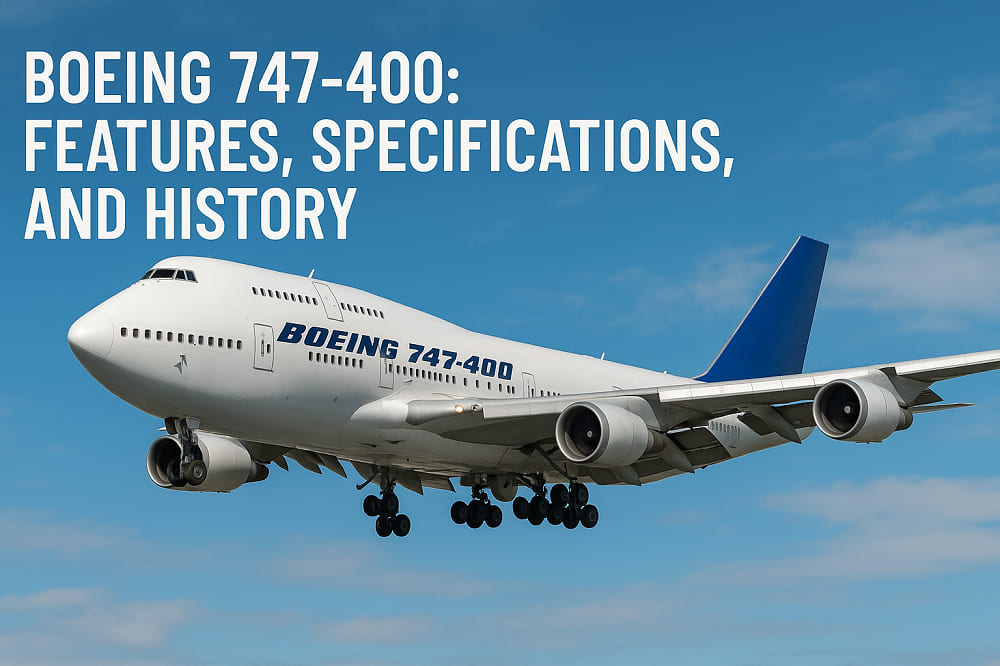
Boeing 747-400: Features, Specifications, and History

Discover the remarkable Boeing 747-400, an engineering masterpiece that revolutionized international air travel. This comprehensive guide explores the aircraft’s innovative features, impressive specifications, and lasting impact on aviation history. Whether you’re an aviation enthusiast or simply curious about this iconic aircraft, you’ll find valuable insights into what makes the 747-400 truly special.

The Boeing 747-400 represents the pinnacle of aviation engineering, marking a significant evolution in the iconic 747 series. This long-range wide-body airliner combines cutting-edge technology with proven design principles, creating an aircraft that’s both innovative and reliable.

  • Advanced aerodynamic features including winglets for improved fuel efficiency
  • Streamlined cockpit design enabling two-pilot operation
  • Enhanced long-range capabilities with high passenger capacity
  • Significant cost savings through technological improvements
  • Proven reliability in international route operations

Aircraft Engine Stands For Lease

Design and Features of the Boeing 747-400

The aircraft maintains the iconic 747 configuration while introducing revolutionary advancements. The stretched upper deck, inherited from the 747-300, combines with innovative winglets to create an aerodynamically superior aircraft. The elimination of the flight engineer position represents a significant technological leap, enabling more efficient two-pilot operations while maintaining the highest safety standards.

Exterior Design and Aerodynamics

The exterior design showcases aerodynamic innovation through several key features:

FeatureSpecificationBenefit
Winglets6-foot (1.8-meter)Reduced drag, improved fuel efficiency
Wingspan211 feet 5 inches (64.4 meters)Enhanced lift and stability
Length231 feet 10 inches (70.6 meters)Optimal passenger/cargo capacity

Interior Layout and Passenger Comfort

The interior design prioritizes passenger comfort and operational flexibility with various seating configurations:

  • Three-class configuration – accommodates 416 passengers
  • Two-class layout – seats up to 524 passengers
  • Premium upper deck with exclusive seating options
  • Enhanced cabin features including:
    • Larger overhead bins
    • Improved lighting systems
    • Ergonomic seating design
    • Advanced noise reduction technology

Engine Stand PW4000/JT9D

Specifications and Performance of the Boeing 747-400

The aircraft boasts impressive performance metrics, with a maximum takeoff weight (MTOW) of 396,895 kg (875,000 lb). Its design incorporates significant aerodynamic improvements that enhance both fuel efficiency and overall performance.

Engine Specifications and Fuel Efficiency

Airlines can choose from three powerful engine options:

  • Pratt & Whitney PW4000 series – 57,100 pounds thrust (PW4056)
  • General Electric CF6 series
  • Rolls-Royce RB211 series

Range and Speed Capabilities

Performance MetricSpecification
Maximum Cruising Speed939 km/h (507 knots)
Long-range Cruising Speed907 km/h (490 knots)
Range (PW-4000 engines)13,491 km (7,284 nautical miles)
Range (GE engines)13,444 km (7,259 nautical miles)
Range (Rolls-Royce engines)13,214 km (7,135 nautical miles)

Capacity and Variants of the Boeing 747-400

The Boeing 747-400 stands as a testament to versatility in commercial aviation, offering multiple variants designed for diverse operational requirements. This remarkable aircraft has established itself as a cornerstone of long-haul travel and cargo operations, demonstrating exceptional adaptability across different market segments.

Engine Stand PW4000-100

Passenger and Cargo Capacity

The aircraft’s passenger capacity demonstrates remarkable flexibility in seating configurations:

  • Three-class layout – 416 passengers
  • Two-class configuration – up to 524 passengers
  • Custom luxury configurations available for specialized operations
Cargo AreaVolumeContainer Capacity
Forward Lower Hold79.3 m³ (2,800 ft³)16 LD-1/LD-3 containers
Aft Lower Hold69.4 m³ (2,450 ft³)14 LD-1/LD-3 containers
Bulk Cargo Space23.6 m³ (835 ft³)Additional storage or 2 LD-1/LD-3

Different Variants and Their Uses

The 747-400 family encompasses several specialized variants:

  • 747-400 Domestic – optimized for high-capacity short-haul routes, particularly in Japan, featuring no winglets for improved efficiency on shorter flights
  • 747-400M Combi – unique dual-purpose configuration allowing simultaneous passenger and cargo transport on the main deck
  • 747-400F Freighter – dedicated cargo variant combining the 747-200F fuselage with advanced 747-400 wing design
  • Boeing Dreamlifter – heavily modified version for transporting large aircraft components
  • 747 Supertanker – specialized adaptation for aerial firefighting operations
  • Boeing YAL-1 – modified 747-400F serving as a testbed for high-energy laser weapon systems

CF6-80C2 – Boeing

Historical Development and Innovations of the Boeing 747-400

Launched in October 1985, the Boeing 747-400 marked a revolutionary advancement in aviation technology. This ‘high-tech jumbo’ distinguished itself from earlier ‘classic jumbo’ models through significant technological innovations, including a glass cockpit, efficient tail fuel tanks, and advanced engine systems.

Development Timeline and Milestones

The aircraft’s development progressed rapidly, with key achievements including:

  • October 1985 – Official program launch
  • April 29, 1988 – First development aircraft flight
  • Mid-1989 – Resolution of early production challenges
  • Remarkable delivery of all three engine variants within four months

Technological Innovations and Advancements

The 747-400 introduced several groundbreaking technologies:

  • Two-crew digital flight deck with six CRT displays, eliminating the need for a flight engineer
  • Advanced high-bypass turbofan engines with improved thrust and efficiency
  • Full-authority digital engine control (FADEC) system for optimized performance
  • Pioneering use of winglets in commercial aviation
  • Recontoured wing/fuselage fairing for enhanced aerodynamics
  • Modernized interior design for improved passenger comfort

The Legacy and Impact of the Boeing 747-400

The Boeing 747-400 represents a pinnacle achievement in aviation history, revolutionizing the commercial aircraft industry. This advanced variant of the original 747 emerged as the most successful model in the family, with an impressive 694 aircraft delivered throughout its production run. Its remarkable combination of increased range, improved fuel efficiency, and enhanced passenger comfort established new benchmarks in commercial aviation.

Influence on Aviation Industry

The 747-400’s impact on aviation has been transformative, introducing several groundbreaking innovations:

  • Revolutionized long-haul operations with efficient and cost-effective routes
  • Triple passenger capacity compared to contemporary jets
  • Reduced cost per seat-mile for airlines
  • Pioneered glass cockpit technology and two-pilot operations
  • Established new standards for cockpit design and crew management

These innovations sparked industry-wide competition, encouraging other manufacturers to develop more efficient wide-body aircraft, ultimately leading to increased options and reduced fares for long-haul travelers.

Future Prospects and Successors

Aircraft TypeCurrent StatusKey Features
747-400Active in cargo operationsLarge capacity, long range capability
747-8Direct successorImproved fuel efficiency, increased capacity
Boeing 777/787Modern alternativesEnhanced efficiency, advanced passenger comfort

While passenger variants are gradually being phased out in favor of more fuel-efficient twin-engine aircraft, the 747-400’s influence continues through its successors. The Boeing 747-8 carries forward its legacy, while modern aircraft like the 777 and 787 Dreamliner embody its spirit of innovation in long-range, high-capacity travel. Though the era of the 747-400 may be concluding, its impact on aviation design and operations will resonate for generations to come.

Read more:

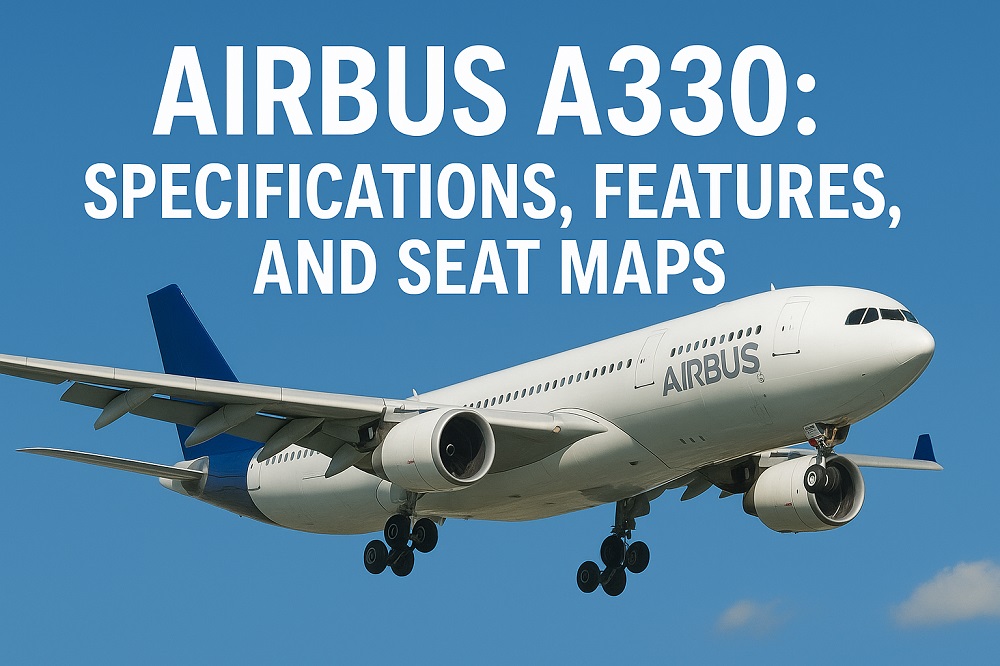
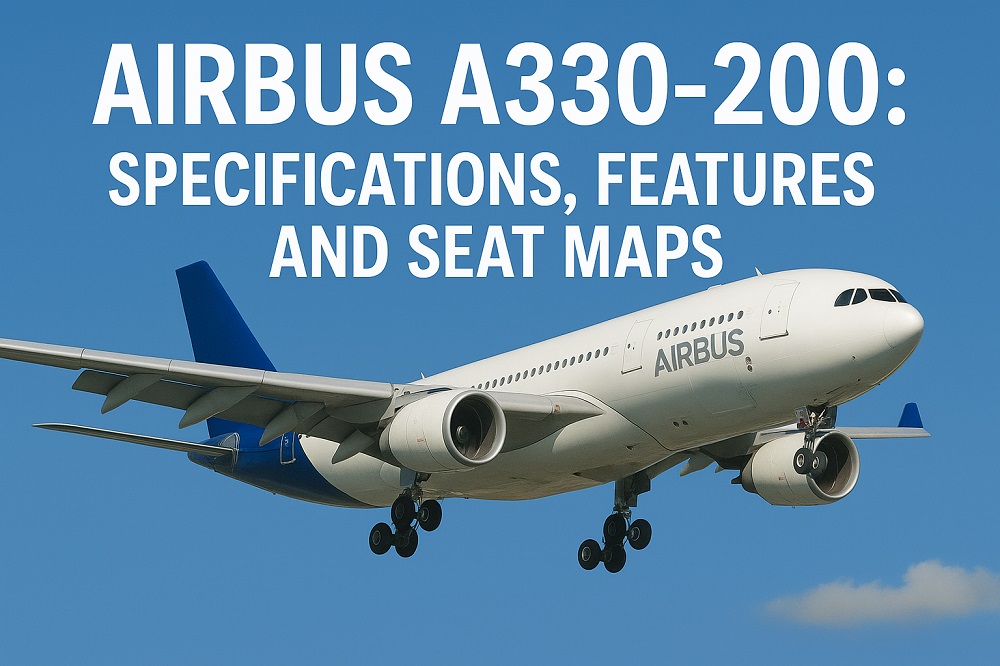
Airbus A330-200: Specifications, Features, and Seat Maps

Discover the remarkable Airbus A330-200, a wide-body twinjet airliner that has revolutionized medium and long-haul air travel. Whether you’re an aviation enthusiast or planning your next journey, understanding this aircraft’s capabilities and features will help you appreciate its significant role in modern commercial aviation.

👉 Airplane engine stands for lease 👈

Overview of the Airbus A330-200

The Airbus A330-200 stands as a testament to modern aviation engineering, combining reliability, flexibility, and cost-efficiency. This wide-body twinjet airliner boasts an impressive range of 6,350 nautical miles (11,750 km), making it a versatile choice for both medium and long-haul routes.

Since its introduction, the A330-200 has undergone numerous enhancements to maintain its competitive edge in the commercial aviation market. These improvements have focused on both performance optimization and operational efficiency, solidifying its position as a preferred choice among airlines worldwide.

History and Development

The A330-200’s journey began in the mid-1970s as part of Airbus’s strategic initiative to expand their A300 aircraft family. The program officially launched in June 1987, alongside its sister aircraft, the A340 quadjet, marking a significant milestone in Airbus’s product diversification.

Developed as a shorter, longer-range variant of the A330-300, this aircraft has undergone continuous refinement over two decades. Airbus’s commitment to excellence was demonstrated early on when they swiftly addressed initial hydraulic pump issues reported by operators, showcasing their dedication to product improvement and customer satisfaction.

Key Milestones

  • Range capability – 13,450 km (7,260 nmi)
  • Passenger capacity – up to 247 passengers in three-class configuration
  • Maximum operating speed – Mach 0.86 (912 km/h or 567 mph)
  • Successful adaptation to both passenger and freight operations
  • Introduction of the A330-200F cargo variant

👉 Engine Stand Trent 700 For Lease 👈

Specifications of the Airbus A330-200

The A330-200 represents a pinnacle of aviation engineering, combining efficiency, range, and passenger comfort in a sophisticated package. Its technical specifications demonstrate why it remains a preferred choice for airlines worldwide.

Dimensions and Capacity

DimensionMeasurement
Length58.82 meters (193 feet)
Wingspan60.30 meters (197 feet 10 inches)
Height17.39 meters (57 feet)
Fuselage Diameter5.64 meters (18 feet 6 inches)
Maximum Passenger Capacity406 passengers
Typical Configuration210-250 passengers

Engine Options and Performance

  • Engine choices:
    • General Electric CF6
    • Pratt & Whitney PW4000
    • Rolls-Royce Trent 700
  • Cruising speed – 875 kilometers per hour (544 mph)
  • Maximum speed – 912 kilometers per hour (567 mph)
  • Service ceiling – 41,100 feet
  • Maximum Takeoff Weight – 242 tonnes (533,519 pounds)

👉 Engine Stand CF6-80E1 👈

Range and Fuel Efficiency

The A330-200 excels in long-haul operations with its impressive range of 13,450 kilometers (7,250 nautical miles). Its fuel tank capacity of 139,090 liters (36,744 US gallons) enables efficient long-distance travel while maintaining cost-effectiveness. The aircraft’s superior fuel efficiency compared to four-engine alternatives makes it an environmentally conscious choice for modern airlines.

Features of the Airbus A330-200

The A330-200’s exceptional combination of reliability, flexibility, and cost-efficiency has established it as a cornerstone of many airline fleets. Its versatility in handling medium to long-haul routes, coupled with continuous technological improvements, ensures its relevance in today’s competitive aviation market. The focus on fuel efficiency and environmental impact reduction makes it an ideal choice for airlines prioritizing sustainable operations.

Features of the Airbus A330-200

Cabin Layout and Seating

The A330-200’s cabin layout exemplifies versatility and passenger comfort through its adaptable three-class configuration. The aircraft accommodates between 210 and 250 passengers, with airlines able to customize seating arrangements according to their specific requirements.

ClassAmerican Airlines Configuration
Business Class20 flat bed seats
Premium Economy21 recliner seats
Main Cabin & Extra206 standard seats

Interior Design and Comfort

  • Wide single-aisle fuselage design for enhanced movement and spaciousness
  • All-leather seats for improved comfort and durability
  • Power sockets available at every seat
  • Business Class featuring lie-flat seats
  • Enhanced cabin noise reduction technology
  • Improved environmental performance

👉 Engine Stand PW4000-100 👈

Airlines Operating the Airbus A330-200

The A330-200 has established itself as a preferred choice among global carriers, offering an optimal balance of efficiency, range, and passenger comfort. Developed in response to market demands and competition from the Boeing 767-300ER, this aircraft delivers approximately 9% lower operating costs compared to its competitors.

The aircraft’s impressive range capabilities have enabled airlines to establish direct routes between distant destinations, including:

  • Abu Dhabi
  • Fortaleza
  • Edmonton
  • Muscat
  • Bahrain

Major Airlines and Routes

American Airlines exemplifies the A330-200’s capabilities through its modern cabin configuration and entertainment features:

  • Entertainment Systems:
    • Business Class – 15.4-inch HD touchscreens
    • Other cabins – 8.9-inch displays
    • Over 350 audio selections
    • AC power outlets throughout
    • Internet connectivity

Seat Maps for the Airbus A330-200

The A330-200 offers adaptable seating configurations that airlines can customize to meet their specific operational requirements. Detailed seat maps are available through airlines and third-party websites, providing passengers with comprehensive information about cabin layouts and amenities.

Understanding Seat Configurations

The A330-200’s versatile configuration options accommodate various class arrangements. American Airlines’ layout demonstrates this flexibility with:

  • 20 Business Class flat bed seats
  • 21 Premium Economy recliner seats
  • 50 Main Cabin Extra seats
  • 156 standard Economy seats

Choosing the Best Seats

When selecting seats on the A330-200, consider these premium options:

  • Bulkhead seats for extra legroom
  • Emergency exit row positions
  • Business Class lie-flat beds
  • Premium Economy seats with increased width and pitch
  • Main Cabin Extra for additional space

Read more:

Airbus A330: Specifications, Features, and Seat Maps

Discover the engineering marvel that has revolutionized modern aviation – the Airbus A330. This comprehensive guide explores the aircraft’s specifications, remarkable features, and diverse variants that have shaped commercial and military aviation.

Overview of the Airbus A330

The Airbus A330 stands as a testament to modern aviation engineering excellence. This medium-size, wide-body aircraft combines reliability, flexibility, and cost-efficiency with its distinctive low-wing cantilever monoplane design and sophisticated six-screen glass cockpit.

Since its inception, the A330’s capabilities have evolved significantly. The maximum takeoff weight (MTOW) has increased from 212 tonnes to 242 tonnes in 2015, enabling the aircraft to cover impressive distances of up to 6,350 nautical miles. These enhancements have established the A330 as a versatile and profitable choice for airlines worldwide.

👉 Jet engine stands for lease 👈

History and Development of the Airbus A330

The A330’s story began in the mid-1970s as part of Airbus’s strategic initiative to develop larger A300 derivatives. The simultaneous launch of the A330 twinjet and A340 quadjet in June 1987 marked a pivotal moment in aviation history.

Through innovative cost-saving strategies, Airbus developed both aircraft using identical fuselage and wing designs, resulting in approximately US$500 million in savings. Initially designated as B9 and B11, later TA9 and TA11 (‘TA’ for ‘twin aisle’), this development approach has led to continuous improvements in operational efficiency.

Airbus A330 Variants

  • A330-800 and A330-900 – Core commercial passenger variants of the A330neo series
  • A330 MRTT (Multi Role Tanker Transport) – Military aerial refueling variant
  • CC-330 Husky – Canadian military variant
  • Beluga XL – Specialized cargo variant for oversized aircraft components

Specifications of the Airbus A330

The A330’s engineering excellence is evident in its sophisticated design features, including the twin-engine configuration mounted under wings and advanced landing gear system with two-wheel nose gear and four-wheel bogie main legs. The six-screen glass cockpit, similar to the A320, enhances operational efficiency and pilot awareness.

Dimensions and Capacity

DimensionMeasurement
Length58.82 meters
Wingspan60.30 meters
Height17.39 meters
Fuselage Diameter5.64 meters

👉 Engine Stand Trent 700 For Lease 👈

Performance and Range

  • A330-300: Range up to 6,350 nautical miles
  • A330-800: 8,150 nautical miles (15,090 km) with 257 passengers
  • A330-900: 7,200 nautical miles (13,330 km) with 287 passengers
  • Maximum speed: 912 kilometers per hour
  • Cruising speed: 875 kilometers per hour

Engine Options

The A330 offers three powerful engine choices, each delivering specific advantages for different operational requirements:

  • General Electric CF6
  • Pratt & Whitney PW4000
  • Rolls-Royce Trent 700

Features of the Airbus A330

The Airbus A330 exemplifies aviation engineering excellence through its distinctive low-wing cantilever monoplane design. The aircraft features two engines efficiently mounted under the wings, complemented by a robust undercarriage system consisting of a two-wheel nose gear and two four-wheel bogie main legs for exceptional stability.

  • Advanced six-screen glass cockpit inherited from the A320
  • Enhanced pilot situational awareness and operational efficiency
  • Increased maximum takeoff weight from 212 to 242 tonnes (2015)
  • Extended range capability up to 6,350 nautical miles
  • Improved payload-range performance for cost-efficient operations

Cabin Layout and Comfort

Drawing inspiration from the A320 Airspace cabin, the A330 delivers exceptional passenger comfort through innovative design features:

  • Spacious XL luggage bins reducing cabin clutter
  • Modern touchless lavatory features for enhanced hygiene
  • Flexible seating configurations for various route requirements
  • Advanced lighting systems for improved ambiance
  • Noise reduction technologies for a quieter cabin environment

Technological Advancements

The A330 showcases pioneering aviation technology through its advanced systems and materials:

  • Innovative Fly-By-Wire system replacing conventional manual controls
  • Advanced composite materials for improved fuel efficiency
  • Enhanced aerodynamic design for optimal performance
  • State-of-the-art avionics and flight management systems
  • Continuous technological improvements for increased reliability

👉 Engine Stand Trent 500/700 APS 👈

Airbus A330 Seat Maps

The A330’s versatile cabin architecture accommodates various seating configurations, exemplified by Delta Air Lines’ A330-300 (333) featuring three distinct classes: Delta One, Delta Comfort+, and Economy. This flexibility allows airlines to optimize their cabin layouts according to specific route requirements and market demands.

Seating Capacity and Configuration

Configuration TypePassenger Capacity
Typical Layout278 passengers
A330-200 Standard210-250 passengers
High-Density LayoutUp to 406 seats
Main Cabin Layout2-4-2 configuration

Airlines Operating the Airbus A330

Major carriers worldwide have integrated the A330 into their fleets, utilizing its capabilities for medium to long-haul routes. Airlines like Delta Air Lines, Lufthansa, and American Airlines provide detailed seat maps through their websites and platforms like SeatGuru, enabling passengers to make informed seating choices and understand available amenities across different cabin sections.

👉 Engine Stand CF6-80E1 👈

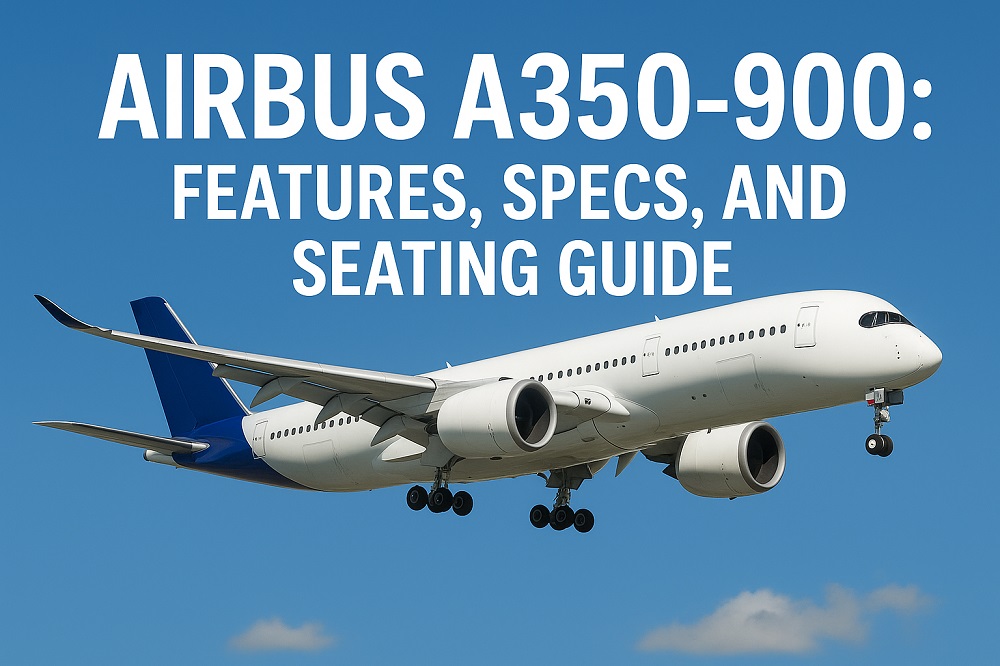
Airbus A350-900: Features, Specs, and Seating Guide

Discover the remarkable Airbus A350-900, a groundbreaking aircraft that’s revolutionizing long-haul travel with its innovative design, superior comfort, and exceptional efficiency. Let’s explore what makes this modern marvel stand out in commercial aviation.

👉 Jet engine stands lease 👈

Overview of the Airbus A350-900

The Airbus A350-900 represents a pinnacle of modern aviation engineering, combining cutting-edge technology with unparalleled passenger comfort. This wide-body aircraft has established itself as a preferred choice for airlines worldwide, delivering exceptional performance across various routes.

  • Advanced materials construction for improved efficiency
  • State-of-the-art aerodynamics for reduced fuel consumption
  • Optimized design for both regional and ultra-long-haul flights
  • Enhanced passenger comfort features
  • Superior environmental performance

Introduction to the Airbus A350-900

As the cornerstone of Airbus’s long-haul fleet, the A350-900 addresses the growing demand for efficient and environmentally conscious air travel. Part of the A350 XWB (eXtra Wide Body) family, this aircraft delivers an exceptional cabin environment with:

  • Panoramic window views for enhanced passenger experience
  • Reduced noise levels for quieter flights
  • Redesigned seats with improved headrests
  • Advanced entertainment systems including satellite TV
  • Superior air quality management

Development and Launch

The A350-900’s journey began in the early 2000s as Airbus’s response to Boeing’s 787 Dreamliner and 777 series. The program’s official launch in 2006 marked the beginning of a new era in aviation technology, culminating in its first commercial flight with Qatar Airways in January 2015.

Key Features of the Airbus A350-900

The A350-900 stands as a testament to modern aviation innovation, incorporating numerous groundbreaking features that enhance both performance and passenger experience.

Advanced Aerodynamics and Design

The aircraft’s exceptional aerodynamic efficiency comes from:

  • Sleek, streamlined design minimizing drag
  • High-aspect-ratio wings with distinctive curved wingtips
  • Carbon fiber reinforced plastic (CFRP) construction
  • Larger windows for enhanced natural lighting
  • Optimized fuselage design for reduced fuel consumption

Innovative Cabin Experience

The A350-900’s cabin design prioritizes passenger comfort through:

  • Wider cabin space for improved passenger comfort
  • Advanced air management system refreshing cabin air every 2-3 minutes
  • LED lighting system mimicking natural daylight cycles
  • Larger overhead bins for additional storage
  • Unique flat floor design enhancing spaciousness

Cutting-edge Technology and Systems

The aircraft features state-of-the-art technology including:

  • Interactive cockpit displays with intuitive controls
  • Advanced fly-by-wire system for enhanced safety
  • High-definition entertainment screens
  • High-speed Wi-Fi connectivity
  • On-demand content and satellite TV options

Specifications of the Airbus A350-900

The A350-900 combines exceptional performance with environmental responsibility, featuring advanced materials and aerodynamics that deliver superior efficiency and passenger comfort. Its clean-sheet design represents a significant leap forward in commercial aviation technology, offering airlines an optimal balance of capacity, range, and operating costs.

Technical Specifications

DimensionMeasurement
Overall Length66.80 meters
Cabin Length51.04 meters
Fuselage Width5.96 meters
Maximum Cabin Width5.61 meters
Wingspan64.75 meters
Height17.05 meters
Track10.60 meters
Wheelbase22.18 meters

The A350-900’s precise measurements reflect Airbus’s commitment to balancing size, weight, and performance. The extensive use of lightweight carbon fiber reinforced plastic in its structure enables enhanced fuel efficiency without compromising strength or durability.

Performance and Range

The Airbus A350-900 demonstrates exceptional performance capabilities, particularly in its impressive range of 15,742 kilometers (8,500 nautical miles). This extensive reach enables airlines to operate ultra-long-haul routes efficiently, connecting distant city pairs with non-stop flights.

  • Advanced Rolls-Royce Trent XWB-84 engines for optimal thrust
  • Superior aerodynamic design reducing drag
  • Efficient performance across all flight phases
  • Optimized route network capabilities
  • Enhanced operational flexibility

Fuel Efficiency and Environmental Impact

Setting new standards in environmental performance, the A350-900 achieves remarkable fuel efficiency through its advanced design and technology. The aircraft delivers a 25% reduction in fuel burn and COâ‚‚ emissions compared to previous generation aircraft, supported by its substantial fuel capacity of 166,488 liters.

  • 25% reduction in fuel consumption
  • Significant decrease in COâ‚‚ emissions
  • Industry-leading Rolls-Royce Trent XWB-84 engines
  • Maximum fuel capacity of 166,488 liters
  • Advanced aerodynamic design for reduced drag

Seating Guide for the Airbus A350-900

The A350-900 offers exceptional seating flexibility with configurations ranging from 300 to 350 passengers in a typical three-class layout, extending to a maximum capacity of 440 passengers. This versatility allows airlines to optimize their cabin layouts for different routes and market demands while maintaining superior comfort standards.

Cabin Layout and Seating Configuration

  • Economy Class: 3-3-3 configuration (nine-across)
  • Premium Economy: 2-4-2 configuration (eight-across)
  • Business Class: 1-2-1 or 2-2-2 configuration
  • Premium Economy seat width: 49.5 cm with 5 cm armrests
  • Available in Long Haul, Ultra Long Range, and Medium Haul variants

Passenger Comfort and Amenities

  • Lower cabin pressure altitude (6,000 feet equivalent)
  • Enhanced humidity levels for improved comfort
  • Air renewal every 2-3 minutes
  • State-of-the-art entertainment systems with HD screens
  • Wi-Fi connectivity throughout the flight
  • Reduced cabin noise levels

Airlines Operating the Airbus A350-900

Since its 2015 debut, the A350-900 has become integral to many leading airlines’ fleets, including Lufthansa, Singapore Airlines, Cathay Pacific, and Qatar Airways. These carriers utilize the aircraft’s capabilities to optimize their route networks, enhance fuel efficiency, and deliver superior service on routes ranging from shorter intercontinental flights to ultra-long-haul journeys exceeding 15 hours.

Major Airlines and Routes

  • Qatar Airways – Launch customer, operated first commercial A350-900 flight (Doha to Frankfurt) on January 15, 2015
  • Singapore Airlines – Operates ultra-long-haul routes, including Singapore-New York service
  • Lufthansa – Serves key intercontinental routes between German hubs and North America/Asia
  • Cathay Pacific – Connects Hong Kong with Europe and North America
  • Other Notable Operators – Delta Air Lines, Finnair, and China Airlines

Customer Feedback and Reviews

Passenger feedback on the Airbus A350-900 has been predominantly positive, with travelers highlighting several key features:

  • Spacious cabin environment
  • Large panoramic windows
  • Exceptional cabin quietness
  • Advanced air management system reducing jet lag
  • Modern amenities and features

While the overall reception remains positive, some passengers have noted specific considerations:

  • Extra-wide body design may result in window seats being closer to sidewalls in certain configurations
  • Some travelers prefer seating layouts of previous generation aircraft (A330/A340)

Despite individual preferences, the consensus among airlines and passengers confirms the A350-900 as a significant advancement in long-haul travel, successfully combining efficiency, comfort, and environmental performance.

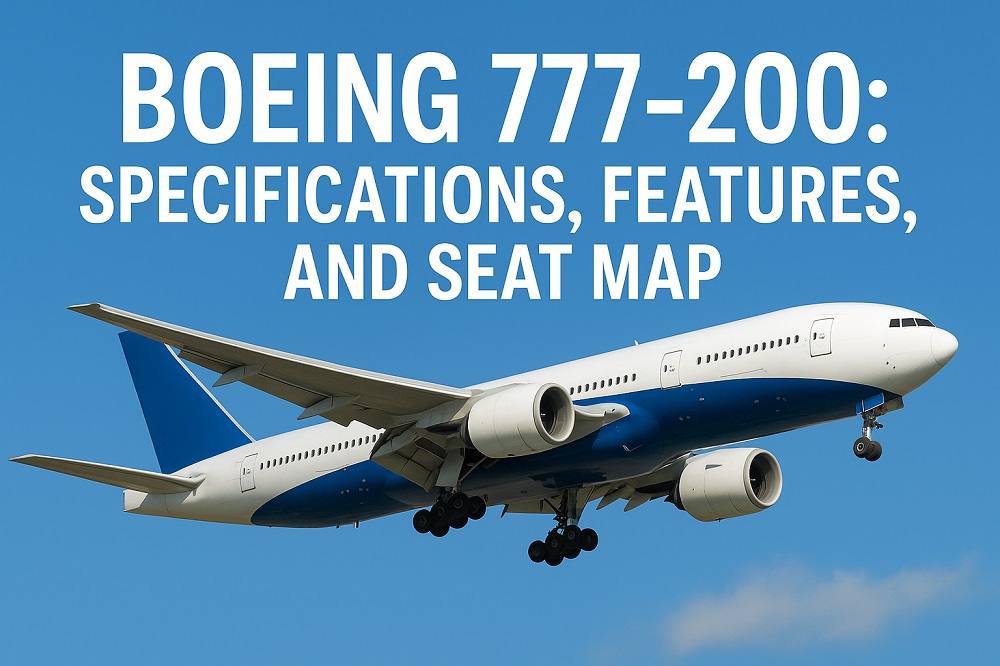
Boeing 777-200: Specifications, Features, and Seat Map
Discover the remarkable Boeing 777-200, a groundbreaking aircraft that revolutionized commercial aviation with its advanced technology and exceptional performance capabilities. Let’s explore the features, specifications, and innovations that make this wide-body airliner a cornerstone of modern air travel.

👉 Aircraft engine stand for rent 👈

Overview of the Boeing 777-200

The Boeing 777-200 represents a significant milestone in aviation history as Boeing’s first fly-by-wire aircraft. Since its 1995 debut, this twin-engine jet has incorporated cutting-edge technology, including the Electronic Flight Instrument System (EFIS) and Flight Envelope Protection, enhancing both safety and operational efficiency.

The evolution of the 777-200 led to the development of the 777-200ER (Extended Range), which features:

  • Increased Maximum Takeoff Mass of 297,550 kg
  • Enhanced engine performance
  • Extended range capability of 7,725 nautical miles
  • Same airframe as the original model
  • Improved fuel efficiency systems

👉 Engine Stand GE90-94B/115B 👈

Introduction to the Boeing 777-200

The aircraft’s design excellence combines advanced technology with exceptional passenger comfort. Key features include:

  • Low wing position for optimal aerodynamics
  • Regular mid-set tail configuration
  • Underwing mounted engines
  • Advanced fly-by-wire system
  • Electronic Flight Instrument System (EFIS)

History and Development of the Boeing 777-200

The Boeing 777-200’s journey began in 1986 as an initiative to create a higher-capacity successor to the 767 model. The project culminated in the aircraft’s introduction in June 1995, marking a new chapter in commercial aviation history.

The 777-200LR (Longer Range) variant, introduced in 2005, further pushed engineering boundaries with:

  • Range capability of 9,395 nautical miles
  • Advanced wing design shared with 777-300ER
  • Enhanced engine power systems
  • Improved aerodynamic efficiency

Technical Specifications of the Boeing 777-200

SpecificationStandard 777-200777-200ER
Typical Passenger Capacity298 (three-class)298 (three-class)
Maximum Range5,240 nautical miles7,725 nautical miles
Cruise SpeedMach 0.84Mach 0.84

Dimensions and Capacity

DimensionMeasurement
Length63.7 meters (209 feet 1 inch)
Wingspan60.9 meters (199 feet 11 inches)
Height18.5 meters (60 feet 9 inches)
Cargo Capacity6 pallets or 14 LD-3 containers

Engine and Performance

The aircraft offers engine options from three major manufacturers:

  • General Electric
  • Pratt & Whitney
  • Rolls-Royce (Trent 875: 73,400 lb thrust, Trent 877: 76,000 lb thrust)

Range and Efficiency

The Boeing 777-200’s impressive range capabilities and efficiency features include:

  • Standard variant range: 5,240 nautical miles (9,700 km)
  • ER variant range: 7,725 nautical miles (14,305 km)
  • Advanced aerodynamic profile
  • Optimized fuel consumption
  • Reduced environmental impact

👉 Engine Stand Trent 800 For Lease 👈

Features and Design of the Boeing 777-200

The Boeing 777-200 represents a technological breakthrough in commercial aviation, distinguished as Boeing’s first fly-by-wire airliner. The aircraft incorporates several innovative features:

  • Advanced Electronic Flight Instrument System (EFIS)
  • Sophisticated Flight Envelope Protection
  • Wide-body configuration for enhanced cabin space
  • Low wing position for optimal aerodynamics
  • Regular mid-set tail design
  • Underwing mounted engines for improved efficiency
  • Tricycle retractable landing gear for stable operations

Aerodynamic Design

The Boeing 777-200’s aerodynamic excellence stems from its pioneering development process, being the first commercial aircraft designed entirely using computer-aided design (CAD). Through CATIA, a sophisticated 3D software system from Dassault Systèmes and IBM, engineers optimized every aerodynamic aspect before physical construction.

Key aerodynamic innovations include:

  • Advanced wing design balancing lift and drag
  • Cutting-edge materials for enhanced flex characteristics
  • Strategic engine placement for improved balance
  • Optimized wing flex for fuel efficiency
  • Reduced cabin noise through innovative design

Passenger Comfort and Amenities

The Boeing 777-200 elevates the passenger experience with comprehensive entertainment and comfort features:

  • 15.4-inch HD-capable touchscreen monitors at each seat
  • Extensive entertainment library including:
    • 75 movies
    • 150+ TV programs
    • 350+ audio selections
    • 15 interactive games
  • AC power outlets throughout the cabin
  • Internet connectivity
  • Spacious overhead bin storage
  • Optimized cabin pressure and humidity control

👉 Engine Stand Trent 800 Rollover 👈

Boeing 777-200 Seat Map and Configuration

Class ConfigurationSeating Capacity
Three-Class Layout305 (24 First / 54 Business / 227 Economy)
Two-Class Layout400 (30 First / 370 Economy)
Single-Class Layout500 (418 Premium Economy)

Seating Classes and Layout

The aircraft features a versatile seating arrangement across different classes:

  • First Class: 2-3-2 configuration at front
  • Business Class: 2-2-2 or 2-3-2 arrangement
  • Economy Class: 3-3-3 or 3-4-3 layout

Economy, Economy Plus, and United First

Class TypeFeatures
United FirstPremium amenities, enhanced services
Economy Plus35-inch seat pitch, 78 seats, 17.1-inch width
Economy31-inch pitch, 258 seats, 17.1-inch width

Boeing 777-200 in Service with United Airlines

United Airlines pioneered the commercial operation of the Boeing 777-200, receiving its first aircraft on May 15, 1995, and conducting the inaugural commercial flight on June 7, 1995. The aircraft serves as a cornerstone of United’s long-haul operations, primarily operating on:

  • US transcontinental routes
  • Hawaiian destinations
  • Select international services
  • High-demand domestic routes

👉 Engine Stand Trent 800 Basic Transport 👈

Destinations Served by the Boeing 777-200

United Airlines strategically deploys its Boeing 777-200 fleet across diverse routes, demonstrating the aircraft’s operational versatility. The primary routes include:

  • US transcontinental services
  • Hawaiian destinations
  • International routes (ER variant), including:
    • Dubai
    • Quito
    • Guayaquil
    • Osaka

The aircraft’s impressive range and passenger capacity make it an ideal choice for both high-density domestic routes and long-haul international services. This flexibility enables United to adapt its network strategy effectively, optimizing the 777-200 fleet’s utilization across various route types and distances.

Customer Experience and Feedback

Cabin ClassNotable Feedback
Polaris First ClassSeats 2C and 2H highly rated for comfort and storage space; enhanced experience with new Polaris lounge
Seat 1AOften utilized by crew for rest and storage
Economy ClassSeat 32A praised for excellent legroom; some areas noted for limited inflight entertainment access

Overall passenger feedback has been predominantly positive, particularly regarding comfort and amenities. However, experiences vary significantly based on seat location and service class, highlighting the importance of strategic seat selection when booking. The diverse feedback across cabin classes demonstrates United’s varied service offerings on their 777-200 fleet, catering to different passenger preferences and needs.

Read more:

Boeing 767-400: Specifications, Features, and Seat Maps

Discover the remarkable Boeing 767-400, a masterpiece of aviation engineering that has revolutionized long-haul air travel. This comprehensive guide explores the aircraft’s specifications, innovative features, and the impact it has made on commercial aviation.

👉 Aircraft engine stands 👈

Overview of the Boeing 767-400

The Boeing 767-400 represents a significant achievement in mid-size, wide-body twinjet airliner design. This versatile aircraft accommodates between 181 and 375 passengers, offering airlines exceptional operational flexibility. With its impressive range of 5,200 to 6,590 nautical miles, the 767-400 excels in long-haul operations.

  • Low wing position for enhanced aerodynamics
  • Regular mid-set tail design
  • Underwing mounted engines for optimal performance
  • Tricycle retractable landing gear system
  • Advanced engineering for maximum efficiency

History and Development

The late 1990s marked the beginning of the Boeing 767-400’s journey, culminating in the maiden flight of the 767-400ER (Extended Range) variant on October 9, 1999. Boeing’s comprehensive development program utilized four aircraft for rigorous testing, ensuring exceptional performance, safety, and reliability standards.

Introduction to the Market

Upon its market entry, the Boeing 767-400 quickly established itself as a versatile and efficient option for airlines. Its ability to serve both high-density short-haul routes and long-distance international flights made it particularly attractive to carriers seeking operational flexibility.

👉 CF6-80C2 Boeing 👈

Specifications of the Boeing 767-400

SpecificationDetails
Passenger Capacity181-375 passengers
Range5,200-6,590 nautical miles
ClassificationLong-range widebody airliner

Technical Specifications

The aircraft features advanced materials and engineering principles, incorporating a spacious wide-body design for enhanced passenger comfort. Modern avionics and fuel-efficient turbofan engines contribute to its impressive performance capabilities.

Performance and Range

With a maximum range of 6,590 nautical miles (12,200 km), the Boeing 767-400 excels in connecting major cities across continents. Its cruising performance is optimized for both medium and long-haul routes, offering airlines exceptional operational flexibility.

Features of the Boeing 767-400

The Boeing 767-400’s innovative design combines efficiency with comfort, featuring advanced aerodynamic elements that optimize performance and fuel economy.

Design and Aerodynamics

  • Distinctive raked wingtip design for improved efficiency
  • Increased gauge aluminum construction with thicker spars
  • Shared components with the Boeing 777 for maintenance efficiency
  • Optimized wingtip extensions for enhanced aerodynamic performance
  • Advanced structural design for optimal strength-to-weight ratio

👉 Engine Stand PW4000-100 👈

Interior and Comfort

The Boeing 767-400’s interior exemplifies passenger-centric design, featuring a spacious cabin adaptable to various airline configurations. The premium Delta One Suites configuration showcases 34 private suites in a 1-2-1 layout, delivering exceptional comfort for long-haul journeys of 10-11 hours.

  • Delta Comfort+ enhanced features:
    • Up to 4 inches of extra legroom
    • 50% more recline capability
    • Priority boarding access
    • Complimentary beverage service

The aircraft’s modern amenities include ambient mood lighting, contemporary design elements, and strategically placed charging ports and storage compartments, ensuring a comfortable experience from the flight deck to the passenger cabin.

Seat Maps and Configuration

The Boeing 767-400’s versatile seating configuration adapts to various airline requirements while maintaining passenger comfort on long-haul routes. The typical three-class layout optimizes both comfort and capacity.

Cabin ClassNumber of Seats
Delta One40 flat-bed seats
Delta Comfort+28 standard seats
Economy178 standard seats
Total Capacity246 passengers

Seating Layout Options

The aircraft’s fuselage accommodates seven seats abreast with dual aisles, balancing comfort with operational efficiency. The Delta One Suites exemplify innovative premium seating with 34 suites in a 1-2-1 configuration, ensuring direct aisle access for all passengers.

  • Suite Privacy Features:
    • Alternating privacy levels in center section seats (B and C)
    • Enhanced privacy in even-numbered window seats (A and D)
    • Reduced privacy in odd-numbered window seats

Passenger Experience

Each Delta One Suite comes equipped with state-of-the-art amenities, including intuitive seat controls, IFE remote access, convenient charging ports, and ample storage space. The Economy and Delta Comfort+ sections feature a comfortable 2-3-2 configuration, reducing the number of middle seats compared to larger aircraft.

  • Enhanced Comfort Features:
    • Spacious aisle design for easy movement
    • Advanced noise reduction technology
    • Optimized cabin pressurization system
    • Extended legroom in Delta Comfort+
    • Increased recline capabilities

Read more:

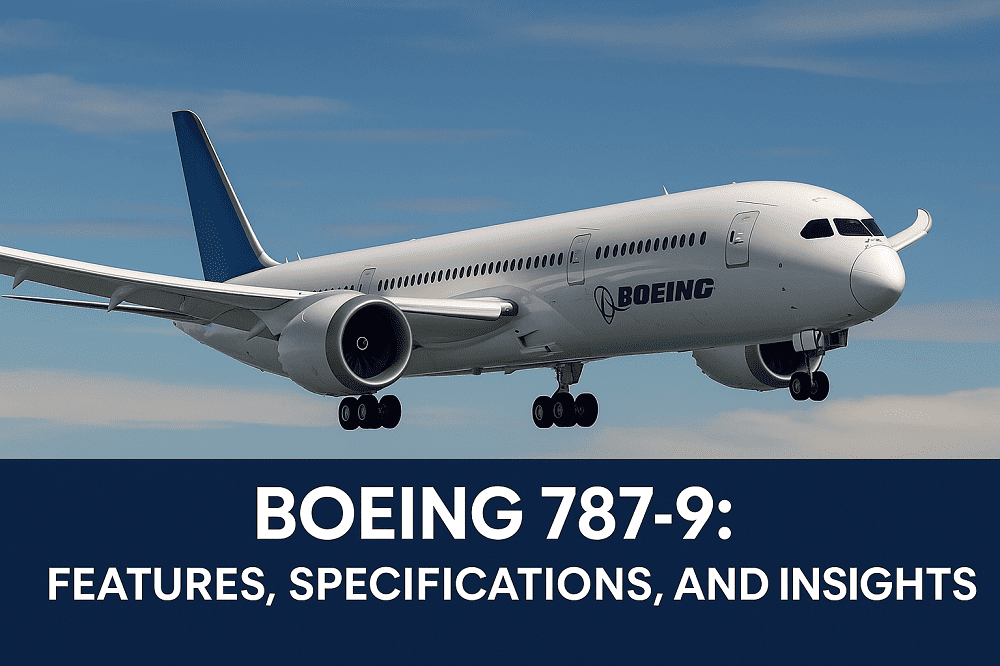
Boeing 787-9: Features, Specifications, and Insights

Discover the revolutionary Boeing 787-9 Dreamliner, an engineering masterpiece that’s reshaping long-haul air travel. This comprehensive guide explores the aircraft’s cutting-edge features, impressive specifications, and the innovative technologies that make it a game-changer in commercial aviation.

Airplane Engine Stand For Lease

Overview of Boeing 787-9

The Boeing 787-9 Dreamliner represents a significant leap forward in commercial aviation technology. As a stretched version of the original Dreamliner, this long-range, twin-engine, wide-body aircraft showcases Boeing’s commitment to innovation and efficiency.

  • Length – 63 meters
  • Wingspan – 60 meters
  • Maximum range – 14,010 kilometers
  • Composite materials – 50% of structure
  • Purpose – long-haul international routes

Introduction to Boeing 787-9

The Boeing 787-9 emerged as an evolution of the Dreamliner family, building upon the success of the 787-8. This variant offers 20% more passenger capacity and increased cargo space while maintaining the exceptional fuel efficiency that defines the Dreamliner series.

Development and Launch

Boeing’s strategic decision to postpone the 787-9’s development until 2012 proved crucial for the aircraft’s success. This delay allowed the company to focus on the 787-8’s delivery and incorporate valuable lessons learned, resulting in a more refined production process and superior end product.

Engine Stand Trent 1000 Sling For Lease

Design and Features of Boeing 787-9

The aircraft’s revolutionary design combines advanced composite materials with cutting-edge aerodynamics. Its sleek profile features raked wingtips and noise-reducing chevrons on engine nacelles, enabling a maximum speed of 954 km/h.

Innovative Design Elements

  • One-piece composite barrel sections replacing traditional aluminum construction
  • 65% larger windows with electrochromic shading technology
  • Four-window cockpit design for enhanced pilot visibility
  • Advanced structural integrity through composite materials
  • Aerodynamic improvements for better performance

Advanced Technology Integration

FeatureBenefit
Advanced electrical systemImproved fuel efficiency and reduced maintenance
Environmental control systemHigher humidity levels and lower cabin altitude
LED lighting systemMood-enhancing color schemes including ‘Turquoise Waves’
Entertainment system18-inch video screens in economy class
Seating arrangement3-3-3 configuration with 44 cm wide seats and 78 cm legroom

Specifications and Performance

The Boeing 787-9 Dreamliner demonstrates exceptional capabilities in commercial aviation, accommodating 290-330 passengers in a typical two-class configuration. Its advanced aerodynamics and lightweight structure enable a maximum range of 14,140 kilometers, making it ideal for connecting distant city pairs with non-stop flights.

Engine Stand Trent 1000/7000 APS

Technical Specifications

SpecificationDetails
EnginesRolls-Royce Trent 1000 or GE GEnx-1B (64,000-76,000 lbf thrust)
DimensionsLength: 62.8m, Height: 17.0m, Cabin width: 5.49m
Maximum takeoff weight254,011 kg (560,000 lbs)
Cruising speedMach 0.85 (903 km/h / 488 knots)
Fuel capacity126,372 liters (33,384 US gallons)

Performance Metrics

The Boeing 787-9 sets new standards in aviation performance with its exceptional efficiency and capabilities. Its advanced design delivers 20% better fuel efficiency compared to previous-generation aircraft of similar size.

  • Maximum range – 14,140 km (enabling non-stop flights between distant cities like London-Tokyo)
  • Climb rate – 2,500 feet per minute
  • Cruise altitude – 35,000 to 43,000 feet
  • Advanced wing design with high aspect ratio and raked wingtips
  • Superior lift-to-drag ratio in its class

Fuel Efficiency and Environmental Impact

The 787-9 Dreamliner achieves a remarkable 20% reduction in fuel consumption compared to the Boeing 767. This improvement stems from two primary sources: the advanced Rolls-Royce Trent 1000 and General Electric GEnx engines, contributing 40% of the efficiency gains, and the aircraft’s innovative design features including aerodynamics, composite materials, and optimized systems.

Fuel Efficiency Innovations

  • Lightweight composite materials reducing overall aircraft weight
  • Advanced aerodynamics with drag-reducing raked wingtips
  • Efficient electrical systems replacing traditional hydraulics
  • Optimized flight path capabilities
  • Enhanced navigation systems for fuel-efficient routing

Environmental Benefits

The 787-9 Dreamliner represents a significant advancement in aviation sustainability. The GEnx-powered variant achieves up to 72% lower carbon emissions compared to typical flights, while incorporating numerous eco-friendly design elements.

  • Reduced noise pollution through quieter engines
  • Lower environmental impact throughout lifecycle
  • Advanced materials minimizing ecological footprint
  • Ongoing development of cleaner propulsion systems
  • Collaboration with manufacturers for sustainable solutions

Engine Stand Trent 1000

Passenger Experience on Boeing 787-9

Turkish Airlines’ 787-9 fleet exemplifies the aircraft’s commitment to passenger comfort with personally-designed seats, enhanced spacing, and user-friendly features including improved overhead storage and multiple power connectivity options.

Cabin Comfort and Amenities

  • Business Class convertible bed seats with extra storage space
  • Advanced environmental control system for reduced jet lag
  • Higher cabin humidity levels
  • Comprehensive amenity kit including eye mask, ear plugs, and toiletries
  • Premium comfort items (fleecy blanket, patterned pillowcase, over-ear headphones)

In-flight Entertainment and Connectivity

The Boeing 787-9 Dreamliner features a cutting-edge in-flight entertainment system with touch-sensitive monitors at every seat. The system offers comprehensive entertainment options through an intuitive interface that caters to passengers of all ages.

  • Wide selection of movies, TV shows, and music
  • Interactive games and entertainment apps
  • User-friendly touchscreen interface
  • Multiple language options
  • Real-time flight tracking and information

The aircraft transforms into a flying digital hub with its advanced connectivity features. Passengers can stay connected throughout their journey with Wi-Fi capabilities, while abundant power outlets and USB ports ensure devices remain charged. This combination of entertainment and connectivity meets the modern traveler’s needs at cruising altitude.

Engine Stand GEnx-1B Rollover

Airlines Operating Boeing 787-9

The Boeing 787-9 Dreamliner has established itself as a preferred choice among major airlines worldwide, particularly for long-haul international routes. American Airlines, a leading operator, configures its 787-9 fleet with 269 seats across three classes:

Cabin ClassNumber of Seats
Business Class36
Premium Economy35
Economy198

Engine Stand GEnx-1B-2B Rollover

Major Airlines and Routes

  • Qantas – Perth to London non-stop service
  • Air New Zealand – Auckland to Chicago route
  • Japan Airlines – Trans-Pacific routes
  • British Airways – London to Tokyo, Santiago, and San Jose
  • Air Canada – International long-haul operations
  • All Nippon Airways (ANA) – Asian and international routes

Customer Feedback and Reviews

Passenger feedback for the Boeing 787-9 has been predominantly positive, with travelers highlighting several key features:

  • Enhanced cabin atmosphere with lower altitude pressure
  • Higher humidity levels reducing jet lag and fatigue
  • Larger windows improving the overall flight experience
  • Comfortable seating with adequate space
  • Attentive and professional cabin crew service

While some passengers note minor issues such as limited recline in certain economy seats or air vent positioning, the overall consensus indicates that the 787-9 delivers an exceptional flying experience, particularly on long-haul routes.

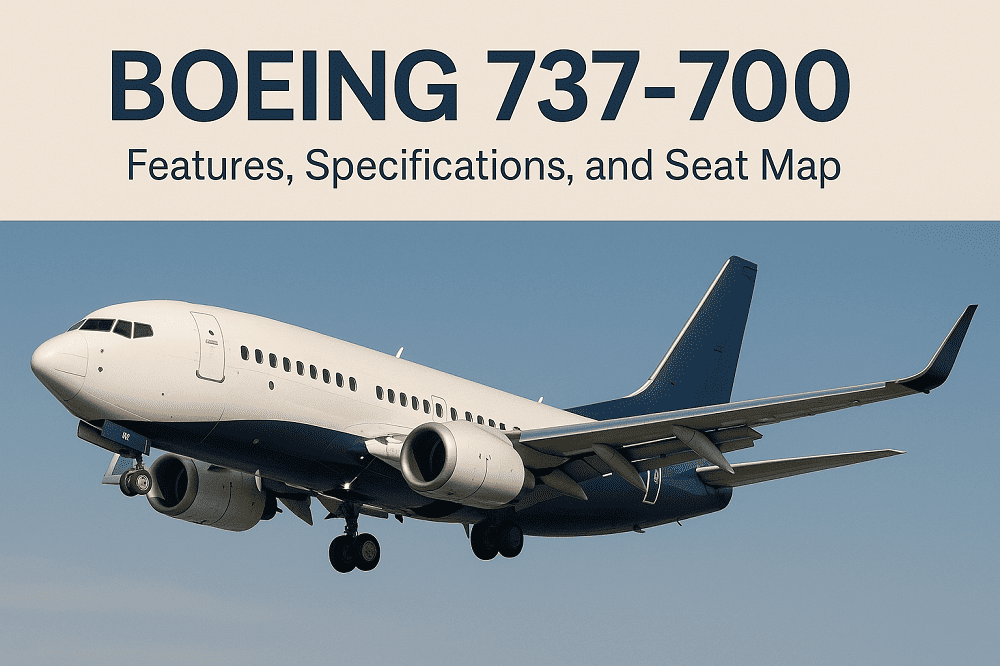
Boeing 737-700: Features, Specifications, and Seat Map

Discover the remarkable Boeing 737-700, a groundbreaking aircraft that revolutionized commercial aviation with its innovative design, exceptional performance, and versatile capabilities. Let’s explore what makes this aircraft a preferred choice for airlines worldwide.

Aircraft engine stands for rent

Overview of the Boeing 737-700

The Boeing 737-700, introduced in 1997, represents a significant advancement in commercial aviation as part of the Boeing 737 Next Generation series. This short to medium-range airliner features:

  • Narrow body design with fixed low wings
  • Regular mid-set tail configuration
  • Advanced propulsion system with two underwing-mounted multi-jet engines
  • State-of-the-art avionics technology
  • Enhanced aerodynamic features

History and Development

The Boeing 737-700 emerged as a direct successor to the Boeing 737-300, marking a new chapter in aviation history. Its development focused on meeting increasing demands for fuel efficiency and environmental consciousness while incorporating cutting-edge technologies that exceeded industry expectations.

Market Position and Popularity

The aircraft’s success in the commercial aviation sector stems from its exceptional versatility and reliability. Key factors contributing to its widespread adoption include:

  • Optimal balance of capacity and range
  • Extensive support network from Boeing
  • Cost-effective operations
  • Compatibility with existing airport infrastructure
  • Commonality with other 737 variants

Engine Stand CFM56-7B For Rent

Design and Features of the Boeing 737-700

The aircraft’s design philosophy combines innovation with practical engineering, featuring advanced propulsion systems and aerodynamic enhancements that deliver superior performance and operational efficiency.

Exterior Design

DimensionMeasurement
Length110 feet 4 inches (33.6 meters)
Wingspan112 feet 7 inches (34.3 meters)

Interior Layout and Comfort

The Boeing 737-700’s interior emphasizes passenger comfort and operational flexibility with:

  • Flexible seating configuration (126-149 passengers)
  • Boeing’s Sky Interior with sculpted sidewalls
  • LED mood lighting system
  • Larger pivot bins for carry-on luggage
  • Ergonomically designed seats
  • Optional in-flight entertainment systems and power outlets

Specifications and Performance

The aircraft combines advanced technology with efficient design, featuring improved aerodynamics through its fixed low wings and regular mid-set tail. The modernized cockpit includes advanced avionics and control systems, ensuring optimal flight management and enhanced safety standards.

Engine and Technical Specifications

SpecificationMeasurement
Engine TypeTwo CFM56-7B turbofan engines
Engine Thrust117 kN each
Wingspan34.32 meters (112 feet 7 inches)
Length33.6 meters (110 feet 4 inches)
Height12.5 meters (41 feet 2 inches)
Maximum Takeoff Weight70,080 kg (154,500 lb)
Maximum Landing Weight58,604 kg (129,200 lb)

The underwing-mounted engines feature a high bypass ratio, delivering superior fuel efficiency and reduced noise levels compared to previous 737 models. The aircraft’s tricycle retractable landing gear ensures smooth operations across various runway conditions, enhancing operational versatility.

CFM56-7B Bootstrap Kit

Range and Fuel Efficiency

The Boeing 737-700 demonstrates exceptional performance capabilities with a maximum range of 6,370 kilometers (3,440 nautical miles), making it ideal for short to medium-haul routes and transcontinental flights.

  • Advanced blended winglet technology for enhanced aerodynamics
  • Up to 4% improvement in range with winglet configuration
  • Reduced fuel consumption by approximately 4% compared to non-winglet models
  • Optimized operational costs through efficient engine performance
  • Reduced environmental impact through improved fuel efficiency

Boeing 737-700 Seat Map and Configuration

The Boeing 737-700’s versatile design allows airlines to implement various seating configurations, adapting to different route requirements and market demands. This flexibility, combined with quick reconfiguration capabilities, has established the aircraft as a preferred choice for carriers worldwide.

Seating Capacity and Arrangement

  • Two-class configuration – 126 passengers
  • Single-class layout – up to 149 passengers
  • Standard economy configuration – 3-3 seating arrangement
  • Premium class option – 2-2 configuration in forward cabin
  • Customizable layouts based on route requirements

Class Options and Amenities

Airlines customize their Boeing 737-700 interiors with various class configurations and modern amenities:

  • First Class/Business Class options in forward cabin
  • Standard Economy class with optimized comfort
  • Premium Economy sections with enhanced legroom
  • Modern entertainment systems and Wi-Fi connectivity
  • Spacious overhead bins for increased storage
  • Boeing Sky Interior featuring LED lighting and sculpted sidewalls

Airlines Operating the Boeing 737-700

The aircraft’s versatility and efficiency have made it a cornerstone of numerous airline fleets worldwide. WestJet, Canada’s leading leisure airline, exemplifies successful deployment of the 737-700, achieving superior reliability and operational efficiency across their network.

Major Airlines and Routes

United Airlines operates the 737-700 with three distinct configurations: Domestic Layout 1, Domestic Layout 2, and Micronesia routes layout. The aircraft serves diverse destinations including Istanbul, Newcastle, and Berlin, demonstrating its adaptability to various route requirements and market conditions.

Customer Reviews and Feedback

Customer feedback on the Boeing 737-700 reveals distinct preferences based on flight duration and cabin configuration. The aircraft receives particularly positive reviews for shorter journeys, with passengers appreciating its reliability and efficient boarding process due to its compact size.

  • Optimal comfort for flights between 1.5 to 2 hours
  • Smoother boarding experience compared to larger aircraft
  • High reliability ratings across different routes
  • Mixed feedback on seating comfort for longer flights
  • Limited lavatory facilities compared to 737-800 (two versus three)
AspectPassenger Feedback
Short FlightsGenerally positive, comfortable seating
Long FlightsMixed reviews, some report cramped conditions
Boarding ProcessEfficient and well-organized
Lavatory AccessLimited compared to 737-800
Overall ExperienceVaries by airline configuration

Airlines continue to refine their 737-700 configurations, seeking the optimal balance between passenger comfort and operational efficiency. While some travelers express preference for the larger 737-800 model, particularly on extended routes, the 737-700 maintains its position as a reliable choice for short to medium-haul flights.

Other articles: