

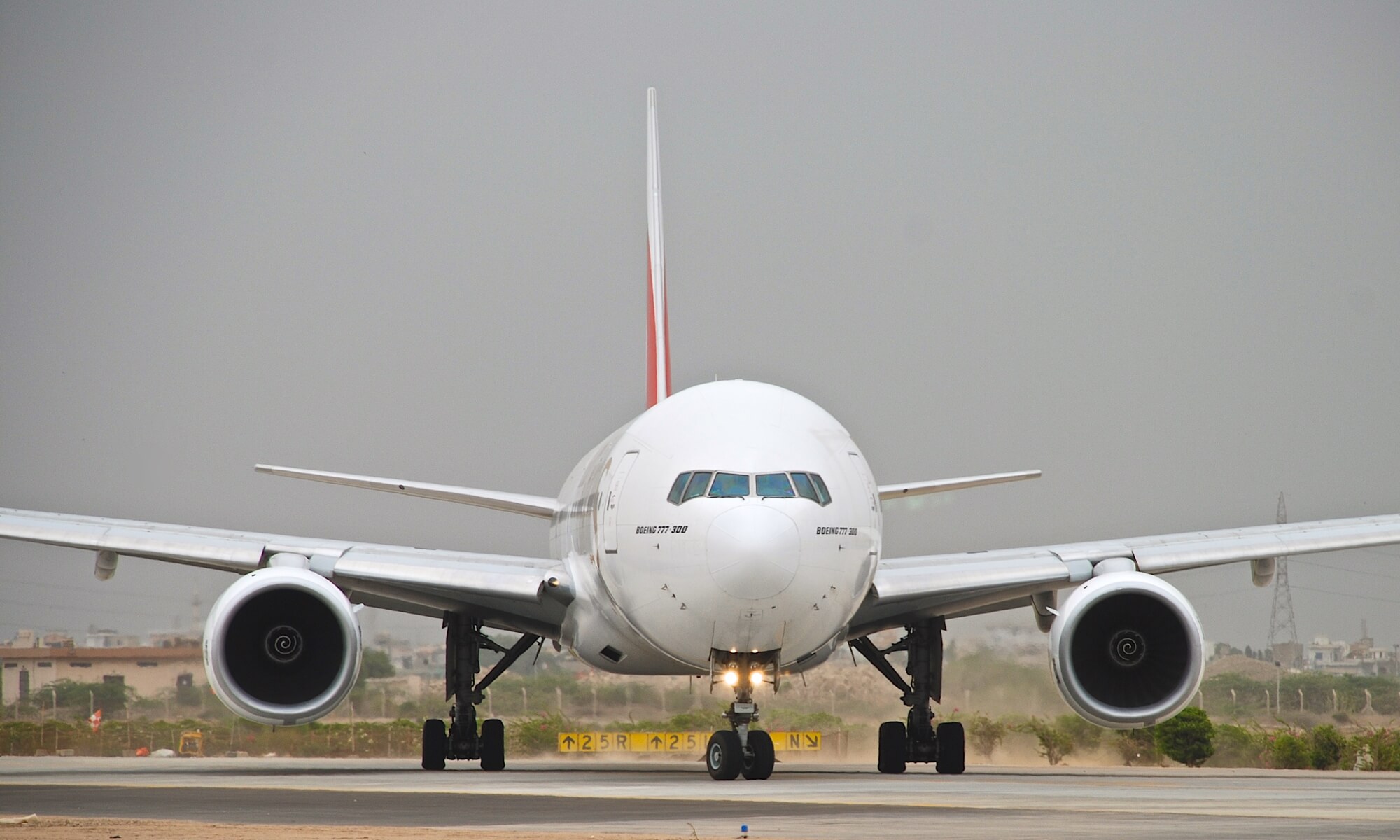
More than 1,700 Boeing 777s have been delivered since 1995, which makes the Triple Seven the most-produced wide-body airliner in history. The family covers six production variants – 777-200, 777-200ER, 777-300, 777-300ER, 777-200LR, and the 777F freighter – plus the folding-wingtip 777X now in certification testing, with typical seating from approx. 301 to 396 passengers and range up to approx. 9,395 nautical miles in the longest-range 777-200LR version. Emirates operates the largest fleet; United Airlines launched the program and flew the first service in June 1995.
Overview of the Boeing 777
The Boeing 777, known across the industry as the Triple Seven, is the world’s largest twinjet. It bridges the gap between Boeing’s 767 and 747 models, while replacing older DC-10 and L-1011 trijets.
- Passenger capacity: approx. 301-396 depending on variant and cabin layout
- Distinctive design features: Low-wing position
- Engine configuration: Underwing mounted
- Landing gear: Tricycle retractable
- Classification: Aerodrome Reference Code 4E and RFF Category 9
History and Development of the Boeing 777
The Boeing 777’s journey began in 1986 with studies for a higher-capacity 767. The project gained official status in October 1990 when United Airlines placed its inaugural order. Boeing’s innovative approach included consulting with eight major airlines to ensure the aircraft met industry needs.
| Milestone | Date |
|---|---|
| Project Launch | 1986 |
| Program Official Start | October 1990 |
| Prototype Rollout | April 1994 |
| Maiden Flight | June 1994 |
| Commercial Service Entry | June 1995 |
Key Features of the Boeing 777
The Boeing 777 stands out with its innovative design and advanced technology features:
- Extended raked wingtips for enhanced fuel efficiency
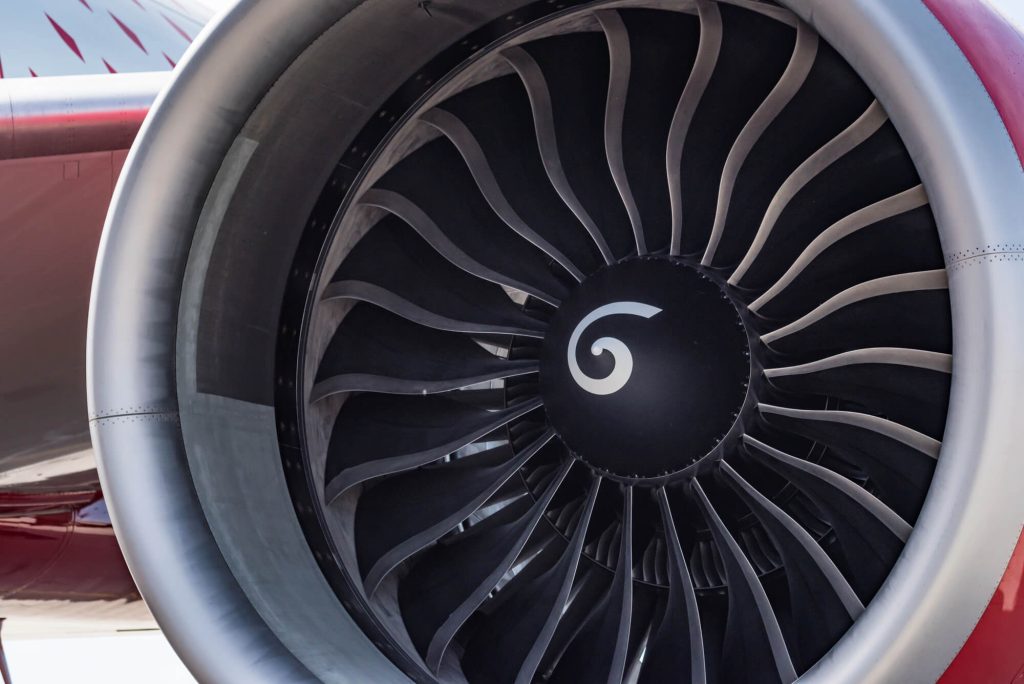
- GE90 engines producing up to 115,300 lbf of thrust in their most powerful version
- Boeing’s first fly-by-wire system
- Advanced Electronic Flight Instrument System (EFIS)
- Flight Envelope Protection
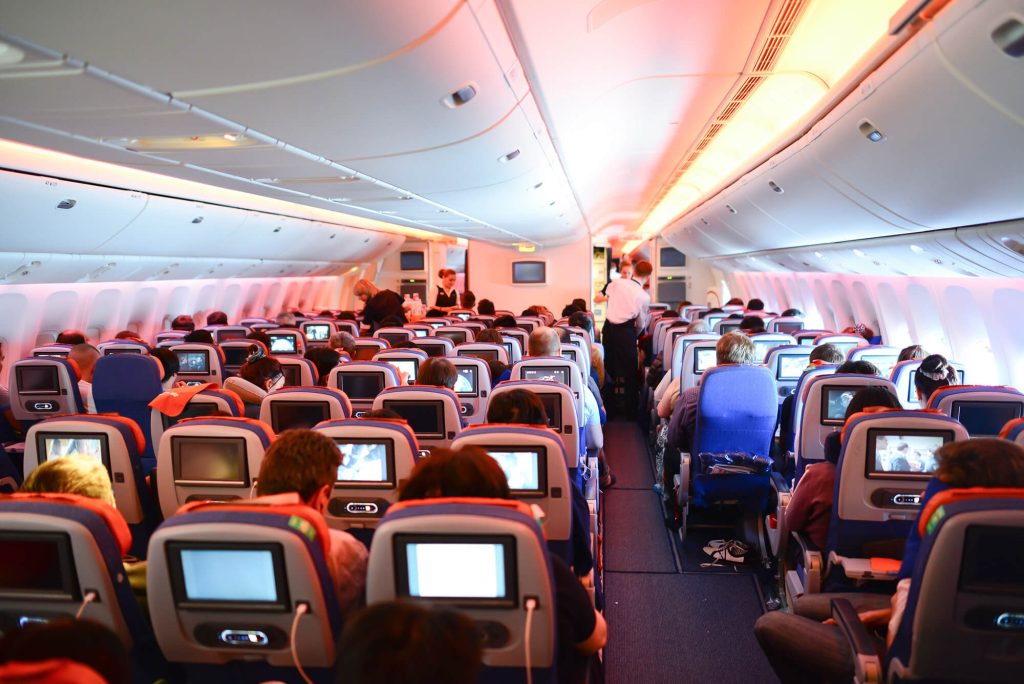
- Spacious cabin with improved lighting
- Larger overhead bins
Boeing 777 Models and Variants
The 777 family includes several variants aimed at different route lengths and capacity needs:
| Model | Introduction Year | Key Feature |
|---|---|---|
| 777-200 | 1995 | Original variant |
| 777-200ER | 1997 | Extended range |
| 777-300 | 1998 | Increased capacity |
| 777-300ER | 2004 | Extended range, higher capacity |
| 777-200LR | 2006 | Ultra-long range |
| 777F | 2009 | Freighter variant |
Boeing 777-200 and 777-200ER
The foundational 777-200 models showcase impressive capabilities:
- Passenger capacity: Up to 440 (single-class)
- Typical two-class layout: 313 passengers
- 777-200ER range: 7,725 nautical miles (14,305 km)
- Engine options: Pratt & Whitney PW4000, General Electric GE90, Rolls-Royce Trent 800
- Thrust range: 77,000-94,000 lbf
Cabin layouts, United’s seat maps, and operator details for these baseline models are covered separately in Boeing 777-200: Specifications, Features, and Seat Map.
Boeing 777-300 and 777-300ER
The 777-300 variants deliver the family’s highest capacity:
- Length: 73.9 meters (242 feet 4 inches)
- Standard two-class capacity: 396 passengers
- Range (777-300ER): 7,370 nautical miles (13,650 km)
- Engine: Exclusive GE90-115B
- Cruise speed: Mach 0.84
- Maximum takeoff weight: 351,530 kg (775,000 lb)
Boeing 777-200LR and 777F
The Worldliner and its cargo variant push the boundaries of range and utility:
- 777-200LR range: approx. 9,395 nautical miles (17,395 km)
- Engine options: GE90-110B1 or GE90-115B
- 777F payload capacity: 102 tons (224,900 lbs)
- 777F range: 4,970 nautical miles (9,200 km) with full payload
Boeing 777X: The Next Generation
The 777X is the next major development of the family, with new composite wings, GE9X engines, and updated systems. Scheduled to enter service in 2026, it uses folding wingtips so that the longer wing still fits standard airport gates.
- Engine: New generation GE9X – the most efficient jet engine in its class
- Enhanced fuel efficiency and environmental performance
- 777-8: approx. 395 passengers with approx. 8,745 nautical miles range
- 777-9: 400+ passenger capacity with 7,285 nautical miles range
- Innovative folding wingtip mechanism
The Stanley Engine Stand Trent 800 Basic Transport for Boeing 777
Discover the reliable Trent 800 Basic Transport Engine Stand by National Aero Stands, designed for secure transportation and storage of engines.
Technical Specifications of the Boeing 777
The table below lists the key figures for the 777-300ER, the most-produced member of the family:
| Specification | Detail |
|---|---|
| Passenger Capacity | 396 (three-class configuration) |
| Range | 7,370 nautical miles (13,650 km) |
| Length | 73.9 meters (242 feet 4 inches) |
| Wingspan | 64.8 meters (212 feet 7 inches) |
| Height | 18.5 meters (60 feet 8 inches) |
| Cruise Speed | Mach 0.84 (1,030 km/h) |
Dimensions and Capacity
The Boeing 777’s dimensions vary strategically across its model range to meet diverse airline requirements. The 777-200 series measures 63.7 meters in length, while the 777-300 series extends to 73.9 meters. The upcoming 777X will feature an extended 71.8-meter wingspan with innovative folding wingtips.
- Passenger capacity ranges from 301 (777-200, three-class) to 396 (777-300ER, two-class)
- High-density configurations can accommodate 500+ passengers
- 777-200LR cargo capacity: 6 pallets or 14 containers
- 777-300ER total cargo volume: 201.6 cubic meters
- Flexible configuration options for airlines
Engine Options and Performance
The Boeing 777’s exceptional performance stems from its powerful engine options. First-generation models offered three choices: GE90, PW4000, and Rolls-Royce Trent 800, with thrust ratings from 77,200 to 98,000 lbf.
| Engine Generation | Specifications |
|---|---|
| First Generation | 77,200-98,000 lbf thrust range |
| Second Generation (GE90-115B) | 115,300 lbf thrust (world record) |
| Next Generation (GE9X) | Enhanced efficiency, lower emissions |
All three first-generation engines remain active in MRO shops, and each ships on its own dedicated cradle. National Aero Stands keeps a Trent 800 engine stand in its lease pool for Rolls-Royce-powered 777s, while GE90 and PW4000-112 shipsets ride on separate model-specific stands.
Boeing 777 in the Aviation Industry
The Boeing 777 has transformed commercial aviation, effectively bridging the gap between the 767 and 747 wide-body aircraft. Its twin-engine design has successfully replaced older trijet models, offering superior efficiency and operational advantages. For operators, the draw is lower fuel burn per seat than the trijets and 747s it replaced, plus crew and maintenance commonality with other Boeing types.
Major Airlines Operating the Boeing 777
Emirates operates the world’s largest Boeing 777 fleet and is the launch customer for the 777-9. The aircraft’s development involved close collaboration with eight major carriers through the ‘Working Together’ group:
- All Nippon Airways
- American Airlines
- British Airways
- Cathay Pacific
- Delta Air Lines
- Japan Airlines
- Qantas
- United Airlines
Notable Incidents Involving the Boeing 777
Measured against the size of the fleet, the Boeing 777 has a strong safety record: hull losses have been rare across three decades of service. The most serious accidents and incidents involving the type are:
- Malaysia Airlines Flight 370 (March 2014) – Mysterious disappearance, remains unsolved
- Asiana Airlines Flight 214 (July 2013) – Crash landing at San Francisco International Airport, three fatalities
- Malaysia Airlines Flight 17 (July 2014) – Shot down over eastern Ukraine
- British Airways engine fire (2015) – Successful evacuation with no casualties
- British Airways Flight 38 (2008) – Landed short at Heathrow after fuel icing; the investigation led to a redesign of the Trent 800 fuel-oil heat exchanger
Innovation and Future of the Boeing 777
The Boeing 777 has pioneered numerous aviation innovations since its introduction, including being Boeing’s first airliner with fly-by-wire controls and carbon composite tailplanes. Both features carried over into later Boeing designs, including the 787.
- Early 777-200s being retired or replaced by 787s at carriers such as United and American
- 777X development featuring composite wings with folding wingtips
- Advanced GE9X engines offering superior fuel efficiency
- Enhanced environmental performance capabilities
- Planned 777-8 passenger and 777-8F freighter versions to follow the 777-9

Technological Advancements and Sustainability
| Innovation Area | Key Features |
|---|---|
| Flight Controls | Digital fly-by-wire system, software-configurable avionics |
| Materials | Carbon composite structures, lighter construction |
| Environmental Impact | approx. 10% lower fuel use per seat for the 777X (airframe plus GE9X engines) |
| Aerodynamics | Composite wings, folding wingtips for improved efficiency |
Passenger Experience and Customer Satisfaction
The Boeing 777’s cabin design continues to evolve with changing passenger expectations. While early 777-200 configurations with eight-across business class received mixed reviews, newer models and retrofits address these concerns with enhanced features.
- Larger windows for improved natural lighting
- Enhanced cabin altitude and humidity control
- Advanced ride smoothing technology
- Modern amenities including mood lighting
- Expanded overhead storage capacity
- State-of-the-art entertainment systems
Common Questions About the Boeing 777 Family
How many models of the Boeing 777 are there?
Six production variants have entered service: the 777-200 (1995), 777-200ER (1997), 777-300 (1998), 777-300ER (2004), 777-200LR (2006), and the 777F freighter (2009). Two next-generation models, the 777-8 and 777-9, form the 777X program. Passenger versions of the original series are out of production; the freighter line continues.
When was the Boeing 777 released?
The program launched in October 1990 on a United Airlines order, the prototype first flew on June 12, 1994, and United operated the first commercial service on June 7, 1995, from London Heathrow to Washington Dulles. The stretched 777-300 followed in 1998 and the long-range second generation arrived in 2004-2006.
Is there a Boeing 777-800?
No. The family runs from the 777-200 to the 777-300ER and 777F, then jumps to the new-generation 777X, whose members are named 777-8 and 777-9. Searches for a ‘777-800’ usually mean the 777-8, the ultra-long-range 777X variant, or confuse the type with the Boeing 787-8 Dreamliner.
How many Boeing 777s have been built?
More than 1,700 have been delivered since 1995, which puts the 777 ahead of the 747’s 1,574 as the most-produced wide-body airliner. Total orders exceed 2,100, including several hundred 777X aircraft still awaiting delivery. Emirates operates the largest fleet and is the launch customer for the 777-9.
Which engines power the Boeing 777 family?
First-generation 777s offered three choices: General Electric GE90, Pratt & Whitney PW4000-112, and Rolls-Royce Trent 800. The long-range second generation (777-300ER, 777-200LR, 777F) is powered exclusively by the GE90-110B1/-115B, and the 777X moves to the new GE9X, the largest commercial jet engine built to date.
What is the Boeing 777X?
The 777X is the third generation of the family: the 777-9 seats approx. 426 passengers in two classes, while the ultra-long-range 777-8 targets approx. 8,700 nautical miles. Composite wings with folding tips keep the 71.8-meter span compatible with existing gates, and GE9X engines cut fuel burn by approx. 10% versus the 777-300ER.
Other articles about Boeing aircraft: