Airbus A340-600: Features, Specifications, and Performance

Step aboard the remarkable Airbus A340-600, a masterpiece of aviation engineering that has redefined long-haul travel. This comprehensive guide explores the features, specifications, and capabilities of one of the world’s most impressive passenger aircraft.

Overview of the Airbus A340-600

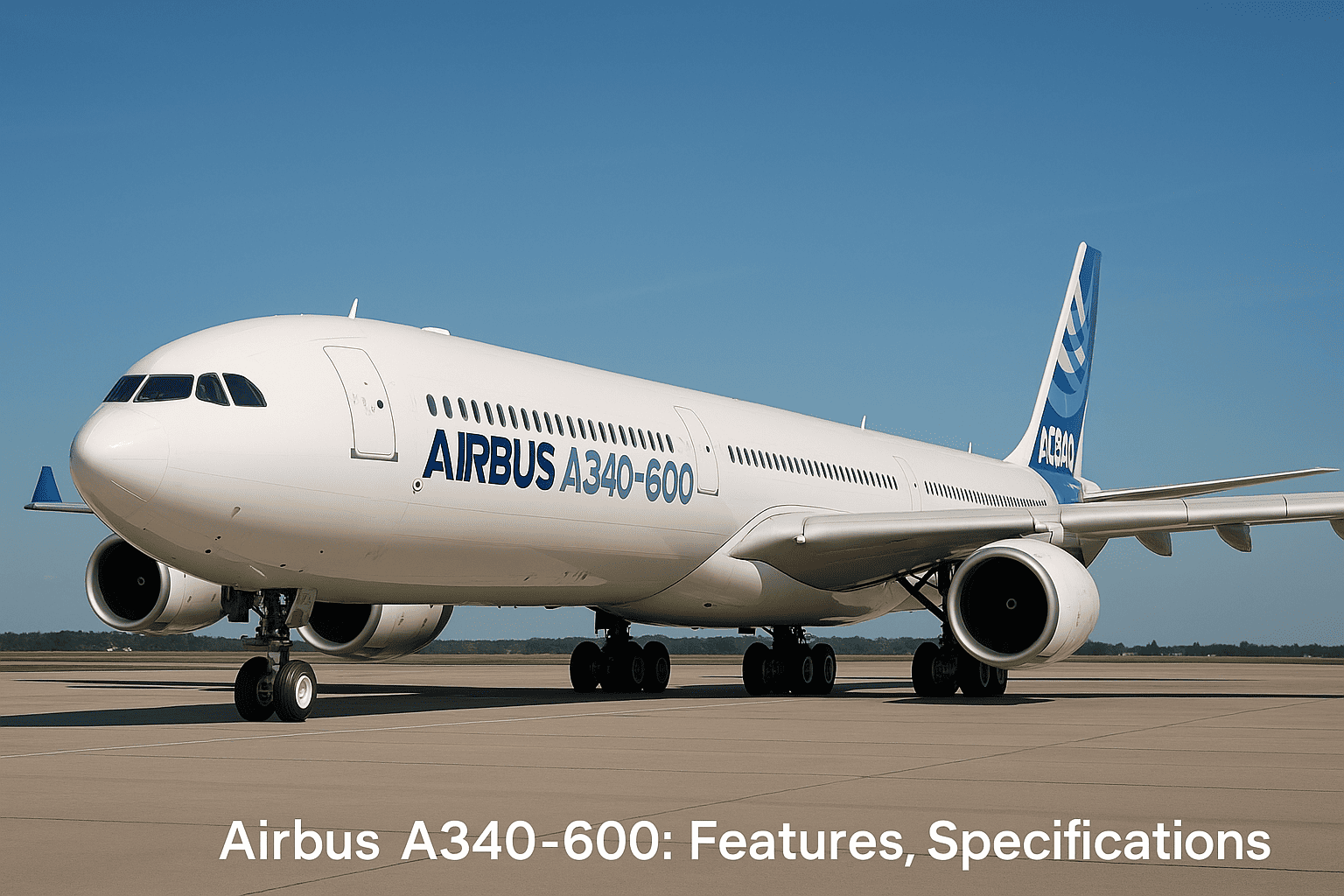
The Airbus A340-600 holds the distinction of being the world’s second longest passenger aircraft, stretching an impressive 75.3 meters from nose to tail. This long-haul, wide-body jet combines power and efficiency with its distinctive four-engine configuration, enabling it to conquer vast distances effortlessly.

  • Maximum range – 12,900 kilometers
  • Fuel efficiency – 4.1 liters per 100 kilometers per passenger
  • Typical passenger capacity – 297 in three-class configuration
  • Cruising speed – 885 km/h
  • Maximum altitude – 12,600 meters

Introduction to the Airbus A340-600

Beyond its impressive dimensions, the A340-600 delivers exceptional comfort and advanced technology. The aircraft’s quiet engines and spacious cabin create an optimal environment for long-haul travel, while its robust engineering supports substantial operational capabilities.

SpecificationMeasurement
Wingspan63.45 meters
Height17.29 meters
Maximum takeoff weight368,000 kg
Landing weight259,000 kg

Development and History

Launched in 1997, the A340-600 program marked Airbus’s ambitious entry into the high-capacity, long-range market. The aircraft’s first flight occurred in April 2001, with Virgin Atlantic introducing it to commercial service in August 2002. The development focused on incorporating cutting-edge technologies while ensuring compliance with ETOPS regulations for enhanced routing flexibility.

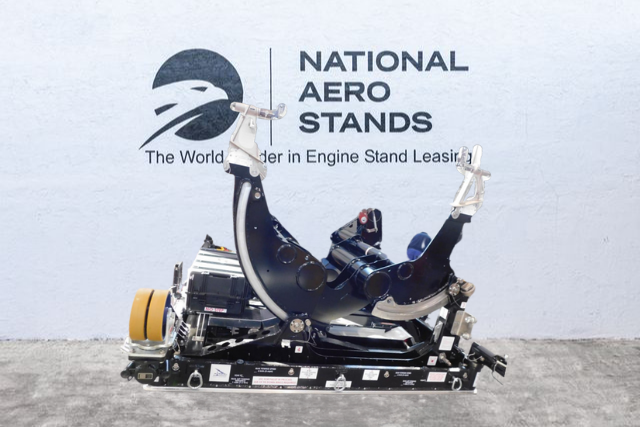
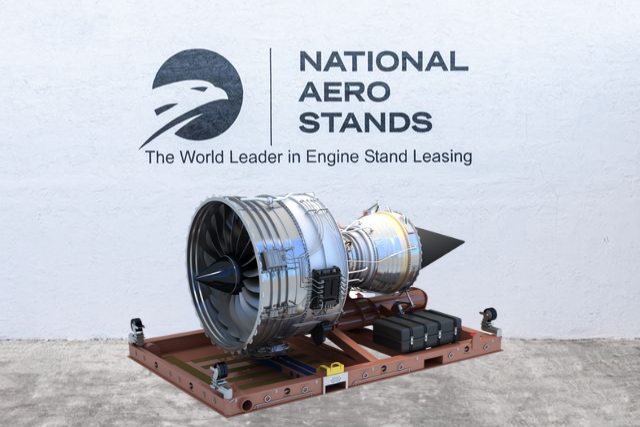
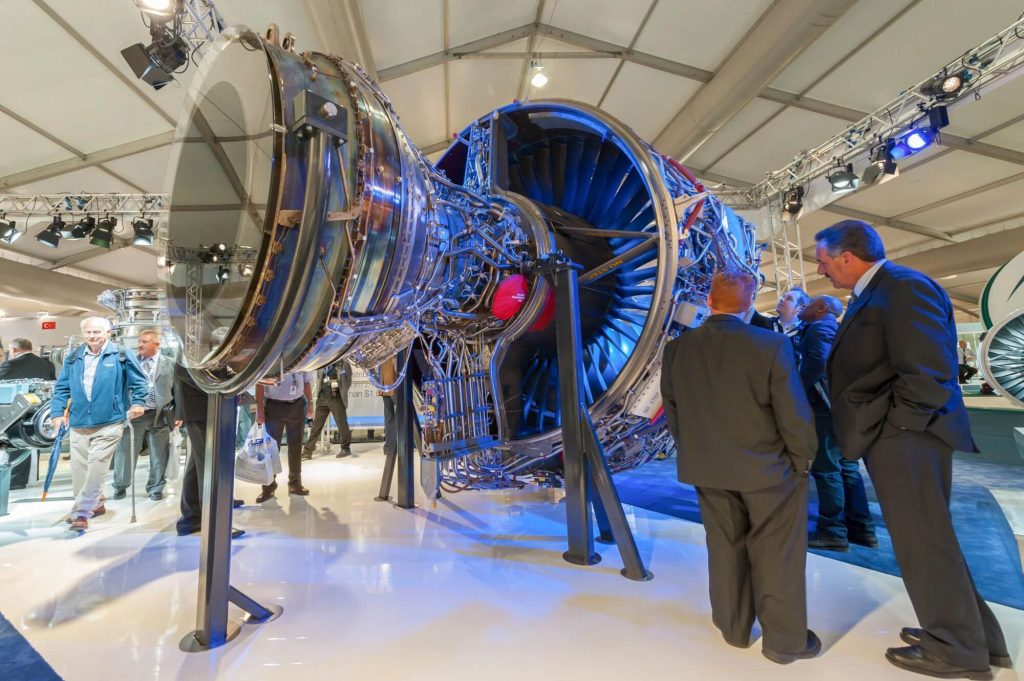
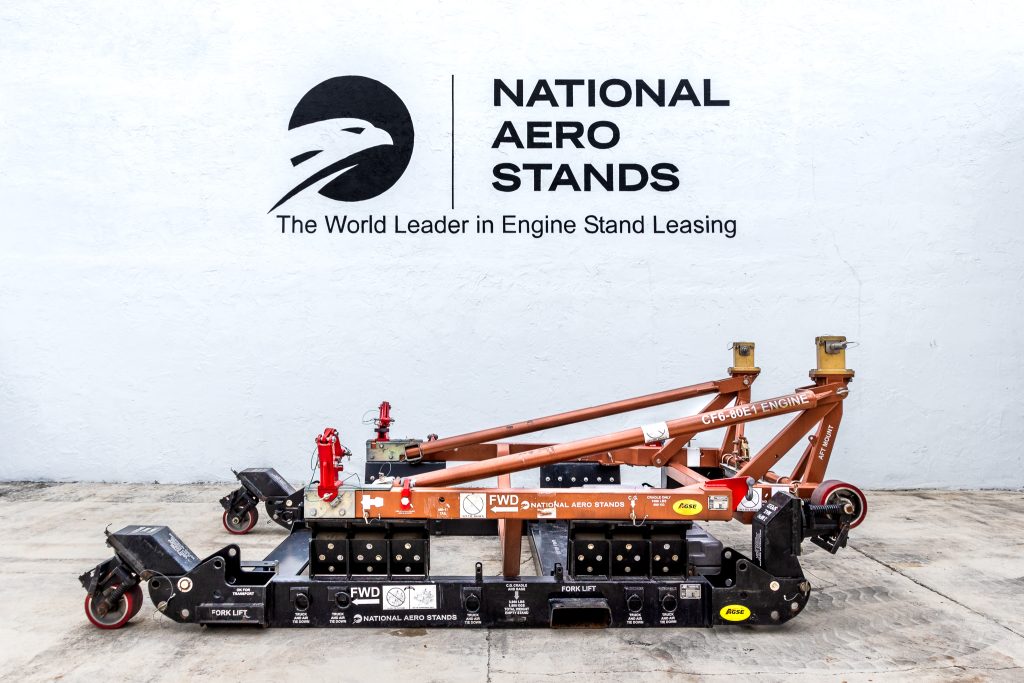
Engine Stand Trent 500/700

Design and Features of the Airbus A340-600

The A340-600’s design exemplifies the perfect balance between form and function. Its four-engine configuration not only provides exceptional power but also enables operations from high-altitude airports and ETOPS-restricted routes. The aircraft’s impressive fuel efficiency of 4.1 liters per 100 kilometers per passenger demonstrates Airbus’s commitment to sustainable aviation.

Exterior Design and Aerodynamics

The A340-600’s exterior features a unique combination of aerodynamic efficiency and structural innovation. Its distinctive main landing gear configuration, featuring an extra central bogey, ensures optimal weight distribution and versatile airport operations.

Interior and Cabin Comfort

The cabin interior prioritizes passenger comfort with its generous 5.3-meter width and flexible seating arrangements. A typical three-class configuration includes:

  • 8 first class suites
  • 44 business class seats
  • 32 premium economy seats
  • 213 economy class seats
  • Enhanced natural lighting through larger windows
  • Advanced climate control and lighting systems

Specifications of the Airbus A340-600

As the world’s second longest passenger jet, the A340-600’s impressive specifications make it ideal for ultra-long-haul operations. Its substantial maximum takeoff weight of 368,000 kg and extensive range of 12,900 km enable efficient operations between major global hubs, while maintaining optimal passenger comfort and operational efficiency.

Technical Specifications

SpecificationValue
Fuselage diameter5.64 meters
Cabin width5.3 meters
Maximum cruising speed885 km/h (Mach 0.86)
Operating ceiling12,600 meters (41,000 feet)
Maximum landing weight259,000 kg
Operational empty weight177,800 kg

The A340-600’s advanced avionics and fly-by-wire control system complement these impressive specifications, ensuring optimal performance during long-haul operations. The spacious cabin dimensions contribute significantly to passenger comfort, while the aircraft’s weight specifications allow for substantial payload capacity across its operational range.

Engine and Performance

  • Engine type: Four Rolls-Royce Trent 500
  • Thrust per engine: 56,000 lbf (249 kN)
  • Fan diameter: 2.47 meters (8.1 feet)
  • Fuel efficiency: 4.1 liters per 100 kilometers per passenger
  • Maximum range: 12,900 kilometers

The four-engine configuration provides exceptional takeoff performance, particularly beneficial for operations from high-altitude airports and in hot conditions. This unique setup offers advantages over twin-engine aircraft in challenging environments, making the A340-600 a versatile choice for diverse route networks.

Performance and Efficiency of the Airbus A340-600

The A340-600 exemplifies the pinnacle of long-haul aviation engineering, delivering exceptional performance across vast distances. Its four-engine configuration provides unmatched versatility, enabling operations from challenging airports while maintaining optimal efficiency at high altitudes.

The aircraft’s ability to cover 12,900 kilometers non-stop opens up numerous possibilities for airlines, facilitating direct connections between distant cities. This impressive range, combined with its adaptability to various operational environments, positions the A340-600 as a crucial asset for airlines operating extensive international networks.

Range and Fuel Efficiency

The A340-600’s remarkable fuel efficiency of 4.1 liters per 100 kilometers per passenger sets a high standard in its class. This efficiency translates into reduced operational costs and environmental impact, making it an attractive option for airlines focused on sustainability.

The aircraft’s advanced aerodynamics and efficient Rolls-Royce Trent 500 engines ensure competitive fuel economy across various operational scenarios, though actual performance may vary based on payload, route, and weather conditions.

Operational Performance

  • Cruising speed: 885 km/h (Mach 0.86)
  • Maximum ceiling: 12,600 meters (41,000 feet)
  • Advanced avionics system
  • Fly-by-wire control system
  • Superior takeoff performance in challenging conditions

These capabilities, combined with the aircraft’s impressive payload capacity and range, establish the A340-600 as a reliable and versatile choice for airlines operating diverse long-haul routes across global markets.

Summary and Key Takeaways: Airbus A340-600 Features, Specifications, and Performance

The Airbus A340-600 represents a masterpiece of aviation engineering, combining exceptional range capabilities with outstanding operational efficiency. As the world’s second-longest passenger aircraft at 75.3 meters, it accommodates up to 297 passengers in a typical three-class configuration while maintaining impressive fuel efficiency.

The aircraft’s four-engine design provides unique operational advantages, particularly for challenging airports and routes. With its combination of range, efficiency, and flexibility, the A340-600 continues to serve as a valuable asset for airlines operating global long-haul routes.

Read more:

PW2000: Overview and Specifications

The PW2000 engine series, developed by Pratt & Whitney, represents a significant milestone in aviation technology. This sophisticated turbofan engine was specifically designed to power the Boeing 757, entering service in 1984. The engine’s core components include:

  • 78.5-inch-wide fan
  • Four-stage Low-Pressure Compressor (LPC)
  • 12-stage High-Pressure Compressor (HPC)
  • Two-stage High-Pressure Turbine (HPT)
  • Five-stage Low-Pressure Turbine (LPT)

History and Development of the PW2000

The PW2000’s journey began in December 1979, marking a collaborative venture between Pratt & Whitney and MTU Aero Engines. Key milestones include:

  • October 1984 – First commercial flight on Boeing 757
  • September 1991 – Powered first C-17 military transport flight
  • April 1992 – Achieved 180-minute ETOPS approval
  • April 1993 – First flight of Russian Ilyushin IL-96
  • March 1995 – PW2043 variant certification
  • July 2002 – Boeing 757-300 service entry

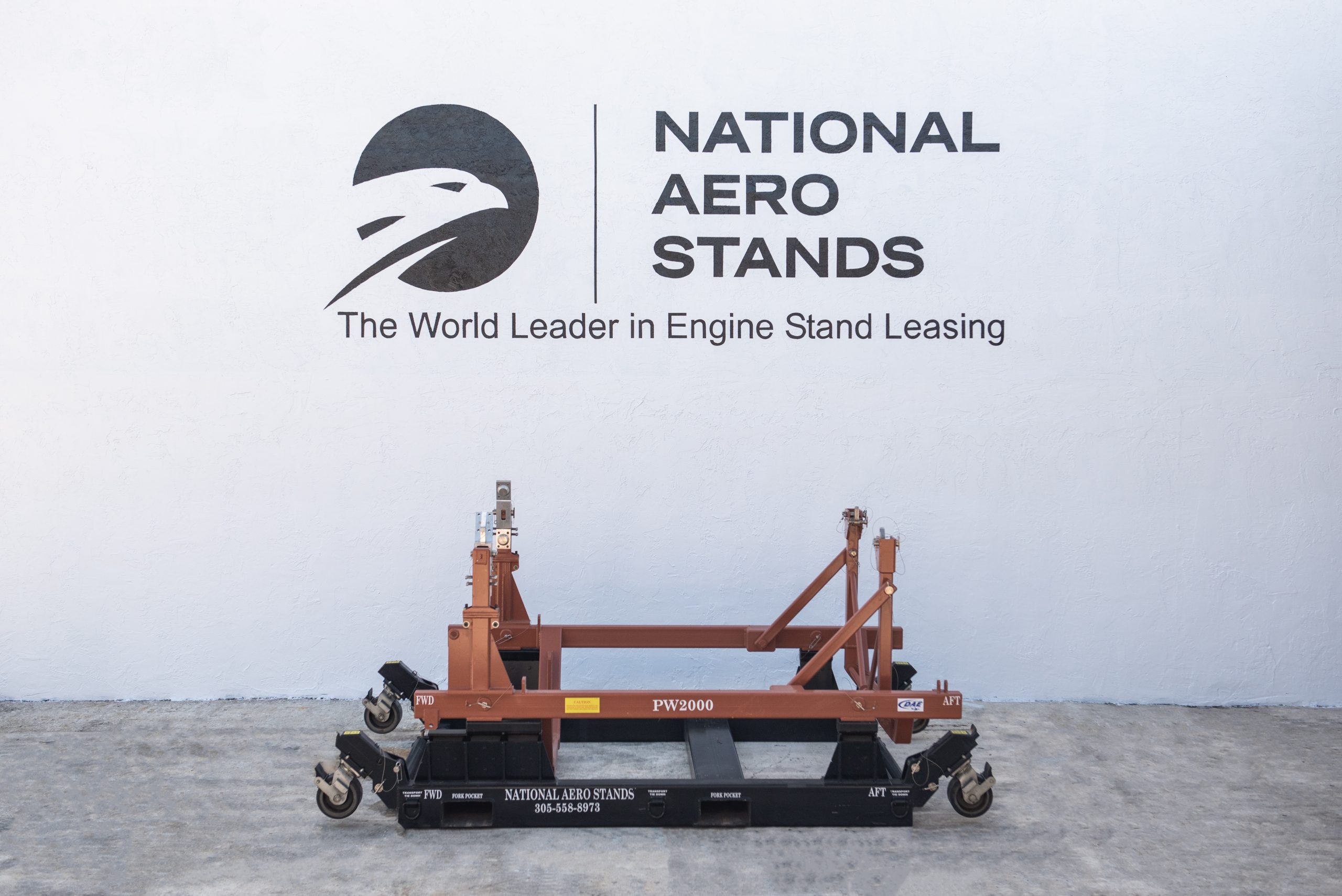
Engine Stand PW2000

Key Features of the PW2000

The PW2000 engine incorporates several innovative features that set new industry standards:

FeatureDescription
FADEC SystemFirst commercial engine with dual-channel Full Authority Digital Engine Control
Active Clearance ControlOptimizes gap between rotating and stationary components
Thrust Range37,500 to 43,000 pounds
Bypass Ratio6-to-1
Pressure Ratio27.6 to 31.2

PW2000 Specifications and Performance

The engine’s specifications demonstrate its impressive capabilities:

  • PW2037 variant: 38,250 lbs thrust
  • PW2040 variant: 41,700 lbs thrust
  • Length: 3,729 mm (146.8 inches)
  • Maximum diameter: 2,150 mm (84.6 inches)
  • Weight: 3,311 kg (7,300 lbs)

Performance Metrics of the PW2000

The engine excels in various performance aspects:

  • Maximum thrust: 191 kN (42,940 lbs)
  • Pressure ratio: 32.1:1
  • Fan pressure ratio: 1.63
  • Flat rated temperature: 96 degrees Fahrenheit
  • Optimized for high-altitude and hot-climate operations

Applications and Compatibility of the PW2000

The PW2000’s versatility is demonstrated through its successful implementation in both commercial and military aircraft. Its robust design and reliable performance have made it a preferred choice for medium to long-haul operations, proving its worth across diverse operational requirements and environmental conditions.

Aircraft Compatible with the PW2000

The PW2000 engine series demonstrates its versatility across various aircraft platforms. The Boeing 757, a medium to long-range narrow-body airliner, serves as the primary commercial application, where the engine’s powerful and efficient performance has contributed significantly to the aircraft’s success and longevity.

  • Boeing 757 – Primary commercial application
  • Boeing C-32A – Military VIP transport variant of the 757
  • Boeing C-17 Globemaster III – Utilizing F117-PW-100 variant
  • Ilyushin Il-96M – Russian-built commercial aircraft

Military and Commercial Use of the PW2000

SectorApplicationsKey Features
CommercialBoeing 757Efficient medium to long-haul operations, cost-effective performance, Delta Air Lines as launch customer
MilitaryC-17 Globemaster III, C-32AF117 military designation, logistics support, VIP transport (Air Force Two)

Maintenance and Support for the PW2000

The PW2000 engine’s longevity relies on comprehensive maintenance and specialized support services. Leading providers like MTU Maintenance Hannover offer complete service packages that ensure optimal performance throughout the engine’s service life. The support ecosystem extends beyond routine maintenance to include on-wing support, emergency assistance, and access to a global network of spare parts and expertise.

Routine Maintenance Procedures for the PW2000

  • Regular borescope inspections for internal component examination
  • Oil analysis for detecting microscopic metal particles
  • Scheduled overhauls at predetermined flight hours/cycles
  • Component replacements and system recalibration
  • Performance checks and monitoring

Support and Service Options for the PW2000

The PW2000 benefits from diverse support options through authorized providers like Pratt & Whitney, MTU Maintenance Hannover, and CTS Engines. These services include:

  • Comprehensive MRO (Maintenance, Repair, and Overhaul) services
  • Fleet management programs
  • Predictive maintenance solutions using data analytics
  • Real-time monitoring systems
  • Technical support hotlines
  • Global spare parts network access
  • Customized service agreements

Read more:

GEnx Engine: Overview, Features, and Benefits

The GEnx engine, manufactured by GE Aerospace, stands as a pinnacle of commercial aviation technology. This widebody jet engine, specifically designed for large aircraft, combines exceptional fuel efficiency with significant noise reduction and low emissions. As a smaller core variant of the celebrated GE90 engine, it has been meticulously engineered to meet next-generation aircraft requirements.

History and Development of the GEnx Engine

GE Aerospace’s vision for a more efficient and environmentally conscious propulsion system led to the GEnx’s creation. The engine’s significance was cemented in 2016 when Boeing selected it alongside the Rolls-Royce Trent 1000 for their aircraft, following rigorous competitive evaluation.

Applications of the GEnx Engine

The GEnx engine powers two of Boeing’s most advanced commercial aircraft:

  • Boeing 787 Dreamliner – Providing optimal power-to-efficiency ratio for long-haul flights
  • Boeing 747-8 – Demonstrating scalability while maintaining impressive fuel economy

GEnx-1B-2B Rollover

Key Features of the GEnx Engine

The GEnx engine introduces revolutionary advancements in aviation technology, notably eliminating traditional bleed air systems in favor of more efficient electrical systems. This innovative approach significantly enhances overall engine performance and efficiency.

Advanced Materials and Design

  • Lightweight composite materials for reduced weight and maintained strength
  • Specialized coatings for enhanced durability
  • Innovative clean-burning combustor
  • Counter-rotating architecture
  • Virtually maintenance-free fan module

Fuel Efficiency and Performance

Performance MetricAchievement
Fuel Consumption ImprovementUp to 15% better than predecessors
Dispatch Rate99.98%
Time on Wing3x higher than previous models
Significant Events3x fewer than earlier models

Environmental Impact and Sustainability

  • CO2 emissions reduction of 1.4% per year
  • Emissions up to 95% below current regulatory limits
  • Optimized energy use through elimination of bleed air system
  • Reduced overall carbon footprint per flight

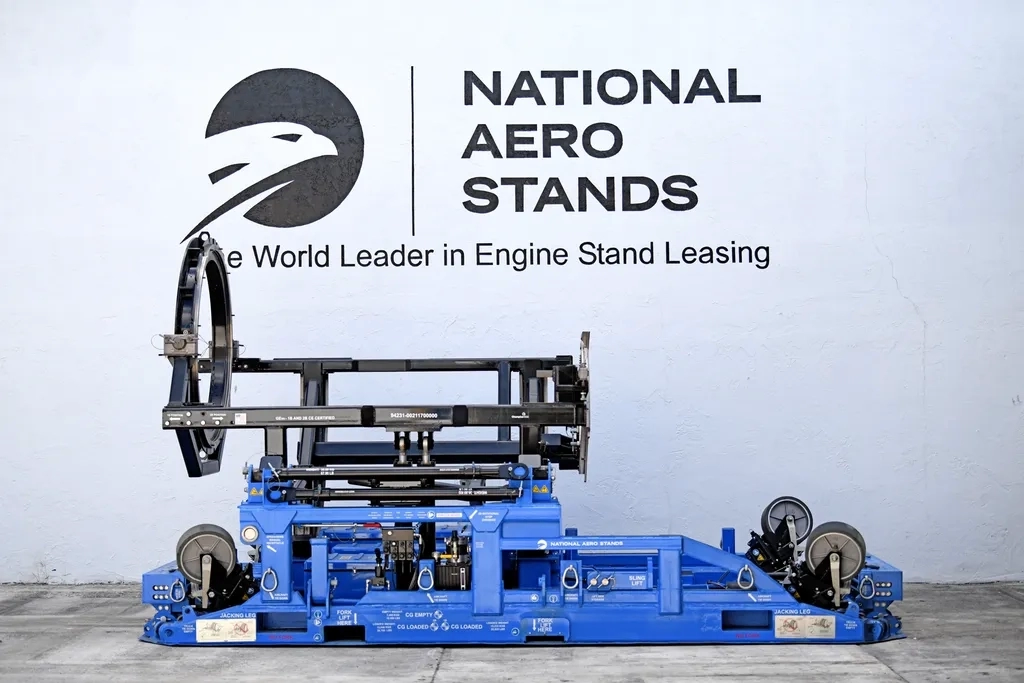
Engine Stand GEnx-1B Rollover

Benefits of Using the GEnx Engine

The GEnx engine delivers substantial advantages for airlines and operators, including 20% longer on-wing time and a 30% reduction in parts compared to predecessors. These improvements, combined with its exceptional dispatch rate of 99.98%, make it a cost-effective and reliable choice for modern commercial aviation.

Cost Efficiency and Maintenance

  • 30% reduction in total parts compared to previous models
  • 20% longer time on wing, reducing maintenance frequency
  • Carbon-fiber composite materials in fan case and blades for enhanced corrosion resistance
  • Reduced line maintenance requirements
  • 15% improvement in specific fuel consumption

These innovative design features translate into substantial cost savings for airlines, making the GEnx an economically attractive option for long-term fleet planning. The streamlined design not only simplifies maintenance procedures but also contributes to reduced operational costs across the engine’s lifecycle.

Enhanced Performance and Reliability

The following table highlights key performance and reliability metrics achieved through the use of advanced composite materials and innovative engineering solutions. These improvements have resulted in measurable operational benefits.

Performance MetricAchievement
Dispatch Rate99.98%
Noise ReductionSignificant improvement through composite materials
Thrust-to-Weight RatioEnhanced through lightweight materials

The GEnx’s exceptional reliability ensures minimal operational disruptions, crucial for maintaining airline schedules and customer satisfaction. Its advanced design, incorporating lightweight composite materials and innovative aerodynamics, delivers superior performance while improving the experience for both passengers and airport communities.

Innovations and Future of the GEnx Engine

The GEnx engine represents a breakthrough in aircraft propulsion technology, establishing new benchmarks for efficiency, performance, and environmental responsibility. As GE Aviation’s most advanced engine for large aircraft, it combines cutting-edge technology with exceptional operational capabilities.

Technological Advancements

  • Lightweight composite materials including additively manufactured parts
  • Carbon fiber composite fan blades and case
  • Clean-burning combustor for reduced emissions
  • Counter-rotating architecture
  • Advanced 3D aerodynamics in low-pressure turbine
  • Specialized protective coatings

Future Prospects and Developments

GE Aviation continues to advance the GEnx platform through ongoing research and development initiatives. Key focus areas include:

  • Integration of digital technologies and artificial intelligence for predictive maintenance
  • Exploration of advanced composites and additive manufacturing techniques
  • Development of alternative fuel capabilities
  • Enhancement of sustainable aviation technologies
  • Further improvements in fuel efficiency and emissions reduction

Read more:

Trent 800 Engine: Overview and Key Features

Discover the engineering marvel that revolutionized commercial aviation – the Rolls-Royce Trent 800 engine. This comprehensive guide explores how this remarkable high-bypass turbofan engine combines cutting-edge technology with exceptional performance to shape modern air travel.

The Rolls-Royce Trent 800 represents a pinnacle of aeronautical innovation in the commercial aviation industry. This high-bypass turbofan engine, distinguished by its unique three-shaft architecture, delivers exceptional performance for wide-body aircraft. The engine’s sophisticated design achieves optimal efficiency across various operating conditions while addressing crucial modern aviation concerns through:

  • Advanced fuel efficiency optimization
  • Significant noise reduction capabilities
  • Enhanced environmental performance
  • Superior reliability for long-haul operations
  • Innovative aerodynamic design

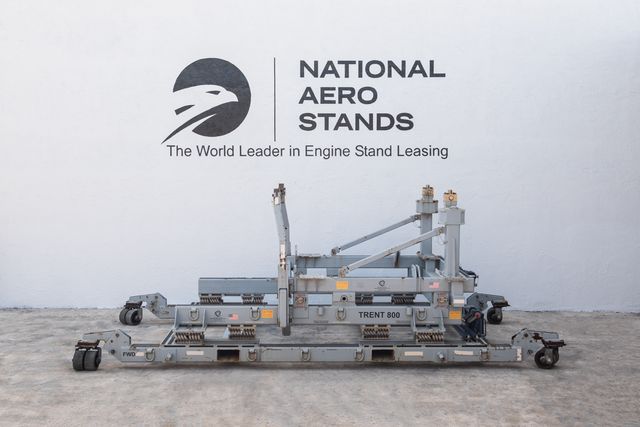
Trent 800 Engine Stand

Engine Stand Trent 800

Discover the reliable Trent 800 Engine Stand by National Aero Stands, designed for secure transportation and storage of engines.


History and Development of the Trent 800

The Trent 800’s journey began in the early 1990s as Rolls-Royce’s answer to Boeing 777’s power requirements. Certified in January 1995, the engine quickly established itself as an industry leader through continuous innovation and rigorous testing. The development process showcased Rolls-Royce’s commitment to excellence, incorporating extensive research and groundbreaking engineering solutions.

Key Features and Specifications

ComponentSpecificationOperating Speed
Low-pressure (LP) turbine5-stage axial3,300 rpm
Intermediate-pressure (IP) compressor8-stage7,000 rpm
High-pressure (HP) compressor6-stage10,611 rpm

Performance and Efficiency of the Trent 800

The engine’s exceptional performance stems from its innovative wide-chord fan blades and three-shaft design. These features enable the Trent 800 to achieve remarkable efficiency gains while maintaining optimal operation across various flight conditions.

Performance Metrics and Capabilities

  • Maximum thrust output – up to 95,000 lbf (422 kN)
  • Bypass ratio – approximately 6:1
  • Adaptable performance across different altitudes
  • Advanced thrust management systems
  • Consistent efficiency throughout flight envelope

Fuel Efficiency and Environmental Impact

The Trent 800 EP (Enhanced Performance) package, introduced in September 2013, demonstrates remarkable efficiency improvements:

  • Annual fuel cost savings of up to $200,000 per aircraft
  • Reduced environmental footprint through lower emissions
  • Advanced noise-reduction technologies
  • Compliance with stringent environmental regulations
  • Optimized aerodynamics for better fuel consumption

Technological Innovations in the Trent 800

The engine’s technological prowess is evident in its advanced computational fluid dynamics and sophisticated control systems. The three-shaft architecture, combined with real-time optimization capabilities, ensures peak performance throughout every flight phase, establishing the Trent 800 as a leader in commercial aviation propulsion technology.

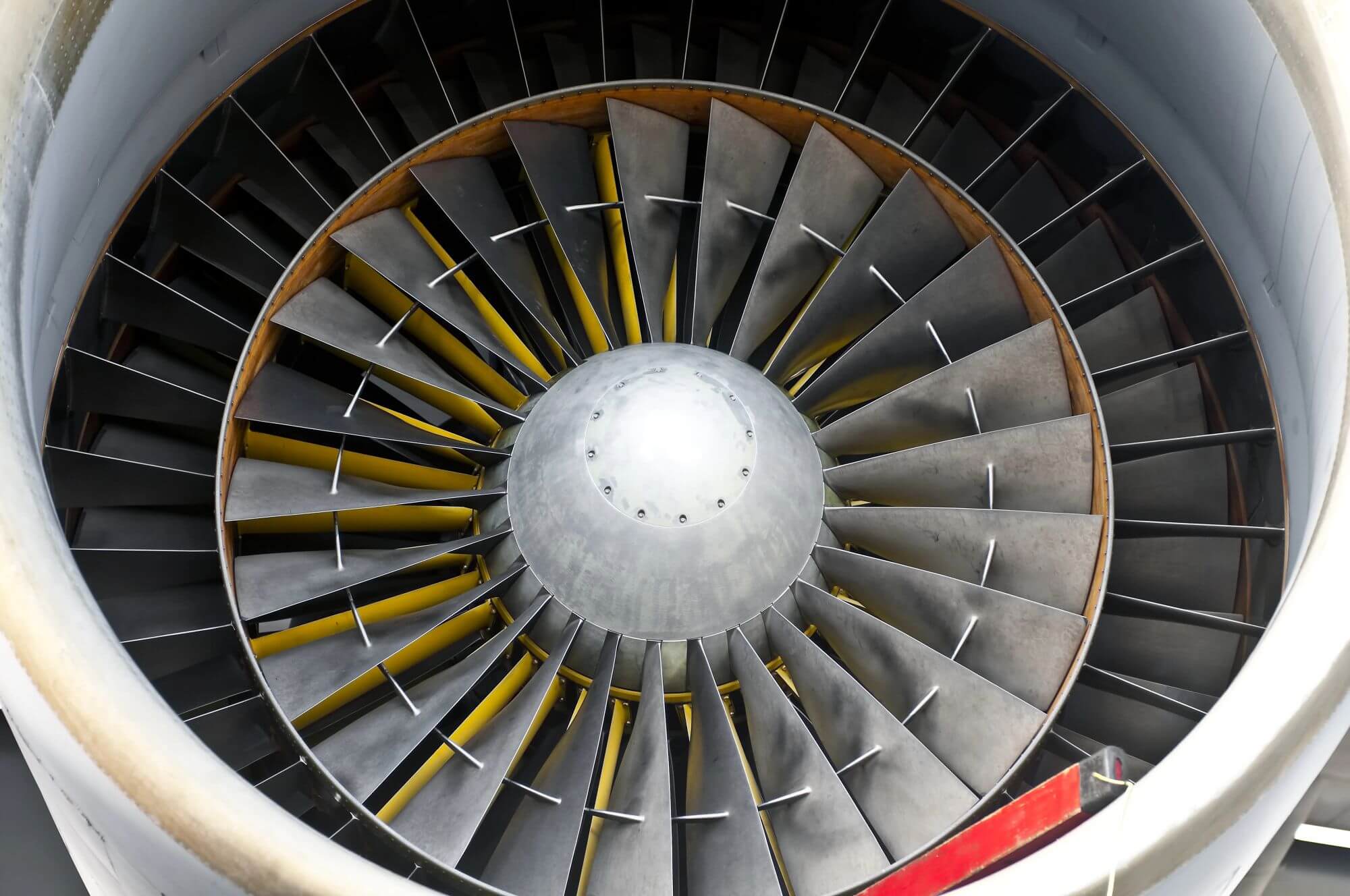
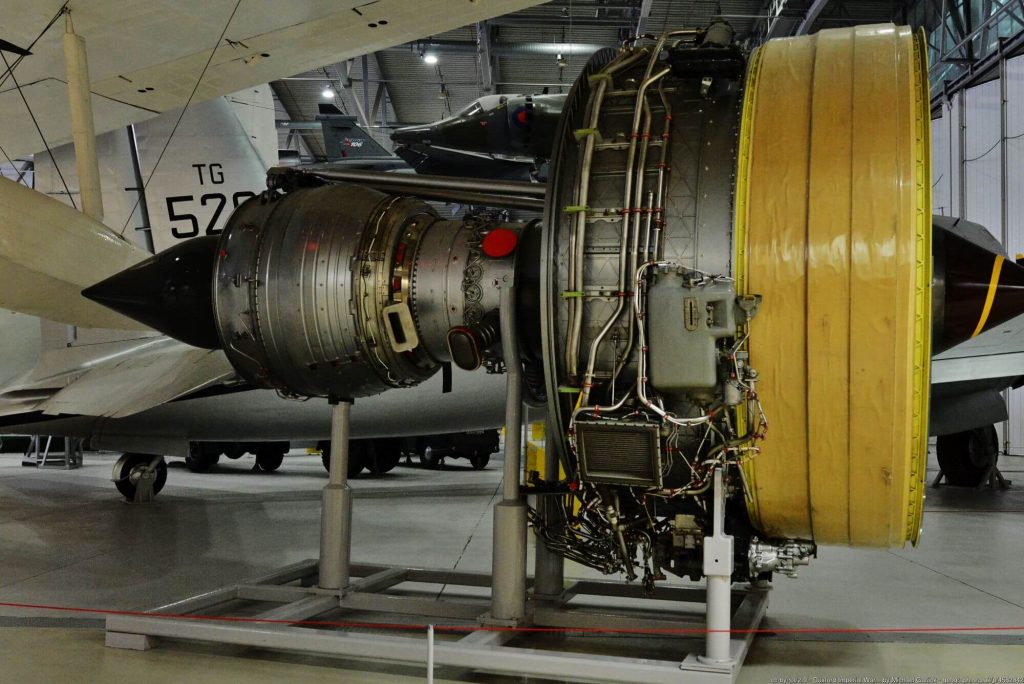
Trent 800 Engine
Duxford Imperial War Museum: Rolls Royce Trent 800 aero engine, taken Friday, 24 April, 2015
cc-by-sa/2.0 – © Michael Garlick – geograph.org.uk/p/4582842

Advanced Engineering and Design

The Trent 800’s engineering excellence is showcased through its sophisticated axial flow, high bypass turbofan design. The engine features a meticulously engineered three-shaft configuration with:

  • 5-stage axial low-pressure (LP) turbine operating at 3,300 rpm
  • 8-stage intermediate-pressure (IP) compressor running at 7,000 rpm
  • 6-stage high-pressure (HP) compressor operating at 10,611 rpm

The engine’s advanced combustion system incorporates a single annular combustor liner with 24 fuel nozzles, enabling precise fuel-air mixing. This sophisticated design delivers dual benefits: enhanced fuel efficiency and reduced emissions, meeting stringent environmental standards while incorporating cutting-edge noise reduction technologies.

Innovative Materials and Manufacturing

Rolls-Royce’s commitment to innovation is evident in the Trent 800’s material composition and manufacturing processes. The engine incorporates lightweight composite materials throughout its structure, optimizing weight reduction while maintaining robust structural integrity. These advanced materials contribute significantly to improved fuel efficiency and extended operational lifespan.

The manufacturing process leverages state-of-the-art techniques, including additive manufacturing for specific components. This advanced approach enables the creation of intricate geometries previously unattainable through conventional methods, resulting in enhanced performance, durability, and maintenance efficiency.

Maintenance and Reliability of the Trent 800

The Trent 800’s exceptional reliability stems from its meticulous engineering, advanced materials, and comprehensive maintenance program. The engine’s innovative design features both fixed and hinged cowls, complemented by a powered door opening system (PDOS) utilizing hydraulic actuators. This configuration streamlines maintenance access and reduces operational downtime.

Maintenance Practices and Procedures

Rolls-Royce has established a comprehensive maintenance framework supported by essential documentation:

  • Installation Manual EL 2839
  • Operating Instructions F-Trent-777
  • Engine Manual E-Trent-2RR
  • Maintenance Manual D633W101-RRY
  • Time Limits Manual T-Trent-2RR

The maintenance program incorporates advanced diagnostic tools and predictive maintenance techniques, enabling proactive issue identification and resolution while optimizing maintenance schedules and extending operational life.

Reliability and Longevity

The Trent 800’s reliability record is exemplary, achieving a dispatch reliability rate exceeding 99.96% since June 1998. This outstanding performance continues to improve through ongoing refinements and updates to both engine design and maintenance procedures.

Rolls-Royce’s dedication to continuous improvement involves constant analysis of in-service performance data, leading to refined maintenance practices and targeted upgrades. This commitment has established the Trent 800 as an industry benchmark for reliability in commercial aviation.

Applications and Usage of the Trent 800

The Trent 800 excels in commercial aviation, particularly in powering wide-body aircraft with its impressive thrust output exceeding 400kN. Its primary application is as the powerplant for the Boeing 777 series, where its combination of high thrust and fuel efficiency has contributed significantly to the aircraft’s commercial success.


Trent 800 Engine Stand

Engine Stand Trent 800

Discover the reliable Trent 800 Engine Stand by National Aero Stands, designed for secure transportation and storage of engines.


Commercial Aviation Applications

The engine’s versatile design enables optimal performance across various flight conditions, making it ideal for diverse route networks. Its exceptional thrust capability, exceeding 300kg, allows airlines to maximize payload capacity and range while maintaining operational efficiency and meeting environmental standards.

Future Prospects and Developments

The Trent 800’s evolution continues as Rolls-Royce maintains substantial investment in its development program. The engine’s future roadmap encompasses several key focus areas:

  • Environmental compliance adaptations to meet stricter emissions regulations
  • Advanced noise reduction technologies implementation
  • Integration of cutting-edge materials for enhanced efficiency
  • Exploration of sustainable aviation fuel compatibility
  • Development of hybrid-electric system capabilities

The engine’s established success in powering wide-body aircraft positions it strategically for next-generation aircraft applications. Rolls-Royce’s commitment to innovation ensures the Trent 800 remains at the forefront of aviation technology through:

  • Implementation of advanced manufacturing techniques
  • Enhanced environmental performance optimization
  • Integration of smart monitoring systems
  • Improved fuel efficiency technologies
  • Extended lifecycle management solutions

These ongoing developments reinforce the Trent 800’s competitive position in commercial aviation, ensuring its continued significance in shaping the future of sustainable air travel. The engine’s adaptability to emerging technologies and environmental requirements positions it as a crucial component in the aviation industry’s evolution toward more sustainable operations.

Read more:

Airbus Beluga: The Unique Transport Aircraft

Step aboard the remarkable world of aviation engineering with the Airbus Beluga, a transport aircraft that has redefined the possibilities of cargo transportation. This extraordinary aircraft, with its whale-like appearance, represents a pinnacle of innovative design and practical engineering that continues to shape the future of aviation logistics.

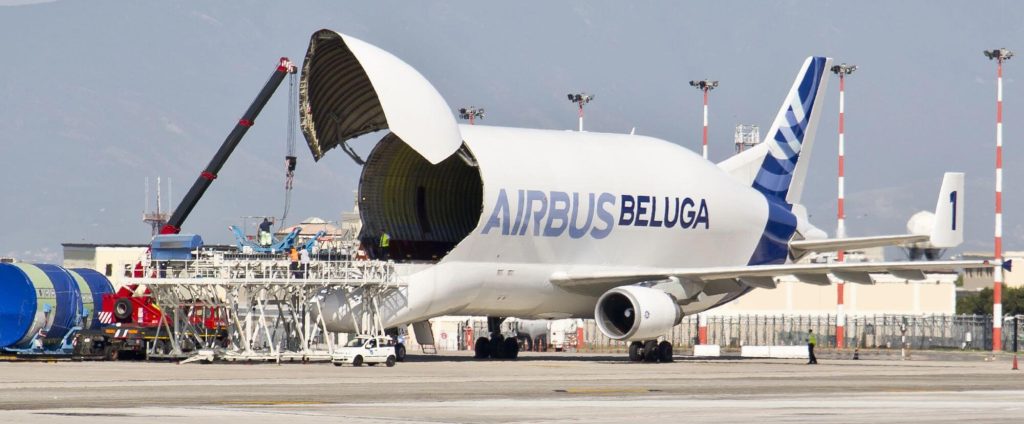
The Airbus Beluga, introduced in September 1995, stands as a testament to aviation engineering excellence. This remarkable aircraft, officially designated as the A300-600ST (Super Transporter), features a distinctive bulbous design that sets it apart from conventional aircraft. Its expansive cargo hold enables the transport of exceptionally large items with unprecedented efficiency.


Trent 1000/7000 APS Engine Stand for Airbus Beluga

Engine Stand Trent 1000/7000 APS

Discover the reliable Trent 1000/7000 APS Engine Stand by National Aero Stands, designed for secure transportation and storage of engines.


The Beluga serves dual purposes in modern aviation:

  • Primary transportation of oversized aircraft components between Airbus production facilities
  • Versatile cargo carrier for various industries requiring specialized transport solutions
  • Essential tool in streamlining global logistics operations
  • Key facilitator in international aerospace manufacturing
  • Strategic asset for specialized commercial transport needs

What Makes the Airbus Beluga Unique?

The Beluga’s extraordinary design mirrors its marine namesake, the beluga whale, but this resemblance serves a crucial functional purpose. The aircraft’s most distinctive features include:

  • Innovative hinged nose cone for efficient front-loading operations
  • Strategically positioned cockpit below the cargo floor
  • Cavernous cargo bay for exceptional payload capacity
  • Optimized aerodynamic design despite its unusual shape
  • Specialized loading systems for oversized cargo
Airbus Beluga

The Role of the Airbus Beluga in Aviation

In modern aviation logistics, the Beluga has become indispensable. Through Airbus Beluga Transport operations, it serves multiple sectors:

  • Aircraft manufacturing – transporting wings, fuselage sections, and major components
  • Space industry – moving satellites and specialized equipment
  • Industrial machinery – facilitating transport of oversized equipment
  • Commercial cargo – serving specialized transport needs across industries
  • International logistics – bridging manufacturing sites across Europe

History and Development of the Airbus Beluga

Born from the necessity to enhance Airbus’s logistics capabilities in the mid-1990s, the Beluga emerged as a revolutionary solution. Based on the A300-600 wide-body passenger jet, this unique aircraft has evolved from an internal logistics tool to a versatile commercial transport solution, particularly following the introduction of the larger A330-700L BelugaXL.

Origins and Evolution

The Beluga’s development story reflects Airbus’s commitment to innovation and efficiency. The aircraft’s evolution has been marked by continuous improvements and adaptations to meet growing industry demands, culminating in the strategic launch of Airbus Beluga Transport to serve third-party markets.

Key Milestones in the Beluga’s Journey

YearAchievement
1995Initial entry into service
Recent yearsCompletion of BelugaXL fleet deliveries
Latest developmentUS operations approval obtained

Design and Specifications of the Airbus Beluga

The Beluga’s design represents a masterful blend of form and function. Its distinctive whale-like silhouette houses a carefully engineered cargo bay capable of transporting entire aircraft sections, satellites, and large industrial components. This modified A300-600 platform demonstrates how innovative design can transform a passenger aircraft into an unparalleled cargo transport solution.

Technical Specifications

SpecificationMeasurement
Length56.15 meters (184 feet 3 inches)
Wingspan44.84 meters (147 feet 1 inch)
Height17.24 meters (56 feet 7 inches)
Maximum Payload47 tonnes (103,616 pounds)
Range1,665 kilometers (900 nautical miles)
Cruising Speed780 km/h (420 knots)
Cruising Altitude31,000 feet

The aircraft is powered by two General Electric CF6-80C2A8 engines, each delivering 257 kN (57,900 lbf) of thrust, making it remarkably efficient for its size and purpose.

Innovative Design Features

  • Hinged Nose Cone – swings upward to enable efficient front-loading of cargo, significantly reducing turnaround times
  • Lowered Cockpit – positioned below the cargo floor to maximize freight space while maintaining optimal flight characteristics
  • Specialized Lower Fuselage – designed to support the expanded upper fuselage
  • Enhanced Tail Section – engineered to ensure structural integrity and aerodynamic efficiency

Operational Capabilities and Fleet

The Airbus Beluga fleet demonstrates remarkable operational efficiency, with the BelugaST fleet operating at maximum capacity since 2017. The fleet maintains an intensive schedule of:

  • Five daily flights
  • Six-day work week
  • 10,000 annual flight hours
  • Enhanced capacity with sixth Beluga XL addition in June 2019
Airbus Beluga

Current Fleet and Operations

The fleet comprises two distinct aircraft types: the original BelugaST and the newer BelugaXL. A significant development occurred in January 2022 with the launch of Airbus Beluga Transport (AiBT), operated by Airbus Transport International (ATI). The operation achieved a major milestone in January 2024 by securing its air operator certificate (AOC), enabling commercial cargo transport services with BelugaST freighters.

Global Impact and Usage

The Beluga fleet has revolutionized global logistics, particularly in aerospace transportation. The launch of Airbus Beluga Transport has expanded its capabilities to serve diverse sectors, including:

  • Space satellite transportation
  • Industrial machinery movement
  • Specialized cargo solutions
  • International trade facilitation
  • Support for industries requiring oversized transport

The Future of the Airbus Beluga

While long-term plans for the BelugaST fleet remain under development, the establishment of Airbus Beluga Transport in January 2022 marks a strategic expansion into commercial markets. This evolution positions the aircraft to serve diverse industry needs while maintaining its crucial role in aerospace logistics.


Trent 1000/7000 APS Engine Stand for Airbus Beluga

Engine Stand Trent 1000/7000 APS

Discover the reliable Trent 1000/7000 APS Engine Stand by National Aero Stands, designed for secure transportation and storage of engines.


Upcoming Developments and Innovations

The future of the Airbus Beluga promises continued innovation and expansion. Key developments include:

  • New outsize cargo transportation services launched in January 2022
  • Potential enhancements to cargo capacity
  • Focus on improved fuel efficiency
  • Integration of advanced materials and technologies
  • Expanded applications across various industries

Challenges and Opportunities Ahead

The future of the Airbus Beluga presents a complex landscape of challenges and opportunities. The aircraft’s highly specialized nature creates specific market considerations that need careful navigation.Key Challenges:

  • Finding consistent demand beyond Airbus’s internal operations
  • Securing regular contracts for oversized cargo transport
  • Adapting to evolving market demands
  • Managing operational costs for specialized transport
  • Maintaining competitive advantage in niche markets

Market Opportunities:

  • Limited competition in high-capacity oversized cargo transport
  • Growing demand from satellite manufacturing industry
  • Expanding renewable energy sector requiring transport of large components
  • Specialized art logistics for oversized sculptures
  • Increasing complexity of global supply chains

The Airbus Beluga’s unique design and impressive payload capacity position it favorably to redefine logistics for oversized cargo. As global trade and industrial development continue to evolve, the aircraft’s specialized capabilities could play an increasingly crucial role in meeting complex transportation needs across various sectors.

Read more:

Trent 1000 Engine: Performance, Features, and Innovations

The Rolls-Royce Trent 1000 represents a groundbreaking achievement in aviation engineering, revolutionizing how we power modern aircraft. Let’s explore this remarkable engine’s capabilities, innovations, and impact on commercial aviation.

Overview of the Trent 1000 Engine

The Rolls-Royce Trent 1000 is a state-of-the-art high bypass turbofan engine specifically designed for the Boeing 787 Dreamliner. Its distinctive three-shaft architecture sets it apart from conventional designs, featuring three independent, coaxial shafts that work in perfect harmony.

  • Fan diameter: 2.85 m (9 ft 4 in), driven by Low Pressure (LP) shaft with six axial turbines
  • Intermediate Pressure (IP) spool: eight axial compressors with single turbine stage
  • High Pressure (HP) Compressor: six stages with counter-rotating single turbine stage

History and Development of the Trent 1000

Development began in the early 2000s, aimed at creating a more efficient and powerful engine for next-generation wide-body aircraft. The engine’s evolution reached a significant milestone with the introduction of the Trent 1000 TEN (Thrust, Efficiency, and New Technology) variant in December 2016, which exceeded performance expectations during testing.


Trent 1000 Engine Stand

Engine Stand Trent 1000

Discover the reliable Trent 1000 by National Aero Stands, designed for secure transportation and storage of engines.


Key Specifications of the Trent 1000

SpecificationDetails
Engine TypeThree-shaft high bypass ratio turbofan
Length4.738 m (186.5 in)
Fan Diameter285 cm (112 in)
Dry Weight Range5,936 – 6,120 kg (13,087 – 13,492 lb)
Maximum Thrust Range265.3 kN – 360.4 kN

Performance of the Trent 1000 Engine

The engine’s sophisticated three-shaft design enables optimal power distribution and efficiency. Its advanced combustion system, featuring a single annular combustor with 18 fuel spray nozzles, ensures precise fuel management and optimal performance across all flight phases.

Fuel Efficiency and Power Output

The high bypass ratio design significantly improves fuel efficiency while reducing noise levels. The improved High Pressure Turbine Blade (HPTB) design has doubled the Take-Off Weight capability, enhancing the engine’s power-to-weight ratio for increased payload capacity and range.

Reliability and Maintenance

  • Modular design allowing quick access for inspections and repairs
  • Advanced health monitoring systems for predictive maintenance
  • Comprehensive support network ensuring consistent performance
  • Top-class reliability indicators across all operational parameters
  • Streamlined maintenance procedures reducing operational costs

Features of the Trent 1000 Engine

The engine’s impressive dimensions and sophisticated design contribute to its exceptional performance. With a length of 4.738 m and a massive 2.85 m fan diameter, the Trent 1000 achieves remarkable efficiency while maintaining an optimal power-to-weight ratio, making it a cornerstone of modern commercial aviation.

Trent 1000 Engine

Advanced Technology and Design

The Trent 1000’s sophisticated compressor system showcases its advanced technological prowess through a three-tier configuration:

  • Single-stage low-pressure (LP) fan for initial air compression
  • Eight-stage intermediate-pressure (IP) compressor for enhanced flow management
  • Six-stage high-pressure (HP) compressor with counter-rotating design for maximized efficiency

The engine’s innovative combustion system features a single annular combustor equipped with 18 fuel spray nozzles, managed by an advanced Electronic Engine Control (EEC). This sophisticated setup ensures:

  • Optimal fuel burn efficiency
  • Maximized power output
  • Minimized emissions
  • Precise performance control across all flight conditions

Environmental Impact and Sustainability

Environmental FeatureBenefit
High bypass ratio configurationEnhanced fuel efficiency and reduced noise levels
Advanced combustion systemLower CO2 emissions per passenger mile
18-nozzle spray systemMore complete and efficient fuel burn

The engine’s environmentally-conscious design makes it an ideal choice for airlines prioritizing sustainability and compliance with strict airport noise regulations. Its forward-thinking features align perfectly with the aviation industry’s push toward greener operations and reduced environmental impact.

Innovations in the Trent 1000 Engine

The Trent 1000 TEN (Thrust, Efficiency, and New Technology) variant, introduced in December 2016, marks a significant milestone in aerospace engineering. This cutting-edge version, successfully tested on the Boeing 787 Dreamliner, exceeded pre-test predictions and established new industry benchmarks for power, efficiency, and reliability.


Trent 1000 Engine Stand

Engine Stand Trent 1000

Discover the reliable Trent 1000 by National Aero Stands, designed for secure transportation and storage of engines.


Cutting-edge Engineering Solutions

The engine’s three-shaft architecture represents a masterpiece of engineering innovation, featuring coaxial shafts that optimize power distribution across various flight conditions. This sophisticated design works in harmony with the advanced compressor system to maximize air compression and flow efficiency.

The integration of the single annular combustor with 18 spray nozzles, coupled with the Electronic Engine Control (EEC) system, delivers precise performance management while maintaining environmental sustainability.

Future Developments and Upgrades

Rolls-Royce’s commitment to innovation continues with the development of an improved High Pressure Turbine Blade (HPTB) design. This advancement promises to more than double the Take-Off Weight capability of Trent 1000-powered aircraft, significantly enhancing their operational flexibility.

These ongoing enhancements, particularly beneficial for the Boeing 787 Dreamliner fleet, focus on improving engine durability and reliability. By addressing previous concerns and enhancing overall performance, Rolls-Royce ensures the Trent 1000 remains at the forefront of next-generation aircraft propulsion technology.

Read more:

AE3007: Overview and Applications of the Rolls-Royce Engine

Discover the remarkable story of the Rolls-Royce AE3007, a groundbreaking turbofan engine that has transformed modern aviation. From powering luxury business jets to advanced military drones, this engineering marvel continues to shape the future of flight. Let’s explore what makes this powerhouse truly exceptional.

The Rolls-Royce AE3007 represents a pinnacle of aerospace engineering excellence. Developed by Rolls-Royce North America, this sophisticated turbofan engine shares its core design with the T406 (AE 1107) and AE 2100 engines. The ‘AE’ designation honors its heritage from the Allison Engine Company, symbolizing a legacy of innovation.


AE3007 Engine Stand

Discover the reliable AE3007 Engine Stand by National Aero Stands, designed for secure transportation and storage of engines.


Since its inaugural run in 1991, the AE3007 has achieved remarkable success with over 3,400 units produced. Its versatility spans from powering the high-performance Cessna Citation X to enabling cutting-edge unmanned aerial vehicles like the Boeing MQ-25 Stingray and Northrop Grumman’s advanced drones.

History and Development of the AE3007

The AE3007’s story began in 1988 through a strategic partnership between the Allison Engine Company and Rolls-Royce plc. Initially conceived as the RB580, a 33 kN (7,400 lbf) engine for the Short Brothers FJX regional jet, the project combined the robust T406 core with Rolls-Royce’s advanced low-pressure spool technology.

Despite Rolls-Royce’s withdrawal in late 1989, Allison persevered, refining the design until its successful debut in 1991. This determination marked the beginning of a new chapter in turbofan technology.

Key Features and Specifications of the AE3007

  • Wide-chord single-stage direct-drive fan for optimal performance
  • 14-stage axial-flow compressor with inlet guide vanes
  • Five variable-geometry-stator stages for superior compression ratios
  • Full annular combustion liner with 16 fuel nozzles
  • Two high-tension igniters for precise fuel combustion
  • Two-stage high-pressure turbine driving the compressor
  • Three-stage low-pressure turbine powering the fan
  • Advanced Full Authority Digital Engine Control (FADEC) system

Applications of the AE3007 Engine

The AE3007’s versatility shines through its diverse applications in both commercial and military aviation. Its modular design and advanced features have made it the preferred choice in the 8,000 lb thrust class, adapting seamlessly to various operational requirements.

Commercial Aircraft Using the AE3007

Aircraft TypeApplication
Embraer ERJ Family (145, 140, 135)Regional airline operations
Cessna Citation XHigh-speed business aviation
Embraer Legacy 600Luxury business transport

Military and Other Uses of the AE3007

  • Northrop Grumman RQ-4 Global Hawk – Long-endurance surveillance
  • MQ-4C Triton – Maritime surveillance operations
  • Boeing MQ-25 Stingray – Unmanned aerial refueling
  • Embraer R-99 – Airborne early warning and control

Performance and Efficiency of the AE3007

With over 32 million flying hours logged, the AE3007 has set impressive benchmarks in performance and reliability. An aircraft powered by this remarkable engine takes off or lands every 20 seconds somewhere globally, testament to its widespread adoption and dependability. Its sophisticated design ensures optimal thrust and fuel efficiency across diverse operational conditions.

Fuel Efficiency and Environmental Impact

The AE3007 engine stands as the most fuel-efficient powerplant in its class, delivering significant environmental benefits. Its advanced design achieves exceptional fuel economy while maintaining peak performance, creating a perfect balance between operational efficiency and environmental responsibility.

  • Reduced fuel consumption leading to lower operating costs
  • Minimized carbon footprint for equipped aircraft
  • Quietest engine in its thrust category
  • Compliance with stringent noise regulations
  • Reduced noise pollution in airport communities

Performance Metrics and Comparisons

Model SeriesWeightKey Features
AE 3007A/A1/A2/A3751.6 kg (1657 lbs)High thrust-to-weight ratio

The engine’s modular architecture incorporates several advanced components:

  • Single-stage fan design
  • 14-stage axial compressor with 6 variable vane stages
  • Two-stage high-pressure turbine
  • Dual single-channel FADEC units for precise control
  • Easy maintenance access points

Maintenance and Support for the AE3007

Rolls-Royce provides comprehensive support through two flagship maintenance programs: TotalCare® and CorporateCare®. These programs deliver predictable costs and expert support throughout the engine’s operational life, ensuring maximum availability and optimal performance.

Routine Maintenance Procedures

  • Regular borescope inspections
  • Fan shaft and carbon seal replacements
  • Fan trim balance checks
  • Vibration analysis
  • FOD (Foreign Object Damage) repairs

Each engine variant follows specific maintenance guidelines outlined in dedicated manuals – the AE 3007C uses CSP34012, while the AE 3007A references CSP34022.

Support and Service Networks

Rolls-Royce maintains a global network of authorized service centers, complemented by third-party providers like StandardAero. This comprehensive support system offers:

  • Quick Engine Change (QEC) capabilities
  • Accessory gearbox services
  • Mid-span bearing replacements
  • Engine leasing options
  • Worldwide spare parts distribution

Future Developments and Innovations in AE3007

Rolls-Royce continues to advance the AE3007 platform through cutting-edge technologies focused on weight reduction, improved aerodynamics, and enhanced digital capabilities. Research priorities include alternative fuel compatibility and environmentally friendly combustion processes.

Upcoming Variants and Upgrades

  • AE 3007N variant for Boeing MQ-25 Stingray
  • Potential 36 kN thrust variant development
  • Enhanced reliability features
  • Reduced maintenance requirements
  • Optimized performance for existing platforms

AE3007 Engine Stand

Discover the reliable AE3007 Engine Stand by National Aero Stands, designed for secure transportation and storage of engines.


Technological Innovations in Engine Design

The AE3007’s evolution is being shaped by cutting-edge technological advancements. Rolls-Royce continues to enhance the engine’s core strengths through several innovative approaches:

  • Advanced refinement of the 14-stage axial compressor using next-generation materials
  • Implementation of state-of-the-art manufacturing techniques
  • Enhanced direct drive turbofan configuration
  • Improved FADEC system integration
  • Weight reduction through innovative material science

Digital twin technology represents a transformative leap in the AE3007’s development cycle. This sophisticated approach enables:

  • Real-time performance optimization through detailed digital modeling
  • Predictive maintenance capabilities
  • Advanced operating condition simulations
  • Enhanced sensor integration and data analytics
  • Extended intervals between maintenance overhauls

Looking further ahead, the AE3007 is positioned to integrate with hybrid-electric systems, aligning with the aviation industry’s shift toward more sustainable operations. This strategic evolution promises to deliver cleaner, more efficient air travel while maintaining the engine’s renowned reliability and performance standards.

Main Photo: YSSYguy at English Wikipedia, CC BY-SA 3.0 https://creativecommons.org/licenses/by-sa/3.0, via Wikimedia Commons

Read more:

CF6 Engine: Overview and Key Features

Discover the remarkable CF6 engine, a masterpiece of aviation engineering that has revolutionized commercial flight. With over 8,500 units produced, this turbofan engine series continues to set industry standards for performance, reliability, and environmental responsibility. Let’s explore what makes this powerhouse of aviation so exceptional.

The CF6 engine, developed by GE Aviation, represents the pinnacle of turbofan engine technology in commercial aerospace. Its innovative modular design allows for easy maintenance and component interchangeability, while delivering exceptional performance through advanced aerodynamics and high efficiency.


CF6-80 Engine Stand

Discover the reliable CF6-80 by National Aero Stands, designed for secure transportation and storage of engines.


History and Development of the CF6 Engine

The CF6’s journey began in September 1967 when GE Aviation initiated its development. A significant milestone occurred in April 1968 when the CF6-6 was chosen to power the McDonnell Douglas DC-10 Series 10 aircraft, marking GE’s entry into commercial aviation.

  • CF6-6 – Original model
  • CF6-50 – Enhanced performance variant
  • CF6-80A – Advanced technology integration
  • CF6-80C2 – Improved efficiency model
  • CF6-80E1 – Latest generation with enhanced capabilities

Key Specifications of the CF6 Engine

SpecificationValue
Fan Diameter86.4 inches
Airflow1,300 lb/s
Bypass Ratio5.72
Overall Pressure Ratio24.3
Maximum Take-off Thrust41,500 lb
Weight3,379 kg (7,450 lb)

Performance and Efficiency of the CF6 Engine

The CF6 family has evolved significantly, with modern variants like the CF6-80E delivering up to 70,000 lbs. of thrust – nearly double the original CF6-6 model’s output. This remarkable advancement demonstrates the engine’s continuous technological evolution.

CF6 Engine

Fuel Efficiency and Environmental Impact

Modern CF6 engines achieve up to 15% better fuel efficiency compared to earlier models. The high bypass design, particularly in the CF6-80C2, delivers the lowest fuel burn in its thrust class, contributing significantly to reduced emissions and environmental sustainability.

Reliability and Maintenance of the CF6 Engine

  • Industry-leading reliability ratings
  • Specialized maintenance facilities worldwide
  • Triple the flights between overhauls compared to earlier versions
  • Reduced maintenance costs through innovative design
  • Expert care through dedicated service networks

Aircraft Compatibility and Applications

The CF6 engine’s versatility has made it a preferred choice for various aircraft types, from commercial airliners to military transport planes. Its scalable performance and robust design continue to meet diverse aviation needs, powering both twin-engine aircraft and large four-engine jumbo jets with remarkable efficiency.

Commercial Aircraft Using the CF6 Engine

The CF6 engine has established itself as a cornerstone of commercial aviation, powering an extensive range of wide-body aircraft. Its versatility spans across multiple manufacturers and aircraft types.

  • Boeing Aircraft – 747, 767 series
  • McDonnell Douglas – DC-10, MD-11
  • Airbus Aircraft – A300, A310, A330 series
Engine VariantThrust RatingAircraft Application
CF6-80C2B156,700 lbsBoeing 747-200/300
CF6-80C2B252,500 lbsBoeing 767-200ER/300ER

Military and Cargo Applications

The CF6 engine’s capabilities extend well beyond commercial passenger aviation, proving its worth in military and cargo operations. In military service, the engine operates as the F138, specifically modified for the U.S. Air Force’s C-5M Super Galaxy strategic airlifter.

In cargo aviation, the CF6 powers several prominent freighter aircraft:

  • Boeing 747 Freighter
  • McDonnell Douglas MD-11 Freighter
  • Military transport variants

Future Prospects and Innovations

The CF6 engine continues to demonstrate strong growth potential in the aviation sector. Industry experts, including Aviation Week & Space Technology’s Guy Norris, project an increase in CF6 production from 50 to 60-80 engines annually by 2020, driven by rising air cargo demand and ongoing Airbus A330 deliveries.

This growth trajectory reflects the CF6’s ability to adapt to evolving industry demands while maintaining its core reliability. The engine’s continuous improvement and innovation make it particularly well-positioned to address future aviation challenges, especially in areas of sustainability and operational efficiency.


CF6-80E1 Engine Stand

Engine Stand CFM56-7B

Discover the reliable CF6-80E1 by National Aero Stands, designed for secure transportation and storage of engines.


Technological Advancements in the CF6 Engine

  • Advanced cooling techniques for improved efficiency
  • Sophisticated clearance control systems
  • Aerodynamic modifications to blades and vanes
  • Integration of advanced materials
  • 3-D aero compressor technology
  • Modern control systems for enhanced performance

Sustainability and the Future of Aviation

GE Aviation’s commitment to sustainability is reshaping the CF6 engine’s evolution. Current development efforts focus on:

  • Enhanced fuel efficiency systems
  • Reduced emissions technology
  • Compatibility with sustainable aviation fuels (SAFs)
  • Noise reduction innovations
  • Environmental compliance improvements

As the aviation industry transitions toward greener operations, the CF6 engine’s adaptability to new environmental standards and eco-friendly technologies positions it as a key player in sustainable aviation’s future.

Main Photo: Hunini, CC BY-SA 4.0 httpscreativecommons.orglicensesby-sa4.0, via Wikimedia Commons

Read more:

Airbus A220: Features, Specs, and Benefits of the A220 Family

Discover the revolutionary Airbus A220 family, a game-changing addition to commercial aviation that’s reshaping how we think about regional and short-haul travel. Let’s explore what makes this aircraft series so exceptional and why it’s becoming increasingly popular among airlines worldwide.

Overview of the Airbus A220 Family

The Airbus A220 family represents a significant leap forward in commercial aviation, offering a modern and efficient solution for airlines operating regional and short-haul routes. This family of narrow-body airliners, developed by Airbus Canada Limited Partnership, includes two main variants: the A220-100 and the larger A220-300.

Originally conceived as the Bombardier CSeries, the A220 has evolved into a cornerstone of Airbus’s product lineup, combining profitability with superior passenger comfort.

Introduction to the A220 Series

  • Unique five-abreast seating configuration for enhanced passenger comfort
  • Advanced aerodynamics and state-of-the-art avionics
  • Fuel-efficient engines for reduced environmental impact
  • Perfect balance between larger aircraft comfort and smaller jet efficiency
  • Cutting-edge technology integration for optimal performance

History and Development of the A220

DateMilestone
July 13, 2008Program launch as Bombardier CSeries
September 16, 2013A220-100 maiden flight
December 18, 2015Transport Canada type certificate received
2018Airbus acquisition and rebranding as A220

PW1500 Engine Stand for Airbus A220

Engine Stand PW1500

Discover the reliable PW1500 Engine Stand by National Aero Stands, designed for secure transportation and storage of engines.


Key Features of the Airbus A220

The A220’s clean-sheet design emphasizes unmatched efficiency and superior passenger comfort, powered by state-of-the-art Pratt & Whitney PW1500G geared turbofan engines. This strategic positioning allows airlines to maximize profitability while minimizing environmental impact.

Innovative Design and Technology

  • Advanced fly-by-wire flight controls for enhanced precision
  • Spacious cabin design rivaling larger aircraft comfort
  • Innovative lavatory designs
  • Superior noise and vibration reduction technology
  • Optimized aerodynamics for better performance

Advanced Aerodynamics and Materials

  • Carbon composite wing for superior strength-to-weight ratio
  • Aluminium-lithium alloy fuselage construction
  • Meticulously designed wing for optimized lift and minimal drag
  • Enhanced durability through advanced material selection

Specifications of the Airbus A220

SpecificationA220-100A220-300
Length35.0 meters38.7 meters
Wingspan35.1 meters35.1 meters
MTOW63.7 tonnes70.9 tonnes
Passenger Capacity100-135120-160
Range3,600 nm (6,667 km)3,400 nm (6,297 km)

Technical Specifications and Performance

Both A220 variants are equipped with Pratt & Whitney PW1500G geared turbofan engines, delivering exceptional fuel efficiency and reduced environmental impact. The carefully engineered dimensions and technical specifications make these aircraft highly versatile and capable of serving various route networks with optimal performance.

Cabin Configuration and Comfort

The A220 family introduces groundbreaking standards in passenger comfort through its innovative cabin design. The aircraft features a distinctive five-abreast seating configuration, delivering wider seats and enhanced personal space compared to traditional regional jets. The cabin’s design prioritizes passenger well-being with expansive windows that bathe the interior in natural light, creating an atmosphere of spaciousness.

  • Airspace cabin with industry-leading overhead bin capacity
  • Enhanced storage space for improved boarding efficiency
  • Two flex zones in the A220-300 for customizable cabin layouts
  • Advanced noise reduction technology for quieter flights
  • Optimized cabin pressure and humidity levels
Airbus A220 specs

Benefits of the Airbus A220

The Airbus A220 family has transformed commercial aviation by delivering an exceptional combination of cutting-edge technology and operational efficiency. This innovative aircraft serves as a powerful tool for airlines, enhancing fleet performance while maintaining environmental responsibility.

  • Optimal positioning in the 100-150 seat market segment
  • Versatility for both short-haul and medium-haul operations
  • Enhanced route optimization capabilities
  • Improved profitability potential
  • Streamlined operational efficiency

Fuel Efficiency and Environmental Impact

Environmental BenefitImprovement
Fuel burn and CO₂ emissions25% reduction
NOx emissions50% decrease
Noise footprint50% reduction

Operational Cost Savings

  • 25% lower operating cost per seat
  • Reduced fuel consumption through advanced aerodynamics
  • Lower maintenance costs with optimized systems
  • Decreased landing and navigation fees
  • Reduced crew training costs through Airbus commonality
  • Enhanced revenue potential with quick turnaround times

Conclusion: The Future of the Airbus A220

The Airbus A220 has established itself as a revolutionary force in commercial aviation, with 392 deliveries as of January 2025. Its innovative design and impressive efficiency position it perfectly to address evolving airline and passenger needs, particularly in the growing focus on sustainability and operational optimization.


PW1500 Engine Stand for Airbus A220

Engine Stand PW1500

Discover the reliable PW1500 Engine Stand by National Aero Stands, designed for secure transportation and storage of engines.


Potential Developments and Market Outlook

  • Potential extended range version development
  • Ongoing aerodynamic and engine technology improvements
  • Increased adoption across global markets
  • Strong positioning for post-pandemic fleet optimization
  • Enhanced capabilities for both short and medium-haul routes

Read more:

Boeing 777: Features, Specifications, and Insights

Step aboard the remarkable Boeing 777, a masterpiece of aviation engineering that revolutionized long-haul air travel. This comprehensive guide explores the features, variants, and technological innovations that make the Triple Seven one of the most successful commercial aircraft ever produced.

Overview of the Boeing 777

The Boeing 777, affectionately known as the Triple Seven, represents a pinnacle of American aviation engineering. As the world’s largest twinjet and most-produced wide-body airliner, it successfully bridges the gap between Boeing’s 767 and 747 models, while replacing older DC-10 and L-1011 trijets.

  • Passenger capacity: 314-396 in typical three-class configuration
  • Distinctive design features: Low-wing position
  • Engine configuration: Underwing mounted
  • Landing gear: Tricycle retractable
  • Classification: Aerodrome Reference Code 4E and RFF Category 9

History and Development of the Boeing 777

The Boeing 777’s journey began in 1986 with studies for a higher-capacity 767. The project gained official status in October 1990 when United Airlines placed its inaugural order. Boeing’s innovative approach included consulting with eight major airlines to ensure the aircraft met industry needs.

MilestoneDate
Project Launch1986
Program Official StartOctober 1990
Prototype RolloutApril 1994
Maiden FlightJune 1994
Commercial Service EntryJune 1995

Key Features of the Boeing 777

The Boeing 777 stands out with its innovative design and advanced technology features:

  • Extended raked wingtips for enhanced fuel efficiency
  • GE90 engines producing 110,000-115,300 lbf of thrust
  • Boeing’s first fly-by-wire system
  • Advanced Electronic Flight Instrument System (EFIS)
  • Flight Envelope Protection
  • Spacious cabin with improved lighting
  • Larger overhead bins
Boeing 777 engine

Boeing 777 Models and Variants

The Boeing 777 family has evolved to meet diverse airline needs, with each variant offering unique capabilities:

ModelIntroduction YearKey Feature
777-2001995Original variant
777-200ER1997Extended range
777-3001998Increased capacity
777-300ER2004Extended range, higher capacity
777-200LR2006Ultra-long range
777F2009Freighter variant

Boeing 777-200 and 777-200ER

The foundational 777-200 models showcase impressive capabilities:

  • Passenger capacity: Up to 440 (single-class)
  • Typical two-class layout: 313 passengers
  • 777-200ER range: 7,725 nautical miles (14,305 km)
  • Engine options: Pratt & Whitney PW4000, General Electric GE90, Rolls-Royce Trent 800
  • Thrust range: 77,000-94,000 lbf

Boeing 777-300 and 777-300ER

The 777-300 variants represent the pinnacle of capacity and efficiency:

  • Length: 73.9 meters (242 feet 4 inches)
  • Standard two-class capacity: 396 passengers
  • Range (777-300ER): 7,370 nautical miles (13,650 km)
  • Engine: Exclusive GE90-115B
  • Cruise speed: Mach 0.84
  • Maximum takeoff weight: 351,530 kg (775,000 lb)

Boeing 777-200LR and 777F

The Worldliner and its cargo variant push the boundaries of range and utility:

  • 777-200LR range: 9,395 nautical miles (17,395 km)
  • Engine options: GE90-110B1 or GE90-115B
  • 777F payload capacity: 102 tons (224,900 lbs)
  • 777F range: 4,970 nautical miles (9,200 km) with full payload

Boeing 777X: The Next Generation

The Boeing 777X represents a significant evolution in the 777 family, incorporating revolutionary technologies and design enhancements. This next-generation aircraft, scheduled to enter service in 2026, features groundbreaking composite wings with innovative folding wingtips – a design that enables access to standard airport gates despite its increased wingspan.

  • Engine: New generation GE9X – the most efficient jet engine in its class
  • Enhanced fuel efficiency and environmental performance
  • 777-8: 350-passenger capacity with 8,730 nautical miles range
  • 777-9: 400+ passenger capacity with 7,285 nautical miles range
  • Innovative folding wingtip mechanism

The Stanley Engine Stand Trent 800 Basic Transport for Boeing 777

Discover the reliable Trent 800 Basic Transport Engine Stand by National Aero Stands, designed for secure transportation and storage of engines.


Technical Specifications of the Boeing 777

The Boeing 777 family exemplifies excellence in aviation engineering through its impressive technical capabilities. The flagship 777-300ER demonstrates these capabilities with remarkable performance metrics:

SpecificationDetail
Passenger Capacity396 (three-class configuration)
Range7,370 nautical miles (13,650 km)
Length73.9 meters (242 feet 4 inches)
Wingspan64.8 meters (212 feet 7 inches)
Height18.5 meters (60 feet 8 inches)
Cruise SpeedMach 0.84 (1,030 km/h)

Dimensions and Capacity

The Boeing 777’s dimensions vary strategically across its model range to meet diverse airline requirements. The 777-200 series measures 63.7 meters in length, while the 777-300 series extends to 73.9 meters. The upcoming 777X will feature an extended 71.8-meter wingspan with innovative folding wingtips.

  • Passenger capacity ranges from 301 (777-200 three-class) to 396 (777-300ER)
  • High-density configurations can accommodate 500+ passengers
  • 777-200LR cargo capacity: 6 pallets or 14 containers
  • 777-300ER total cargo volume: 201.6 cubic meters
  • Flexible configuration options for airlines

Engine Options and Performance

The Boeing 777’s exceptional performance stems from its powerful engine options. First-generation models offered three choices: GE90, PW4000, and Rolls-Royce Trent 800, with thrust ratings from 77,200 to 98,000 lbf.

Engine GenerationSpecifications
First Generation77,200-98,000 lbf thrust range
Second Generation (GE90-115B)115,300 lbf thrust (world record)
Next Generation (GE9X)Enhanced efficiency, lower emissions

Boeing 777 in the Aviation Industry

The Boeing 777 has transformed commercial aviation, effectively bridging the gap between the 767 and 747 wide-body aircraft. Its twin-engine design has successfully replaced older trijet models, offering superior efficiency and operational advantages. Airlines benefit from improved profitability through enhanced fuel efficiency, flexible capacity options, and operational commonality with other Boeing aircraft.

Boeing 777 interior

Major Airlines Operating the Boeing 777

Emirates leads the global 777 operator community with a fleet of 163 aircraft as of 2018. The aircraft’s development involved unprecedented collaboration with eight major carriers through the ‘Working Together’ group:

  • All Nippon Airways
  • American Airlines
  • British Airways
  • Cathay Pacific
  • Delta Air Lines
  • Japan Airlines
  • Qantas
  • United Airlines

Notable Incidents Involving the Boeing 777

The Boeing 777’s safety record, while impressive, includes several significant incidents through its operational history. As of May 2024, the aircraft has been involved in 31 aviation accidents and incidents, including five hull losses, resulting in 542 fatalities (including three ground casualties) across its nearly three-decade service.

  • Malaysia Airlines Flight 370 (March 2014) – Mysterious disappearance, remains unsolved
  • Asiana Airlines Flight 214 (July 2013) – Crash landing at San Francisco International Airport, three fatalities
  • Malaysia Airlines Flight 17 (July 2014) – Shot down over eastern Ukraine
  • British Airways engine fire (2015) – Successful evacuation with no casualties
  • Various other incidents leading to safety protocol improvements

The Stanley Engine Stand Trent 800 Basic Transport for Boeing 777

Discover the reliable Trent 800 Basic Transport Engine Stand by National Aero Stands, designed for secure transportation and storage of engines.


Innovation and Future of the Boeing 777

The Boeing 777 has pioneered numerous aviation innovations since its introduction, including being Boeing’s first airliner with fly-by-wire controls and carbon composite tailplanes. These groundbreaking features established new standards for commercial aircraft design and influenced future developments in aviation technology.

  • First-generation 777-200 variants transitioning to Boeing 787 Dreamliner
  • 777X development featuring composite wings with folding wingtips
  • Advanced GE9X engines offering superior fuel efficiency
  • Enhanced environmental performance capabilities
  • Continued evolution to meet future aviation demands
Boeing 777 in the sky

Technological Advancements and Sustainability

Innovation AreaKey Features
Flight ControlsDigital fly-by-wire system, software-configurable avionics
MaterialsCarbon composite structures, lighter construction
Environmental ImpactGE9X engines with 10% improved fuel efficiency
AerodynamicsComposite wings, folding wingtips for improved efficiency

Passenger Experience and Customer Satisfaction

The Boeing 777’s cabin design continues to evolve with changing passenger expectations. While early 777-200 configurations with eight-across business class received mixed reviews, newer models and retrofits address these concerns with enhanced features.

  • Larger windows for improved natural lighting
  • Enhanced cabin altitude and humidity control
  • Advanced ride smoothing technology
  • Modern amenities including mood lighting
  • Expanded overhead storage capacity
  • State-of-the-art entertainment systems

Other articles about Boeing aircraft: