
What is Load Factor in Aviation – Definition and Explanation

The term ‘load factor’ has two distinct meanings in aviation: one for pilots in the cockpit and the other for managers in the boardroom. It measures both the aerodynamic stress on an airframe in Gs and an airline’s commercial efficiency. Understanding what is load factor in aviation in both contexts is essential for grasping its full impact on flight safety and profitability.

👉 Check out the offer: aircraft engine stand for lease 👈

Understanding Load Factor — Definition and Importance

In aviation, the term ‘load factor’ has two distinct but equally important meanings. For pilots and engineers, it’s a critical measure of aerodynamic stress on an aircraft’s structure.

The primary aerodynamic definition of load factor is the ratio of the total lift an aircraft’s wings produce to its total weight. This ratio is expressed in Gs, where one ‘G’ represents the force of gravity we experience on Earth. It’s a direct measure of the stress the airframe is under. A load factor of 2 Gs, for instance, means the aircraft and its occupants feel a force equal to twice their normal weight.

On the commercial side, load factor is the percentage of an airline’s available capacity in use. This metric measures how full a flight is with paying passengers or cargo. For example, if a 100-seat aircraft carries 85 passengers, its load factor is 85%. This figure directly reflects an airline’s ability to fill its planes and generate revenue, making it a vital indicator of financial health.

Load Factor in Level Flight vs. Banking

To understand how load factor changes, consider the simplest scenario: straight-and-level, unaccelerated flight. In this state, the lift generated by the wings perfectly balances the aircraft’s total weight. Since load factor is the ratio of lift to weight (Lift ÷ Weight), the value is exactly 1. This is known as flying at 1 G—the familiar force of gravity we experience daily.

This changes when an aircraft banks into a turn. As the wings tilt, the lift they generate tilts with them. Consequently, only a portion of the lift counteracts gravity, while the rest pulls the aircraft horizontally through the turn. To maintain altitude, the pilot must increase total lift until its vertical component again equals the aircraft’s weight, which in turn raises the load factor above 1 G.

The steeper the bank, the higher the load factor. A gentle 30-degree bank, for instance, increases it to about 1.2 G, making everyone and everything on board feel 20% heavier. In a steep 60-degree bank, it jumps to 2 Gs. This exponential increase places significant stress on the airframe, which is why pilots must operate within the specific load factor limits designed for their aircraft.

Calculating Load Factor in Aviation Operations

From a pilot’s perspective, the aerodynamic load factor is determined by a simple physics formula:

Load Factor (N) = Lift (L) / Weight (W)

For airline management, the commercial metric—Passenger Load Factor (PLF)—measures financial efficiency and is calculated as follows:

Load Factor (%) = (Revenue Passenger Miles / Available Seat Miles) × 100

Here, ‘Revenue Passenger Miles‘ (RPMs) represent the total miles flown by paying passengers, while ‘Available Seat Miles‘ (ASM’s) represent the total seating capacity multiplied by the miles flown. For example, if a 150-seat aircraft flies a 1,000-mile route with 120 passengers, its load factor is 80%.

Seasonal Variations in Load Factor

An airline’s commercial load factor is rarely static; it varies seasonally. Driven by holidays, school breaks, and seasonal weather, passenger demand fluctuates naturally throughout the year. During peak travel periods, such as summer vacation or major holidays, demand surges, and airlines often achieve their highest load factors.

Conversely, the industry also has its quieter, off-peak months. In periods like late autumn or just after the New Year, passenger numbers decline, and load factors naturally drop. This is a predictable part of the annual business cycle that airlines must manage.

These seasonal variations are central to airline operational planning. To maximize year-round revenue, carriers adjust schedules, often reducing flight frequencies on certain routes during the low season.

Load Factor Limits and Safety Considerations

Every aircraft is engineered with specific structural tolerances, and its load factor limits define the safe operational envelope. Expressed in Gs, these limits represent the maximum positive and negative forces an airframe can withstand without risking structural damage.

These structural boundaries vary significantly with the aircraft’s intended purpose. A ‘normal’ category airplane, like a typical trainer, is generally certified for a positive load factor of +3.8 G and a negative limit of -1.52 G. In contrast, an**’acrobatic’ category** aircraft, designed for high-stress maneuvers, is certified to withstand far greater forces—often +6 G or more. This superior strength allows aerobatic planes to perform sharp turns and loops that would dangerously overstress a standard aircraft.

Exceeding certified load factor limits poses a serious safety risk. Pushing an aircraft beyond its boundaries overstresses the airframe, which can lead to permanent deformation or even catastrophic structural failure. Pilots are therefore rigorously trained to manage maneuvers like steep turns, turbulence recovery, and pull-ups. Their goal is to keep G-forces well within the prescribed safe range, a discipline fundamental to maintaining the aircraft’s structural integrity.

Load Factor and Aircraft Design

Load factor is far more than just an operational limit; it is a cornerstone of aircraft design.

The influence of load factor is evident in the physical construction of different aircraft. For example, the wings of an aerobatic aircraft are engineered with far more robust internal structures and stronger materials than a normal category plane, a direct consequence of its higher certified G-limits. These design choices ensure the aircraft remains safe and performs reliably across a wide range of flight conditions, from a gentle turn in a passenger plane to a high-G loop in a competition aircraft. Load factor dictates the crucial balance between performance, weight, and structural integrity between performance, weight, and structural integrity.

Impact of Load Factor on Operational Efficiency

A higher load factor directly improves financial health. A flight’s significant fixed costs—fuel, crew salaries, maintenance, and airport fees—remain largely the same whether the plane is half-empty or completely full.

Beyond individual flights, airlines use load factor data to make strategic decisions about schedules, routes, and fleet choices. A route with a consistently high load factor, for example, may warrant more frequent flights or a larger aircraft. Conversely, a route with persistently low numbers might see its service reduced or be assigned a smaller, more economical plane to better match capacity with demand. This data-driven approach is key to maximizing resource utilization and maintaining a competitive edge.

Load Factor and Competitive Advantage

A high load factor is more than a metric; it’s a powerful competitive weapon in the airline industry. Maximizing revenue from every available seat significantly improves its profitability and financial stability. This efficiency is self-reinforcing: higher revenue and lower costs per passenger strengthen the airline’s financial position, enabling it to invest in better services, expand its network, or weather economic downturns more effectively than its rivals.

This financial strength provides pricing power. With lower unit costs, an airline with consistently high load factors can offer more competitive fares to attract price-sensitive travelers. This strategy not only maintains high occupancy rates but also puts immense pressure on less efficient competitors, who may struggle to match such prices without operating at a loss.

Airlines that master capacity utilization outperform their rivals in both operational efficiency and financial performance. Consistently high load factors signal superior fleet management and an accurate grasp of market demand. This operational excellence leads to stronger financial statements and builds a reputation for success, making the airline a preferred choice for passengers and investors alike.

What is an FBO in Aviation? Understanding Fixed-Base Operators

Private jets operate away from busy commercial terminals, using exclusive facilities for a smooth and efficient experience. Central to this process is the Fixed-Base Operator, or FBO. This guide explains what they are, how they work, and the services they provide.

👉 Check out the offer: airplane engine stands for lease 👈

Understanding FBS — Definition and Role

An FBO, or Fixed-Base Operator, functions as a private terminal and support hub on airport grounds, providing dedicated services for general and private aviation away from the bustle of commercial terminals.

While major airlines operate from public terminals, private flyers turn to FBS for a discreet, efficient, and personalized experience—one that bypasses the congestion and lengthy procedures of commercial travel.

History of FBS — Evolution in Aviation

The story of the FBO begins after World War I with former military pilots known as “barnstormers.” These transient aviators traveled the country in surplus biplanes, landing in farmers’ fields to offer air shows and passenger rides without a permanent home base.

This unregulated landscape began to shift with the introduction of the Air Commerce Act of 1926. This landmark legislation brought order to the burgeoning aviation industry by requiring pilots and mechanics to be licensed. Crucially, it mandated that aviation businesses operate from a permanent, registered location to ensure safety and accountability.

This new requirement forced the wandering barnstormers to settle down. As they established permanent businesses at airports, the term “Fixed-Base Operator” was coined to distinguish these legitimate, stationary operations from their transient predecessors. The name was literal: they were now “fixed” to a specific base.

Services Offered by FBS — Comprehensive Overview

FBS offer a wide range of services for both the aircraft and its occupants, ensuring a smooth and efficient private flight experience.

Passenger Amenities — Luxury and Comfort

  • Luxury Lounges: Passengers are welcomed into private lounges that resemble a luxury hotel lobby, offering plush seating, complimentary refreshments, and state-of-the-art entertainment in a quiet, serene atmosphere.
  • Business Facilities: For business travelers, FBS provide high-speed Wi-Fi, private meeting rooms, and fully equipped conference spaces, allowing work and confidential discussions to continue without interruption at the airport.
  • Concierge and VIP Services: FBS specialize in coordinating VIP ground transportation, expedited customs clearance, and concierge services for hotel bookings, restaurant reservations, and other travel arrangements.

Aircraft Services — Maintenance and Refueling

  • Ground Handling and Refueling: Core services include supplying Jet-A and Avgas fuels, along with essential ground handling like aircraft towing, parking, and providing ground power units (GPUs).
  • Maintenance and Repair: Many FBS have certified mechanics for services ranging from routine checks to complex repairs, minimizing downtime by providing on-site access to parts and expertise.
  • Aircraft Storage and Servicing: FBS offer secure storage options, from enclosed hangars for maximum protection to outdoor tie-downs. They also handle aircraft cleaning, lavatory servicing, and de-icing for safe winter operations.

FBS Around the World — Global Presence

The concept of the Fixed-Base Operator is not confined to a single country; it is a global standard that underpins private and general aviation worldwide. FBS form a critical international network, acting as private gateways to thousands of destinations across every continent. Whether for a business executive flying into a major financial hub or a tourist chartering a flight to a remote island, an FBO provides the essential ground infrastructure that makes the journey possible.

Large FBO chains like Signature Flight Support, Jet Aviation, and Atlantic Aviation operate globally, providing a consistent standard of service. This standardization ensures that pilots and passengers receive a reliable level of professionalism, safety, and amenities, whether landing in London, Dubai, or Singapore.

Beyond the major chains that dominate key markets, the global FBO landscape includes thousands of independent and regional operators. These facilities often reflect local character, offering services tailored to the region’s unique aviation needs.

Regulations Governing FBS — Compliance and Standards

Behind the smooth experience and luxury of an FBO lies a complex regulatory framework designed to ensure safety and quality. FBS must adhere to strict guidelines from several sources:

  • National Aviation Authorities: Bodies like the Federal Aviation Administration (FAA) in the U.S. set baseline rules for fuel handling, maintenance procedures, ground safety, and employee training.
  • Airport Authorities: FBS operate under lease agreements with host airports, which impose additional “Minimum Standards” for hours of operation, insurance, and required services. They must also comply with local environmental regulations.
  • Industry Organizations: Groups like the National Air Transportation Association (NATA) provide best practices and voluntary certifications (e.g., Safety 1st) that signify a commitment to safety and professionalism beyond basic compliance.

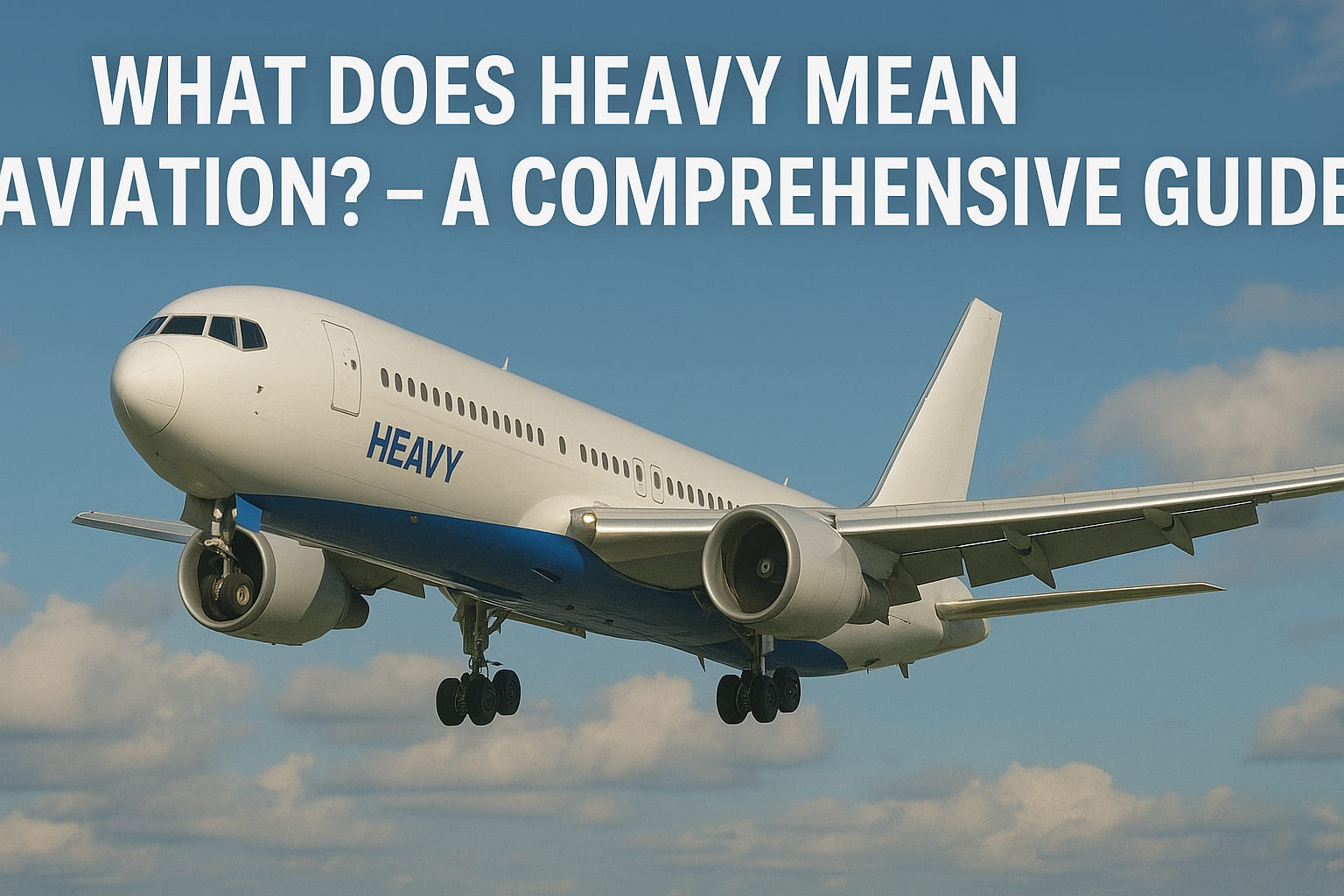
What Does Heavy Mean In Aviation? – A Comprehensive Guide

Hearing a pilot add the word ‘heavy’ to their call sign is more than just aviation jargon; it’s a critical safety warning. This classification is for aircraft with a high takeoff weight, which generate a powerful and invisible phenomenon known as wake turbulence. This simple term is a crucial tool for ensuring safety in crowded airspace.

👉 Check out the offer: airplane engine stands rent 👈

Understanding the Term ‘Heavy’ in Aviation

Anyone who has tuned into air traffic control communications has likely heard the term “heavy” appended to a call sign, such as “United 915 Heavy.”

The primary reason for this designation is wake turbulence: a powerful, invisible trail of rotating air masses, or vortices, spun from an aircraft’s wing tips.

To manage this risk, the ‘heavy’ suffix is a mandatory part of radio communications, acting as an immediate warning to air traffic controllers and other pilots.

Weight Classifications in Aviation

While the ‘heavy’ designation is crucial, it belongs to a broader aircraft classification system established by aviation authorities like the FAA.

These classifications offer a quick gauge of an aircraft’s size and potential impact on surrounding air traffic. Here’s how the FAA breaks them down:

  • Small: This category includes aircraft with an TOW of 41,000 pounds or less. Most private planes, turboprops, and smaller regional jets fit in this group.
  • Large: An aircraft is considered ‘Large’ if its TOW is more than 41,000 pounds but less than 300,000 pounds. This is a wide category that includes many of the most common commercial airliners, such as the Boeing 737 and Airbus A320 families.
  • Heavy: This classification is for aircraft with an TOW of 300,000 pounds or more.
  • Super: This is a special and exclusive category created for the most massive aircraft, which generate the most extreme wake turbulence. It currently includes the Airbus A380 and formerly the Antonov An-225.

Because each weight class generates a different level of wake turbulence, controllers rely on this system to apply the correct separation standards and ensure the safety of all aircraft.

Examples of Heavy Aircraft

The ‘Heavy’ classification includes many of the world’s most recognizable long-haul passenger airliners and massive cargo freighters.

Some of the most common examples include:

  • Boeing 747: Often called the “Queen of the Skies,” this legendary four-engine jumbo jet helped make long-haul international travel accessible.
  • Boeing 777: A highly successful long-range, wide-body twin-engine jet known for its powerful engines and capacity.
  • Boeing 787 Dreamliner: A modern and fuel-efficient aircraft, with its larger variants (like the 787-9 and 787-10) easily exceeding the 300,000-pound TOW.
  • Airbus A330 & A340: These wide-body aircraft are workhorses for many international airlines, flying both passenger and cargo routes.
  • Airbus A350: Airbus’s modern, long-range competitor to the Boeing 777 and 787, celebrated for its efficiency and advanced technology.
  • McDonnell Douglas MD-11/DC-10: Classic three-engine wide-body jets, now primarily used as cargo freighters by companies like FedEx and UPS.

Wake Turbulence and Its Risks

Minimizing Wake Turbulence Risks

To counter the dangers of wake turbulence, the aviation industry employs a strategy based on close coordination between pilots and Air Traffic Control (ATC).

ATC enforces mandated separation distances that vary based on the weight classes of the aircraft involved, and pilots share an equal responsibility for vigilance.

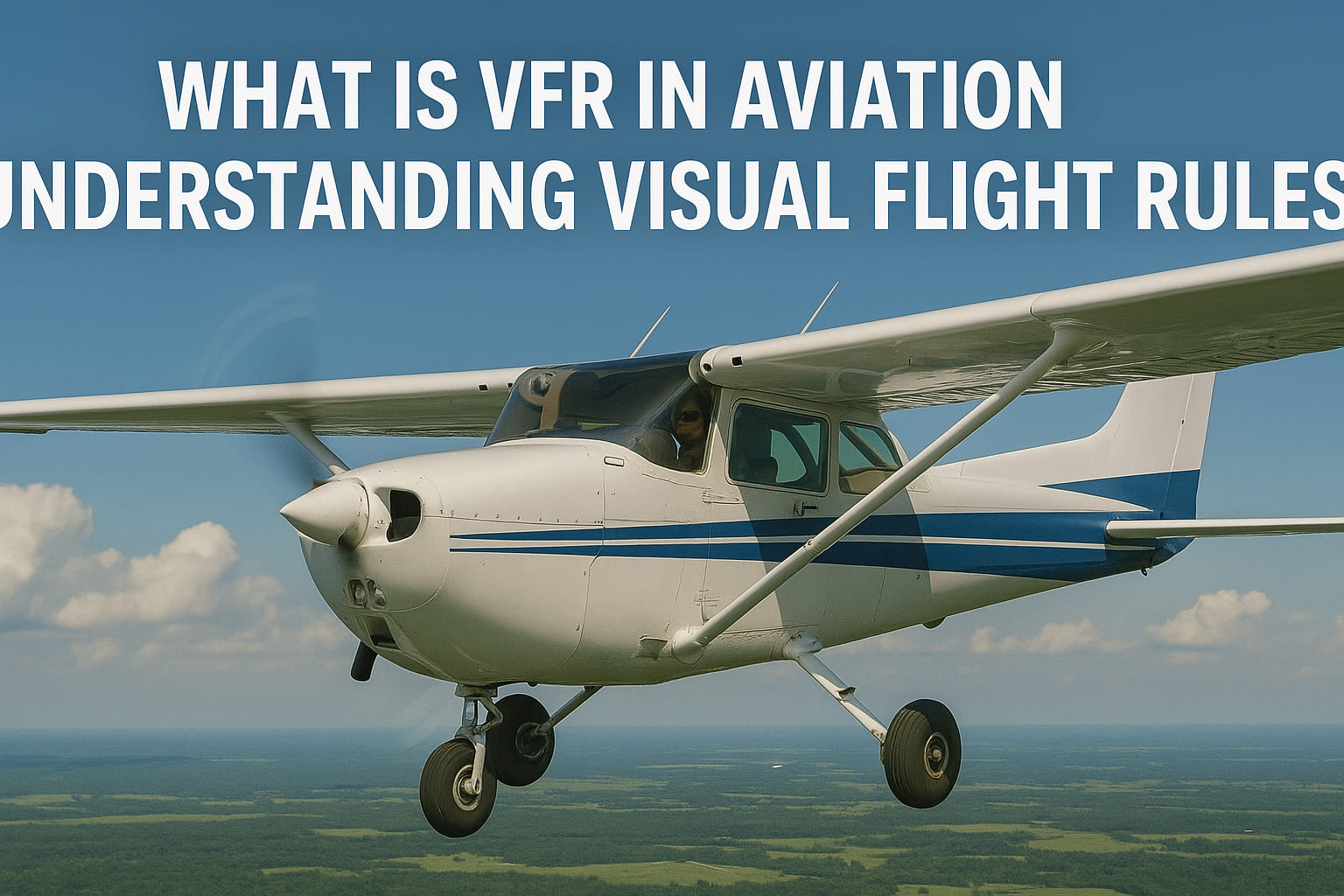
What is VFR in Aviation – Understanding Visual Flight Rules

Flying on a clear day is based on the simple principle of “see and avoid,” the foundation of Visual Flight Rules. But what is VFR in aviation beyond just looking out the window? It’s a strict framework dictating weather minimums, cruising altitudes, and pilot responsibilities that ensure safety. This guide breaks down how these rules work.

👉 Check out the offer: jet engine stands lease 👈

What Are Visual Flight Rules (VFR)?

Visual Flight Rules (VFR) are a set of regulations governing flight in weather clear enough for the pilot to navigate by sight. This framework is built on the “see and avoid” principle, which makes the pilot directly responsible for navigating by visual landmarks, maintaining separation from other aircraft, and avoiding obstacles.

VFR is not just a flying technique but a formal regulatory framework. Aviation authorities establish specific weather minimums—such as required visibility and distance from clouds—that pilots must meet. If conditions fall below these thresholds, pilots are required to operate under a different set of regulations: Instrument Flight Rules (IFR).

VFR Minimums — Weather Requirements

To fly under VFR, weather conditions must meet specific criteria known as VFR minimums. These legal thresholds for visibility and cloud clearance ensure it’s safe for a pilot to navigate visually. Weather that meets or exceeds these minimums is defined as Visual Meteorological Conditions (VMC)—essentially the “green light” for VFR flight, confirming a pilot can reliably see other aircraft, terrain, and obstacles.

VFR minimums are built on two main components:

  • Flight Visibility: The average forward distance from the cockpit that a pilot can see and identify prominent objects.
  • Distance from Clouds: The buffer zone that must be maintained around clouds—vertically and horizontally—to provide reaction time in case another aircraft emerges.

These requirements vary by airspace class and altitude. For example, a common standard below 10,000 feet is the “3-152” rule:

  • 3 statute miles of visibility
  • 1,000 feet above clouds
  • 500 feet below clouds
  • 2,000 feet horizontally from clouds

Above 10,000 feet, visibility requirements often increase to 5 statute miles because aircraft are typically flying faster.

The pilot in command holds the final responsibility for confirming that weather conditions meet VFR minimums before takeoff and throughout the flight. This requires analyzing weather reports, studying forecasts, and making real-time assessments from the cockpit. If conditions deteriorate below VMC, the pilot must respond by altering the route, landing at a suitable airport, or transitioning to IFR if qualified and equipped.

VFR vs IFR — Key Differences

Flights operate under either Visual Flight Rules (VFR) or Instrument Flight Rules (IFR), distinguished primarily by how pilots navigate and maintain separation. The choice is dictated by weather conditions, aircraft equipment, and pilot qualifications.

FeatureVFR (Visual Flight Rules)IFR (Instrument Flight Rules)
NavigationBy visual reference to the groundBy aircraft instruments and ATC guidance
SeparationPilot’s responsibility (“see and avoid”)Provided by Air Traffic Control (ATC)
Weather ConditionsClear weather (VMC) onlyCan operate in poor visibility (IMC)
Pilot RequirementsPrivate Pilot CertificateAdditional Instrument Rating required
Flight PlanningFlexible, not always requiredStrict, pre-filed flight plan required

Pilot Certification for VFR Operations

Operating an aircraft under Visual Flight Rules requires specific training and certification. The first step is earning a Private Pilot Certificate, the primary credential confirming a pilot has the essential knowledge and skills for safe flight in clear weather.

Training for this certificate is comprehensive, focusing heavily on the core demands of visual flying. Student pilots learn to navigate by referencing ground landmarks, interpret weather reports to confirm VFR minimums, and handle emergencies without relying on advanced instrumentation. It is this practical knowledge that equips a pilot to make sound, safe decisions based on visual information alone.

Beyond theoretical knowledge, proficiency is demonstrated through hands-on skill. A VFR pilot must be adept at maintaining aircraft control by referencing the horizon and other external visual cues. Mastering visual separation—the pilot’s primary duty to spot and avoid other aircraft—is central to this. Adhering to VFR weather minimums is therefore not just a regulatory requirement; it’s a critical safety discipline instilled in every student.

While a Private Pilot Certificate covers basic VFR operations, certain conditions require extra qualifications, such as:

  • Night Flying: Requires specific training and an endorsement, as navigation is more challenging without daylight.
  • Complex Airspace: Operating within some of the busiest controlled airspace may require additional endorsements to ensure the pilot is prepared for a high-traffic environment.

Earning the certificate is only the first step; continuous experience is essential to maintain the sharp situational awareness that safe VFR flight demands.

VFR Cruising Altitude Rules

While the “see and avoid” principle is a VFR pilot’s primary tool for collision avoidance, it is reinforced by a standardized system of vertical separation. To prevent the chaos and risk of aircraft flying at random altitudes, aviation regulations establish specific VFR cruising altitude rules. These mandatory guidelines apply to flights operating more than 3,000 feet above the ground (AGL) and are determined by the aircraft’s magnetic course.

  • Eastbound (0° to 179°): Fly at an odd thousand-foot altitude plus 500 feet (e.g., 3,500, 5,500 ft).
  • Westbound (180° to 359°): Fly at an even thousand-foot altitude plus 500 feet (e.g., 4,500, 6,500 ft).

A common mnemonic is: “East is Odd, West is Even (odder).”

This “plus 500 feet” component is a critical safety feature. Since aircraft on Instrument Flight Rules (IFR) typically cruise at whole thousand-foot altitudes (e.g., 4,000 or 5,000 feet), offsetting VFR traffic creates a built-in vertical buffer. This simple but effective rule drastically reduces the risk of midair conflicts and helps establish a predictable, organized flow of traffic, making the skies safer for everyone.

Special VFR Operations — What You Need to Know

When weather conditions dip just below standard VFR minimums but are not poor enough to require a full instrument flight, a pilot can request Special VFR (SFR). This is a specific clearance from Air Traffic Control (ATC) that permits operation within controlled airspace when visibility or cloud clearance is substandard, allowing a pilot to safely complete a flight—for instance, landing at an airport when a localized fog bank rolls in.

To receive an SVFR clearance, a pilot must maintain at least 1 statute mile of flight visibility and remain clear of clouds. This clearance is only applicable within the surface areas of Class B, C, D, or E airspace near an airport and is designed for local operations, not for cross-country travel in marginal weather.

An SVFR clearance is not automatic; the pilot must explicitly request it from ATC. For example, a pilot might say, “Tower, November-One-Two-Three-Alpha-Bravo is ten miles north, requesting Special VFR for landing.” ATC will only grant the request if IFR traffic permits, to maintain proper separation. A crucial limitation is that night SVFR operations are only permitted if the pilot holds an instrument rating and the aircraft is equipped for IFR flight.

While SVFR is a useful tool in marginal conditions, it places significant responsibility on the pilot. The “see and avoid” principle remains the primary rule, even with just one mile of visibility. This clearance is designed for navigating specific, short-term weather challenges—not as a workaround for lacking an instrument rating. Its safe use demands sharp situational awareness and sound judgment.

Controlled VFR — Guidelines and Regulations

Whereas Special VFR handles weather exceptions, Controlled VFR (CFR) is designed for the challenges of busy, complex airspace. Under CVFR, a pilot flies by visual rules but receives direct instructions from Air Traffic Control (ATC), such as specific headings and altitudes. This creates a hybrid environment that mirrors the structure of IFR, yet without requiring the pilot to hold an instrument rating or fly an IFR-equipped aircraft.

The primary purpose of CVFR is to improve safety and efficiency in high-density traffic areas, a system notably used in places like Canadian Class B airspace where ATC oversight is mandatory. By providing positive control, ATC ensures safe separation and proactively resolves potential conflicts while the pilot continues to navigate visually. This system merges the pilot’s real-time situational awareness with the structured guidance of air traffic controllers.

Crucially, CVFR is a specific designation used in countries like Canada and is not a formal term in the United States. While a VFR pilot in U.S. Class B or C airspace also communicates with ATC and follows instructions, this is simply considered a standard VFR operation. The outcome is similar—a VFR flight under ATC guidance—but the terminology and regulatory framework differ.

Controlled VFR provides an organized framework for managing visual traffic in congested skies. The pilot remains responsible for the core ‘see and avoid’ principle but benefits from the added safety of ATC’s separation services. The result is a smoother traffic flow and a reduced risk of midair collisions in areas where visual navigation alone cannot safely manage the volume of aircraft.

Conclusion — The Importance of VFR in Aviation

Visual Flight Rules are more than just regulations; they represent the essence of flying. VFR is built on a pilot’s ability to see the world—the horizon, landmarks, and other aircraft—and use that visual information to navigate safely. As the foundation of pilot training, it is grounded in the core ‘see and avoid’ principle.

While flying in clear weather may seem simple, VFR operations demand significant discipline. Pilots must master protocols ranging from weather minimums and cloud clearance to cruising altitude rules. While this framework provides order, the ultimate responsibility for situational awareness and collision avoidance remains with the pilot, requiring constant vigilance.

From a student pilot’s first solo flight to an experienced aviator navigating a busy terminal area, VFR is the fundamental skill for safe operations. Its principles are adaptable, allowing for Special VFR in marginal conditions and integrating with air traffic control for added safety in congested airspace. It stands as the essential counterpart to IFR, providing the flexibility to operate when the weather is clear and the view is unobstructed.

Even with advanced avionics and automation, the ability to look out the window, interpret the visual landscape, and safely guide an aircraft remains the most critical skill a pilot can possess. VFR is not just a method for flying—it is the fundamental connection between the pilot, the aircraft, and the sky.

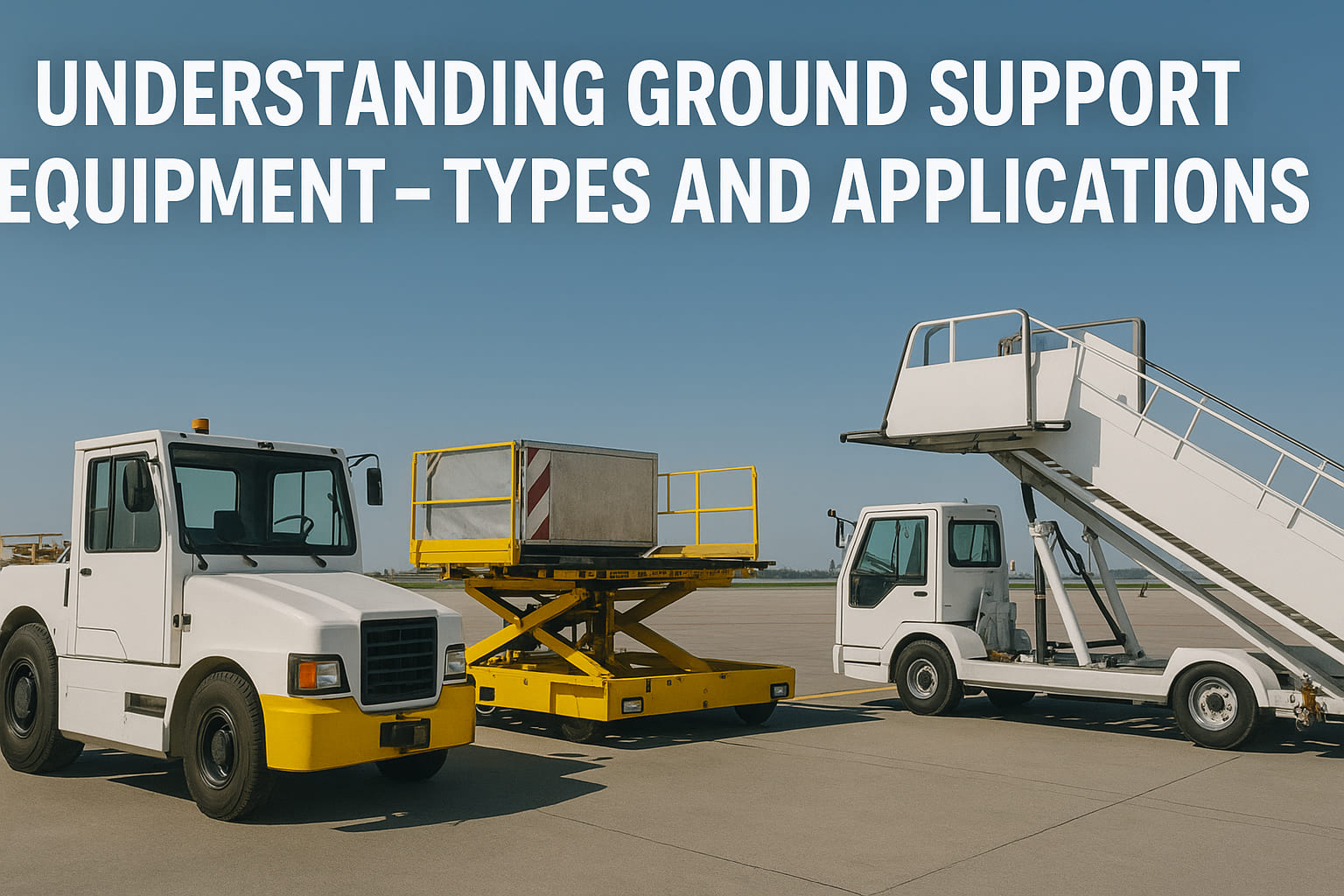
Understanding Ground Support Equipment – Types and Applications

The swift and safe turnaround of an aircraft depends on a complex fleet of vehicles operating on the tarmac. This machinery, known as Ground Support Equipment, handles everything from towing the plane to loading cargo and conditioning the cabin air, making modern air travel possible. Discover the essential types and applications of this vital equipment.

👉 Check out the offer: airplane engine stands lease 👈

What is Ground Support Equipment (GSE)?

Ground Support Equipment (GSE) is the comprehensive range of vehicles and tools that services an aircraft between its arrival and departure. This equipment forms the foundation of airport ground operations, supporting tasks ranging from passenger boarding and cargo loading to refueling and maintenance, all while ensuring turnarounds are handled quickly, safely, and efficiently.

Most tasks performed on a parked aircraft relies on GSE. Without this specialized machinery, the rapid turnarounds essential to modern aviation would be impossible.

GSE quality and reliability directly affect operational efficiency, safety, and on-time performance. Airlines are increasingly adopting the adoption of electric Ground Support Equipment (else).

Types of Ground Support Equipment

Ground Support Equipment falls into two main categories. Powered GSE includes vehicles with an internal combustion or electric engine for demanding tasks. In contrast, non-powered GSE operates without an onboard power source and is typically towed or handled manually.

Equipment spans every aspect of aircraft servicing:

  • Aircraft Handling: METRO® Tow barless Tow Tractors
  • Winter Operations: Tempest-i™ Dancers
  • Logistics: B80® Baggage Tractors and Cargo Loaders
  • Air & Power: Retire® M60 Mobile Conditioned Air Units
  • Electric GSE Support: Amp Cart™ Towable Charging Platforms

Powered Ground Support Equipment

Powered GSE drives airport apron operations. These vehicles rely on internal combustion or electric motors to perform operations requiring force, speed, and precision—from moving the aircraft to preparing its cabin for passengers.

This category includes a wide array of specialized vehicles:

  • Aircraft Tugs and Tow barless Tractors: Move aircraft away from the gate.
  • Refueled: Transfer large volumes of aviation fuel with precision.
  • Ground Power Units (GPUs): Supply power to the aircraft while its engines are off, powering lights, avionics, and cabin systems.

Non—Powered Ground Support Equipment

Non-powered equipment handles essential tasks that maintain safety and efficiency. Operating through manual operation or basic mechanics, this equipment includes:

  • Dollies and Carts: Essential for moving baggage and cargo between the terminal and the aircraft.
  • Wheel Chocks: Used to secure the aircraft and prevent unintended movement.
  • Aircraft Service Stairs: Provide safe access for passengers and maintenance crews.

Non-powered equipment works alongside powered machinery for smooth operations. For example, while a cargo loader lifts heavy containers, dollies are needed to transport them. This combination enables ground crews to complete important tasks effectively, without the complexity or maintenance costs of powered equipment.

Applications of Ground Support Equipment

Aircraft handling and servicing represents a primary application. Aircraft handling and servicing. Key tasks include:

  • Maneuvering Aircraft: Pushback tractors and tow barless tugs move aircraft between gates, parking stands, and hangars.
  • Supplying Power: Ground power units (GPUs) provide electricity while the aircraft’s engines are off.
  • Cabin Climate Control: Conditioned air units maintain a comfortable cabin temperature without using the plane’s auxiliary power unit (APU).
  • Refueling: Refueled ensure the aircraft has the necessary fuel for its next journey.

GSE is also central to managing passenger and cargo flow:

  • Passenger Boarding: Stairs and transport buses are used when jet bridges are unavailable.
  • Baggage and Freight Handling: A fleet of equipment, including belt loaders for loose items and container loaders for palletized cargo, quickly loads and unloads the aircraft’s hold.

De/Anti—Icing Vehicles

In cold climates, removing ice and snow from an aircraft is a critical safety requirement. These vehicles perform two functions: de-icing removes existing frost, ice, or snow, while anti-icing applies a protective fluid to prevent new ice from forming before takeoff. Using a boom, operators spray a heated, glycol-based fluid onto critical surfaces like wings and tails. This process is vital because even a small amount of ice can disrupt airflow, reduce lift, and compromise pilot control—making it essential for safe winter operations.

GSE technology continues evolving toward greater sustainability, efficiency, and safety. Key future trends include:

  • Electrification: Transition to cleaner, quieter, and more cost-effective electric equipment.
  • Automation: Deployment of autonomous vehicles to handle repetitive tasks with greater precision and speed.
  • Intelligent Data Connectivity: Adding sensors that use real-time data for smarter scheduling and predictive maintenance.
  • Enhanced Safety and Ergonomics: Adding sophisticated anti-collision systems and improving operator comfort and control.

Sustainability drives industry transformation. Electric GSE (else) increasingly replaces diesel-powered machines to cut emissions, reduce noise pollution, and lower long-term operational costs. By deploying electric baggage tractors and air conditioning units, airports not only meet environmental targets but also create a healthier work environment.

What is worth remembering?

Ground Support Equipment forms an essential network of vehicles and tools that ensures aircraft are serviced safely and efficiently. From powerful pushback tractors to simple wheel chocks, each piece plays a critical role in enabling the swift turnarounds that define modern aviation.

Quality GSE investment drives operational excellence. This approach improves safety, boosts efficiency, and maintains the reliability essential to aviation. As technology advances through electrification and automation, the importance of innovative ground support solutions will only grow, cementing their essential role in the future of air travel.

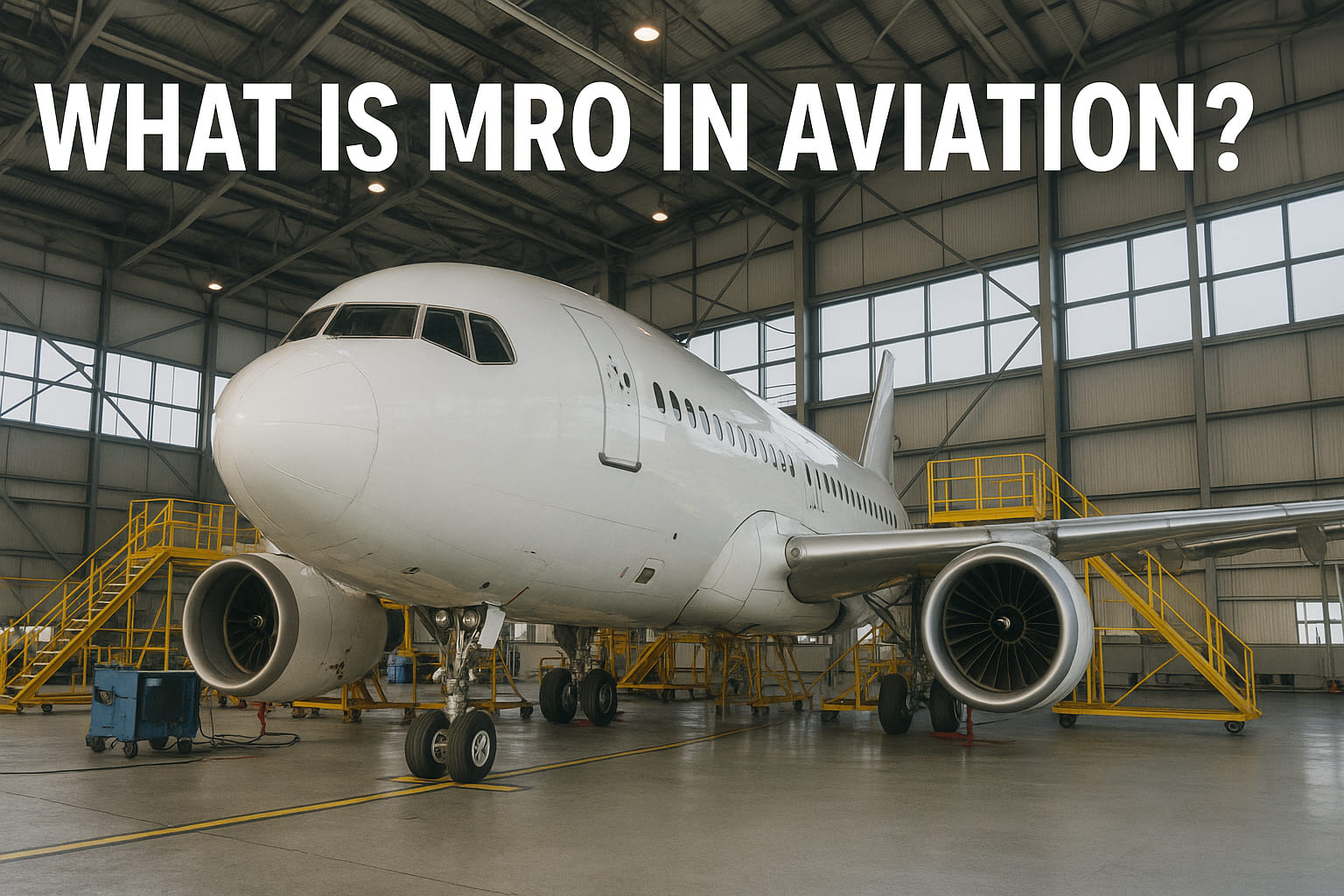
What is MRO in Aviation? – Definition and Overview

The safety of every flight relies on a comprehensive system known as MRO in aviation. Standing for Maintenance, Repair, and Overhaul, this process is the foundation of aircraft airworthiness, covering everything from routine inspections to complete engine rebuilds to ensure regulatory compliance and extend the aircraft’s operational life.

👉 Check out the offer: aircraft engine stands leasing 👈

Understanding MRO — Definition and Importance

In aviation, MRO stands for Maintenance, Repair, and Overhaul—a term covering all activities required to keep an aircraft safe, operational, and compliant with strict industry regulations. This comprehensive program ensures the global aircraft fleet remains in top condition.

MRO is essential for aviation safety, ensuring every aircraft is airworthy before it leaves the ground.

Key Components of MRO — Maintenance, Repair, Overhaul

While often spoken of as a single concept, MRO represents three distinct yet interconnected areas of aircraft care. Each plays a critical role in an aircraft’s lifecycle, collectively ensuring its safety and reliability.

Types of MRO Facilities — Where Maintenance Happens

Aircraft maintenance takes place in a variety of specialized facilities, each tailored to different aircraft and operational needs. This diversity ensures that every aircraft—from a private jet to a commercial airliner—receives the precise care it requires. Common MRO facility types include:

  • Airline MRO Divisions: Operated by large commercial and regional airlines, these in-house facilities provide direct control over maintenance schedules, quality, and costs.
  • Independent MRO Companies: A significant part of the market, these firms range from global corporations handling heavy maintenance to smaller specialists focusing on specific components like engines or avionics.
  • Fixed-Base Operators (FBS): Located at airports, many FBS offer MRO services primarily for general aviation and business jets, alongside their fueling and passenger services.
  • Corporate In-House Teams: Large corporations with private fleets often maintain their own MRO teams to ensure their aircraft are always flight-ready.
  • Military MRO Facilities: These highly specialized facilities handle the unique systems of military aircraft and operate under stringent military standards, which differ from civilian regulations.

This network of diverse facilities is essential to the aviation industry, ensuring every aircraft remains safe and airworthy.

Aviation MRO is rapidly shifting from reactive repairs to an intelligent, data-driven approach powered by new technology.

A key part of this evolution is predictive maintenance, powered by the Internet of Things (IoT) and Artificial Intelligence (AI). Modern aircraft are equipped with thousands of sensors that stream real-time data on component health. AI algorithms analyze this information to detect subtle patterns and predict potential failures before they occur. As a result, airlines can schedule repairs proactively, reducing unscheduled downtime and preventing critical in-flight issues.

Another key innovation is the use of digital twins and advanced MRO software solutions. A digital twin is a virtual replica of a physical aircraft or component, allowing engineers to simulate stress, test repairs, and optimize performance in a digital environment. Sophisticated MRO software serves as the central hub for these operations, centralizing tasks such as inventory management, work order scheduling, and regulatory compliance.

Together, these technologies create a smarter, safer MRO ecosystem. By using data to inform decisions, MRO providers can improve maintenance scheduling, increase operational efficiency, and strengthen overall aircraft safety. This digital transformation is a present-day necessity for any provider aiming to stay competitive and compliant.

The aviation MRO market is a growing sector that directly reflects the health of the global airline industry. As air travel recovers and expands, the demand for reliable maintenance is increasing significantly.

One of the primary drivers of this growth is the increasing volume of air traffic. More flights translate directly to increased wear and tear on aircraft, driving a greater need for routine maintenance, component repairs, and comprehensive overhauls. Additionally, many airlines are extending the service life of their existing fleets, which increases the demand for intensive MRO services to ensure these older aircraft remain airworthy and compliant with modern standards.

Technological integration is a dominant trend, with tools like AI, IoT, and predictive maintenance becoming standard. MRO providers are investing heavily in these digital solutions to improve workflows, reduce aircraft downtime, and meet the industry’s high efficiency demands.

Sustainability has become another critical focus as the industry faces mounting pressure to reduce its environmental footprint. MRO plays a vital role through greener repair processes, parts recycling, and the adoption of lightweight, fuel-efficient materials. Specialized companies are also emerging to focus on advanced solutions like composite material repair and sustainable end-of-life aircraft services, pointing toward a more technologically advanced and responsible future.

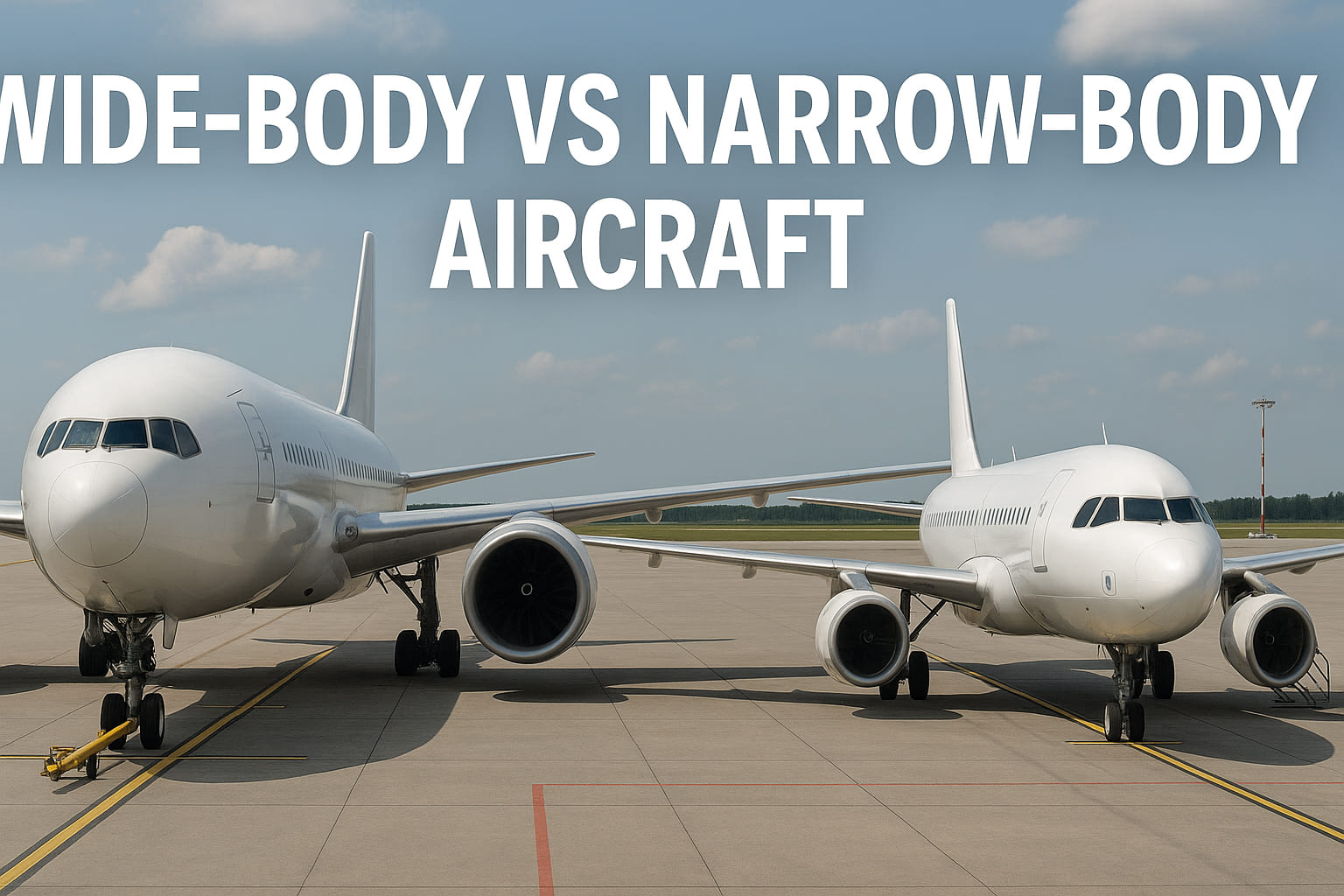
Wide Body vs Narrow Body Aircraft – Key Differences Explained

Choosing between a wide body vs narrow body aircraft represents a crucial airline decision that directly impacts your flight experience. Single-aisle narrow-body aircraft is the efficient choice for short regional flights, while twin-aisle wide-body planes is designed for long-haul international journeys. The differences in fuselage, seating, and fuel capacity make each aircraft type ideal for its specific role. Here are the key distinctions that define these two types of planes.

👉 Check out the offer: airplane engine stands for lease 👈

Understanding Aircraft Types — Wide body vs Narrow body

The fundamental distinction between wide body and narrow body aircraft depends on fuselage diameter. A narrow body features a slimmer frame (3–4 meters) built around a single aisle, whereas a wide body boasts a more expansive one (5–6 meters) that accommodates two.

This design choice significantly affects both cabin layout and the passenger experience. On a wide body like the iconic Boeing 747, this means fitting seven or more seats per row in configurations such as 2-4-2 or 3-4-3.

Operationally, these two designs serve different purposes. With their smaller size and fuel capacity, narrow bodies are the go-to choice for shorter flights.

Fuselage Diameter — A Key Difference

The main physical difference is fuselage width: a narrow body aircraft typically measures 3.6 to 4 meters (10 to 13 feet) in diameter, while a wide body spans a much larger 5.4 to 7.1 meters (16 to 23 feet).

This expansive diameter enables a twin-aisle cabin, offering several advantages for travelers:

  • Spacious Environment: Creates a more open and less claustrophobic atmosphere.
  • Larger Storage: Overhead bins are substantially larger, accommodating more carry-on luggage.
  • Increased Comfort: Reduces the sense of confinement during flight.

Conversely, a narrow body’s constrained diameter requires a single-aisle configuration, which typically accommodates 3 to 6 passengers per row and results in a more compact interior.

Seats Per Row — How They Differ

The fuselage width directly determines seating arrangements, making this is one of the most noticeable differences for passengers. On a narrow body aircraft, such as the popular Boeing 737 or Airbus A320, a 3-3 configuration is standard.

The expansive cabin of a wide body, by comparison, offers far greater flexibility. With two aisles, these planes can accommodate seating patterns ranging from 7 to 11 passengers abreast.

This difference directly affects the passenger experience. A wide body’s varied seating creates more choice—a 2-4-2 layout, for instance, offers window pairs ideal for couples.

Number of Aisles — Single vs Twin

A single aisle running down the center of the cabin defines a narrow body plane—a hallmark of aircraft like the Boeing 737 and Airbus A320.

In a wide body, the expansive interior accommodates two parallel aisles. This twin-aisle design does more than just add seats; it transforms the cabin’s flow and feel—a key feature on long-haul giants like the Boeing 747 and Airbus A380.

The twin-aisle configuration has significant practical implications that improve cabin efficiency and the passenger experience:

  • Faster Boarding: Two pathways reduce congestion during boarding and deplaning.
  • Quicker Service: Cabin crew can serve passengers more efficiently, often using two carts simultaneously.
  • Reduced Waiting: Passengers spend less time waiting in the aisle, creating a more seamless experience.

Flight Times — Long—Haul vs Short—Haul

Wide body aircraft dominate long-haul travel. Their large fuel capacity enables flights of 6 to 16 hours or more, making models like the Boeing 787 and Airbus A350 the standard for transoceanic journeys.

Narrow body aircraft, in contrast, are optimized for short- to medium-haul routes, typically those under 6 hours. Their design prioritizes efficiency across frequent takeoffs and landings, making them the workhorses of domestic and regional travel.

For airlines, matching the right aircraft to the right route involves balancing distance, passenger demand, and cost-effectiveness. Wide bodies dominate intercontinental travel between global hubs, while narrow bodies form the backbone of high-frequency regional networks.

Carbon Emissions — Environmental Impact

On a per-passenger basis, modern narrow body aircraft are often more efficient. An Airbus A321LR Neo, for example, emits 57–72 grams of CO2 per passenger-kilometer, reflecting their optimization for shorter routes.

While wide body models like the Airbus A350-1000 typically register higher figures (74 to 105 grams per passenger-kilometer), the story is more nuanced.

Ultimately, airlines must balance an aircraft’s efficiency profile with the specific demands of each route. Manufacturers continue addressing these efficiency challenges.

Conclusion — Choosing the Right Aircraft Type

The choice between a wide body and a narrow body ultimately depends on the mission. Narrow bodies dominate short- to medium-haul routes, where their efficiency is key for frequent, economical flights.

Wide body aircraft, meanwhile, excel at long-haul travel; their twin aisles, vast fuel capacity, and spacious cabins are essential for comfortably carrying hundreds of passengers across continents.

Looking ahead, both aircraft categories will continue to play vital roles. Manufacturers continue focusing on enhancing fuel efficiency and reducing emissions, meaning future jets—wide body and narrow body alike—are set to become lighter, quieter, and more sustainable, optimized for their distinct roles in global aviation.

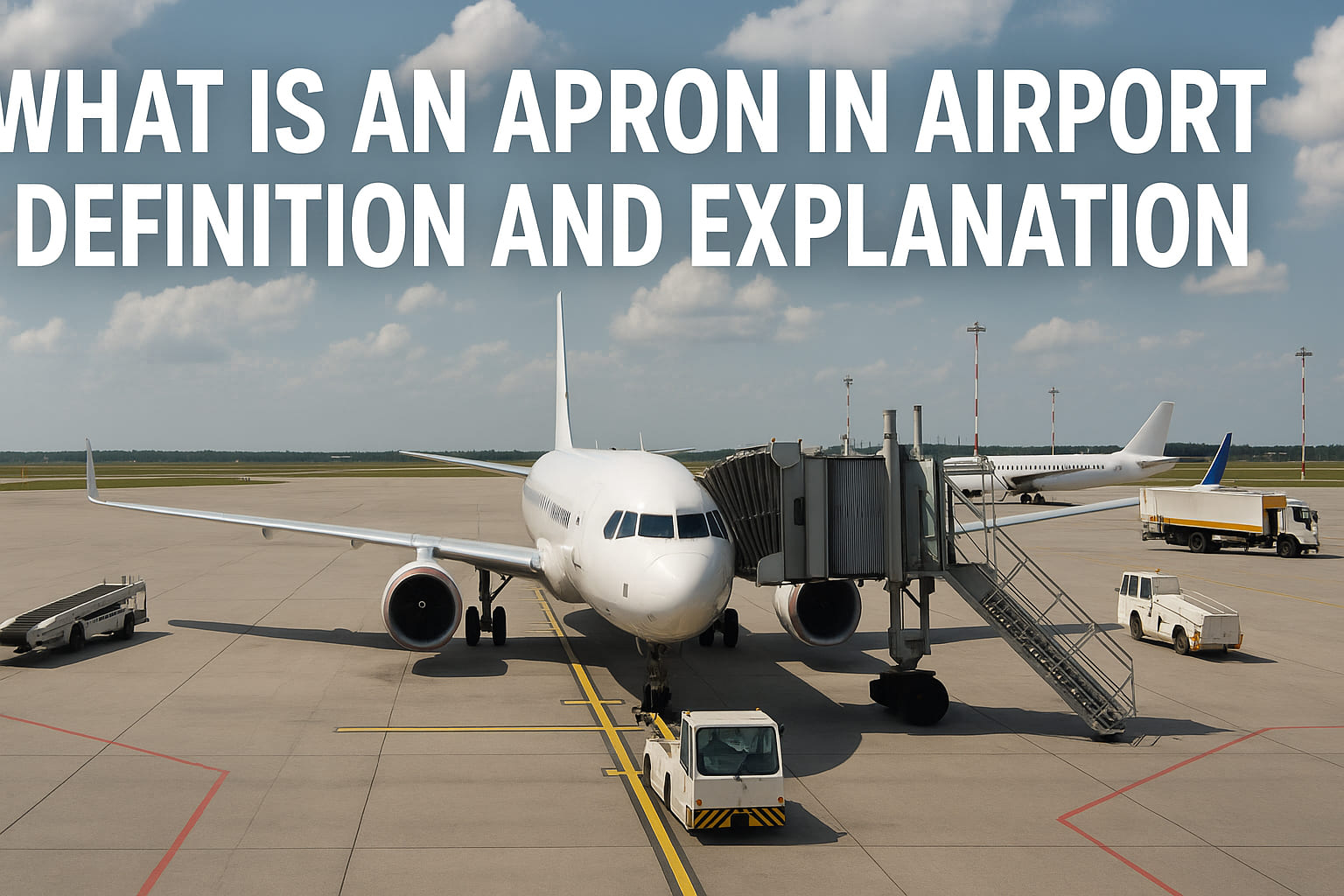
What is an Apron in Airport – Definition and Explanation

The area where aircraft park, refuel, and load by the terminal is the apron. Understanding the airport apron is essential to grasping how flights run on schedule. This space is a hub of activity, distinct from runways and taxiways, where ground crews perform essential services. Here’s how this vital operational area functions.

👉 Check out the offer: airplane engine stand for lease 👈

Understanding the Airport Apron — Definition and Purpose

The airport apron is the paved area where aircraft are parked, refueled, and loaded with baggage, serving as the central stage for ground operations before takeoff and after landing.

The apron’s primary purpose is to provide space for aircraft servicing while allowing ground support equipment (GSE)—from baggage carts to fuel tankers—unobstructed access. Its proximity to the terminal is vital for efficient turnarounds, ensuring flights can depart on schedule.

The apron is a unique zone, not to be confused with other reside areas. While runways are built for high-speed takeoffs and landings and taxiways act as the connecting arteries, the apron is a low-speed, high-activity hub. It functions as the airport’s dynamic parking lot and service station, where every aircraft is meticulously prepared for its next journey.

Functions of the Airport Apron — Key Operations

The apron functions as the airport’s operational heart, where a range of essential pre-flight and post-flight activities unfolds. Key functions include:

  • Passenger Boarding and Deplaning: Aircraft connect to terminal gates via jet bridges or use mobile stairs for passengers to embark and disembark.
  • Cargo and Baggage Handling: Ground crews use belt loaders and container loaders to move luggage and freight between the aircraft and the terminal.
  • Aircraft Servicing: This includes refueling, replenishing potable water, and servicing lavatories.
  • Catering: Catering trucks restock the aircraft with food and beverages for the next flight.
  • Minor Maintenance and Inspections: Technicians perform routine checks and light maintenance to ensure the aircraft is airworthy.

A fleet of specialized vehicles known as Ground Support Equipment (GSE), from pushback tugs to de-icing trucks, enables these operations. Quick, safe turnarounds and schedule adherence depend on the seamless coordination of this equipment and the ground crew.

Design Principles of Airport Aprons — Safety and Efficiency

The design of an airport apron is a careful balance between operational efficiency and safety requirements. Every element, from its line markings to its parking stands, is engineered to streamline operational flow, enabling rapid aircraft turnarounds while upholding strict security standards.

Efficiency depends on maximizing space. A well-designed apron provides ample room for aircraft to park and maneuver while maintaining clear, unobstructed lanes for ground support equipment.

Safety, critical, is addressed through a combination of standardized markings, powerful lighting, and generous clearance between aircraft. Security is woven into the design as well, with controlled access points and constant surveillance to prevent unauthorized entry and protect everyone involved.

Safety Measures on the Apron — Ensuring Secure Operations

With its constant, movement of aircraft, vehicles, and personnel, the apron ranks among the most hazardous areas of an airport. To mitigate these risks, airports implement a comprehensive system of safety measures designed to create a predictable and orderly environment where every movement is carefully managed.

Visual guidance forms the foundation of apron safety. The pavement is covered in a network of painted markings, from lead-in lines that guide pilots to their stands to safety envelopes that delineate no-go zones around a parked aircraft.

Beyond visual aids, strict operational protocols govern every action on the apron. All ground vehicles must adhere to specific speed limits, and personnel are required to wear high-visibility clothing to remain conspicuous.

Security Features of the Apron — Protecting Aircraft and Passengers

While safety protocols prevent accidents, security features defend against intentional threats. The apron is a highly restricted area, making its security paramount for safeguarding aircraft, passengers, and crew. To that end, a multi-layered system creates a tightly controlled and monitored environment.

Physical perimeter security, typically high fencing with controlled access points, forms the primary barrier. Every person and vehicle entering the apron must pass through these gateways, which are staffed by security and often require credentials like ID badges or biometric scans.

Types of Airport Aprons — Open vs. Closed Designs

Airport apron layouts are tailored to an airport’s size and traffic volume, resulting in two primary designs: open and closed. The fundamental difference between them lies in how aircraft are positioned relative to the terminal and, consequently, how passengers access the plane.

Open Apron Design — Features and Benefits

An open apron is defined by the physical separation between the aircraft and the terminal building. Instead of using a jet bridge, planes park in designated stands on the tarmac, and passengers reach them by walking along marked pathways or taking a shuttle bus. This design is common at regional airports and low-cost carrier terminals where operational simplicity is key.

This design offers key benefits: flexibility and cost-effectiveness. Because it isn’t constrained by fixed jet bridges, it can accommodate a wider variety of aircraft sizes, and its infrastructure costs are significantly lower.

However, the open layout has its downsides, primarily in passenger convenience. Boarding and deplaning are exposed to the elements, which can be uncomfortable in rain, snow, or extreme heat.

Closed Apron Design — Features and Benefits

Unlike open aprons, a closed apron design positions aircraft directly adjacent to the terminal building, a configuration standard at most major international airports. This design is defined by its use of jet bridges—enclosed, movable connectors that link the gate directly to the aircraft door, creating a seamless, climate-controlled pathway for passengers.

The primary advantage is a significant enhancement in passenger convenience and comfort. Travelers can board and deplane through a climate-controlled passage, completely shielded from adverse weather.

Beyond passenger comfort, closed aprons offer superior security and operational efficiency. The jet bridge system naturally restricts movement, tightly controlling access to authorized personnel only. This simplifies security protocols and reduces the risk of unauthorized entry.

Apron Management Services — Coordination and Control

The coordination of aircraft, vehicles, and personnel on the apron is managed by Apron Management Services (or apron control), a specialized unit responsible for coordinating all ground movements to ensure safety and efficiency.

Apron management’s primary role is directing traffic within this specific zone, a responsibility distinct from that of Air Traffic Control (ATC), which manages runways and taxiways. Its jurisdiction is confined to the apron, where it serves as a vital link between flight crews, ground handlers, and the airport tower to ensure seamless handoffs.

Apron Control — Managing Aircraft and Vehicle Movements

Their main duties include allocate parking stands, guide aircraft to and from gates, and manage the flow of all ground vehicles to prevent collisions. Through constant communication with ATC and airline agents, they coordinate everything from servicing and boarding to cargo handling, all while enforcing strict safety protocols to maintain order in a high-density environment.

Effective coordination depends on three elements:

  • Clear communication channels
  • Real-time monitoring of the apron
  • Strict adherence to established operational procedures

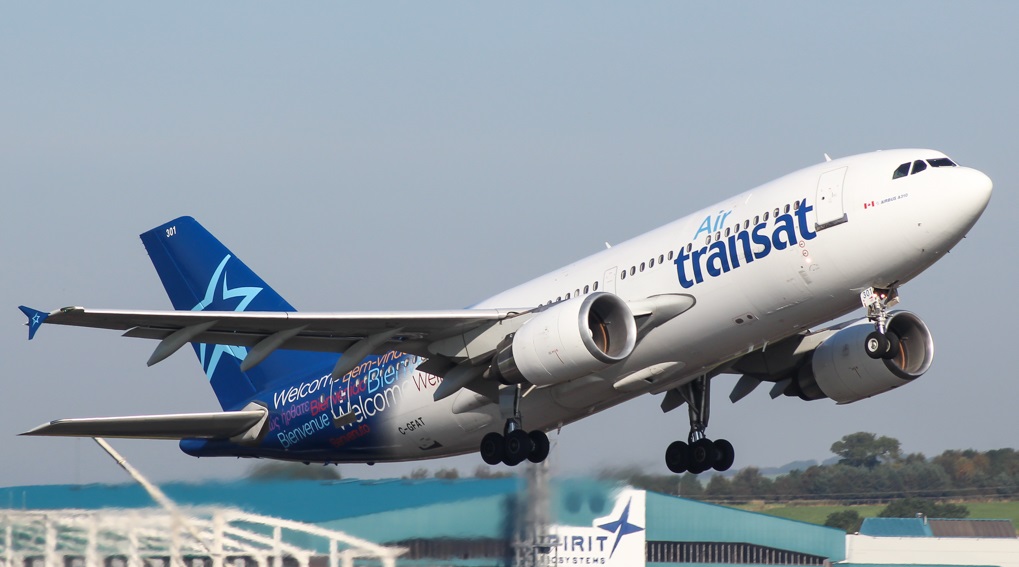
Airbus A310 – Overview and Features

The Airbus A310 was one of the key milestones in Airbus’s early history, serving as the company’s first true widebody aircraft family. Introduced in the 1980s, the A310 opened new opportunities for airlines looking for a versatile, fuel-efficient, and smaller widebody compared to its competitors. It became a pioneering design that bridged the gap between long-haul efficiency and medium-capacity needs.

Engine stand lease

Introduction to the Airbus A310

The Airbus A310 was launched as a shorter, lighter derivative of the Airbus A300, the world’s first twin-engine widebody jetliner. Its purpose was to provide airlines with an aircraft that combined the efficiency of a widebody with reduced capacity, making it ideal for markets where the A300 was too large.

First flown in 1982 and entering service in 1983, the A310 introduced several design refinements, including a completely new wing, updated avionics, and a modern two-crew cockpit. These innovations helped airlines operate more economically while still offering the comfort and range expected from a widebody aircraft.

Key Specifications of the A310

The A310 was produced in two main versions, the A310-200 and the longer-range A310-300. Both were versatile enough to cover short- and long-haul routes, with performance tailored to the needs of different operators.

SpecificationA310-200A310-300
Passenger Capacity (Typical 2-Class)280–280280–280
Max Seating~280~280
Length46.66 m (153 ft 1 in)46.66 m (153 ft 1 in)
Wingspan43.9 m (144 ft 4 in)43.9 m (144 ft 4 in)
Range4,150 NM (7,685 km)5,150 NM (9,540 km)
Maximum Takeoff Weight (TOW)142 tonnes164 tonnes

These figures show how Airbus positioned the A310 as a highly efficient widebody aircraft, smaller than the Boeing 747 or DC-10 but with the flexibility to serve a variety of routes.

Engine Options for the A310

The Airbus A310 was designed to accommodate two types of turbofan engines:

This flexibility gave airlines the choice to align the A310 with existing maintenance and fleet strategies. Both engine options provided the thrust necessary for medium- to long-haul operations while maintaining lower operating costs than larger widebodies.

Fuel Efficiency and Environmental Impact

Compared to other widebody jets of its era, the A310 offered significantly improved fuel efficiency. Its optimized wing design and smaller fuselage reduced drag, while the twin-engine configuration made it far more economical than four-engine competitors.

Although it did not benefit from modern features like winglets or composite structures, the A310’s performance set new standards in the early 1980s. Airlines could operate long-haul flights at lower cost and with reduced fuel burn compared to similar-capacity aircraft from other manufacturers.

The A310 also met ICAO noise standards of its time, allowing operators to use it in noise-sensitive airports across Europe and North America.

Passenger Experience on the A310

Inside, the Airbus A310 offered passengers the comfort of a widebody cabin but in a smaller, more intimate setting. Typical layouts included:

  • 2-4-2 seating in economy class, providing good comfort for medium- and long-haul flights.
  • Spacious galleys and advanced (for its time) in-flight service layouts.
  • Cargo capacity that allowed airlines to combine passenger service with significant belly freight revenue.

The quieter twin-engine operation compared to older tri-jets like the DC-10 or L-1011 also improved cabin comfort. While cabin amenities were limited by the standards of the 1980s, the A310 was seen as a modern and reliable choice for travelers.

Operational History and Market Presence

The A310 entered service with Lufthansa and Swissair in 1983 and quickly became popular among European and Asian carriers. Its unique blend of range and efficiency made it ideal for “long and thin” routes—long-haul flights with relatively lower passenger demand.

In total, Airbus built 255 A310 aircraft before production ended in 1998. While modest compared to the A320 family, the A310 played an essential role in establishing Airbus as a global competitor to Boeing and McDonnell Douglas.

Today, most A310s have retired from passenger service, but many continue to fly as cargo aircraft or military multi-role transports. Operators such as FedEx and several air forces worldwide extended the type’s service life well into the 21st century.

A310 Variants and Their Differences

The Airbus A310 family was straightforward, consisting primarily of two variants:

  • A310-200 – The original model, optimized for medium-haul routes, with a range of approximately 4,150 NM.
  • A310-300 – Introduced in 1985, this version added additional fuel capacity and higher maximum takeoff weight, extending its range to over 5,000 NM and making it suitable for true intercontinental flights.

Beyond passenger versions, Airbus also developed A310 freighters and offered convertible combi models to meet cargo market demands.

Legacy and Influence on Future Airbus Aircraft

While the Airbus A310 was not produced in the same massive numbers as later models, its influence on the Airbus product line was profound. Key innovations—such as the advanced wing, modernized avionics, and reduced crew cockpit—directly influenced the Airbus A330 and A340 programs that followed.

The A310 also proved that airlines were eager for efficient, twin-engine widebodies capable of flying long distances. This concept became central to Airbus’s long-term strategy and is still reflected today in aircraft like the A330neo and A350.

Although the A310 no longer dominates skies, its role in shaping Airbus’s reputation and technological approach cannot be overstated. It remains an important step in the evolution of widebody jetliners, bridging early Airbus experiments with the modern generation of efficient long-haul aircraft.

Read more:

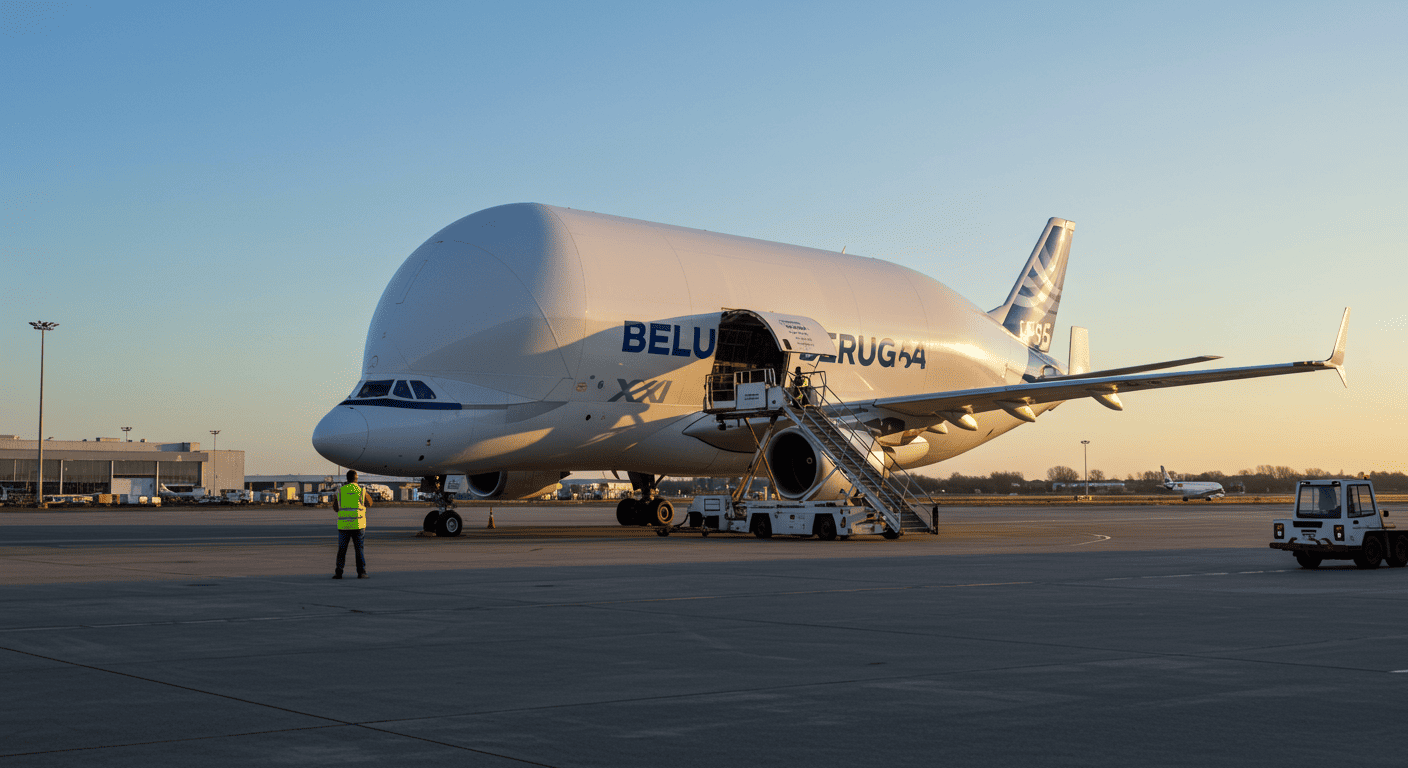
Airbus Beluga XL – The Next Generation Heavy-Lift Aircraft

With its distinctive whale-like shape, the Airbus Beluga XL is one of the most recognizable aircraft in the sky. Its unique design serves a critical purpose: transporting massive aircraft components between production sites across Europe. This next-generation heavy-lifter offers a 30% greater capacity than its predecessor. Here’s a look at its key specifications.

Airplane engine stands for lease

Overview of the Airbus Beluga XL

The Airbus Beluga XL (officially the A330-743L) was designed for one critical mission: transporting oversized cargo. It ferries massive aircraft components—complete wing sets, entire fuselage sections—between Airbus’s production sites across Europe. Its distinctive whale-like shape and smiling livery make it more than just a workhorse; it’s an icon of modern aviation logistics.

To support Airbus’s production ramp-up, the Beluga XL was engineered with a 30% greater payload capacity than its predecessor. It can haul a maximum of 51 tonnes. This allows it to transport two A350 XWB wings at once—a task that previously required two separate flights.

While based on the A330 platform, the Beluga XL features a heavily modified and widened fuselage to accommodate its massive cargo. Its defining characteristic is a huge, front-opening cargo door, which streamlines the loading and unloading of cumbersome parts. This design, coupled with a 4,000 km range, makes it the perfect link between Airbus’s geographically dispersed manufacturing and assembly lines.

Specifications of the Airbus Beluga XL

Engine and Performance

Powering the Beluga XL are two Rolls-Royce Trent 700 turbofan engines, each generating 71,000 pounds of thrust. This immense power allows the aircraft to cruise at 737 km/h (458 mph) and achieve a range of 4,000 km, even with its maximum 51-tonne payload.

Design Features of the Airbus Beluga XL

The Beluga XL’s specialized design is defined by its cavernous cargo bay. This was achieved by lowering the cockpit and grafting a dramatically enlarged upper fuselage onto the A330-200 airframe.

The sheer scale of the cargo hold is staggering. It measures over 46 meters long, 7.7 meters wide, and 7.9 meters high.

Operational Use of the Airbus Beluga XL

The Airbus Beluga XL is the core of Airbus’s European manufacturing logistics, acting as an airborne conveyor belt to transport oversized components like fuselage sections and entire wings between production facilities and final assembly lines. This is essential for keeping Airbus’s just-in-time production schedule on track, ensuring massive parts arrive precisely when needed.

To meet its production demands, Airbus relies on a dedicated fleet of six Beluga XL aircraft. The first entered service in 2020, with the final aircraft joining the fleet in mid-2024. This completed fleet supports the production ramp-up of models like the A350 by moving more components with fewer flights.

The Beluga XL’s daily operations are defined by efficiency, with short inter-site flights and rapid turnaround times. At each Airbus site, specialized loading facilities work seamlessly with the aircraft’s massive front-opening cargo door to enable swift loading and unloading. This optimized process minimizes ground time and maximizes availability, making the Beluga XL a critical component of Airbus’s industrial strategy.

Sustainable Aviation Practices

The Beluga XL fleet reflects Airbus’s commitment to sustainability. The aircraft use Sustainable Aviation Fuel (SAF) and can operate with blends up to 50% to lower carbon emissions. Furthermore, their operational efficiency supports the production of Airbus’s latest fuel-efficient aircraft, like the A321neo, by ensuring timely component delivery.

Comparison with Airbus Beluga ST

FeatureAirbus Beluga XLAirbus Beluga ST
Base AircraftA330-200A300
Max Payload51 tonnes47 tonnes
Range~4,000 km (2,485 mi)1,650 km (1,025 mi)
A350 Wing CapacityTwo wings simultaneouslyOne wing
Key Advantage30% greater payload capacityPredecessor model

Future of the Airbus Beluga XL

As of mid-2024, all six aircraft are in service, making the Beluga XL fleet fully operational. It now forms the backbone of the company’s industrial logistics. The fleet’s completion marks the end of the transition from the original Beluga ST, solidifying the XL’s role as the primary transporter of large aircraft components for the foreseeable future.

The Beluga XL fleet’s immediate mission is to support increasing production rates for Airbus’s key commercial aircraft. Its ability to carry entire A350 wing sets or large A321neo fuselage sections is critical for keeping the assembly lines in Toulouse and Hamburg running smoothly. The Beluga XL’s future is therefore directly linked to Airbus’s manufacturing targets, making it an indispensable industrial asset.

The aircraft is also vital for developing next-generation aviation technology. As Airbus explores innovative designs like the ‘Wing of Tomorrow’ program, the Beluga XL will transport large-scale demonstrators and prototype components, serving as the critical link between research and testing facilities. This capability ensures Airbus’s logistical network can evolve with its technological ambitions, securing the Beluga XL’s relevance for decades to come.

Read more: