Aircraft engines

Aircraft engines
Hold-open equipment supports an engine’s opened fan cowl or thrust reverser cowl; RH Aero, for example, describes its hold-open tooling as providing fan cowl and thrust reverser access during engine removal and installation. The risk is documented: an FAA safety alert for the Embraer ERJ-190 describes thrust reverser cowl doors that can come down on personnel and cause serious injury. One manufacturer, RH Aero, specifies its hold-open devices only for listed aircraft and engine combinations, with separate variants for fan cowls and thrust reversers. This guide covers what it does, the safety record behind it and how kits are matched to engines.
The FAA handbook defines cowling as the removable cover that encloses an aircraft engine. The nacelle is the enclosed compartment in which the engine is mounted: basically a framework covered with removable cowling. On a turbine engine, the area around the fan case, zone 1, contains the accessory case and the electronic engine control (EEC).
Most thrust reverser systems fall into two categories, mechanical-blockage and aerodynamic-blockage. A modern aerodynamic system consists of a translating cowl, blocker doors and cascade vanes that redirect the fan airflow to slow the aircraft. Because the fan can produce approximately 80 percent of the engine’s thrust, it is the best source of reverse thrust.
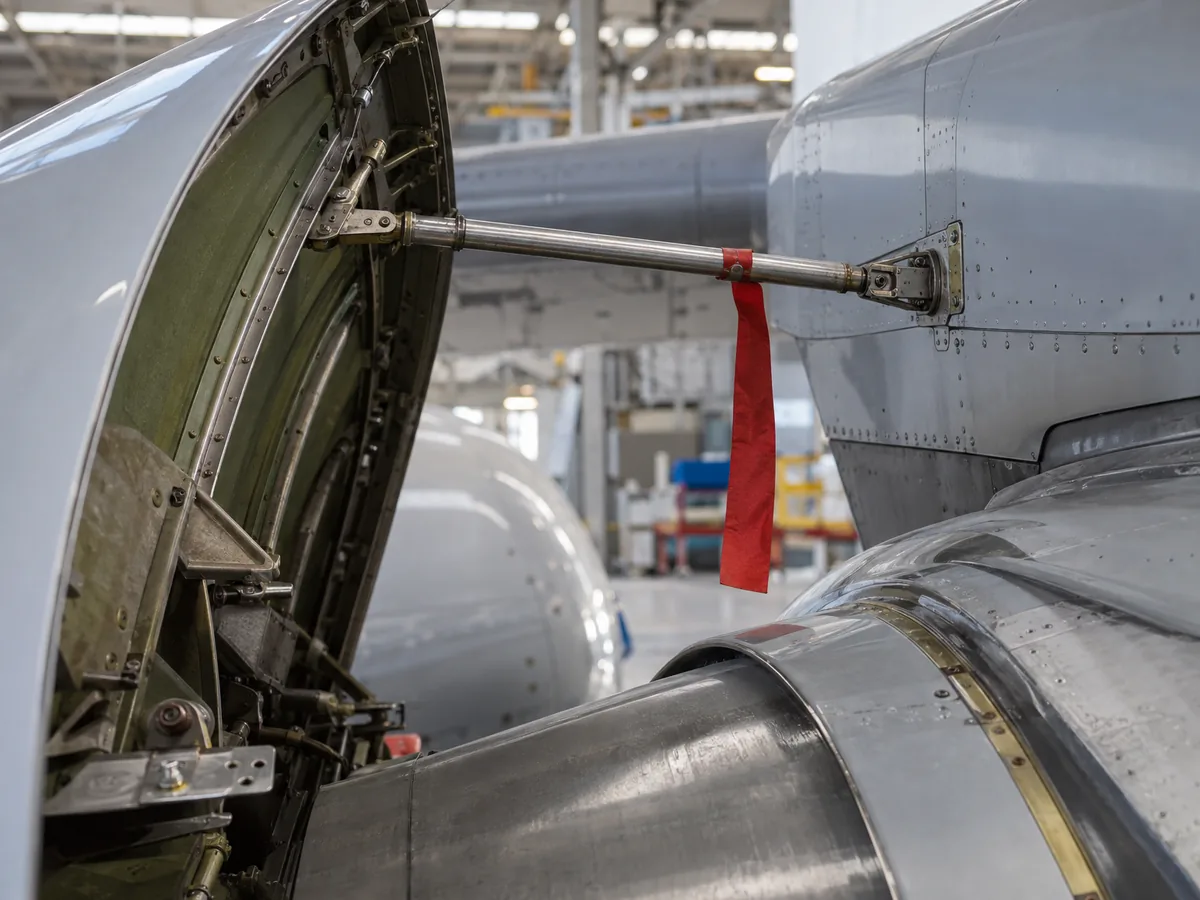
In service, the systems are locked in the stowed position until the flight deck commands them to deploy. The FAA handbook states that while performing any type of maintenance, the reverser system must be mechanically locked out from deploying while personnel are in the area of the reverser system.
A separate term covers dispatch rather than maintenance. An FAA advisory circular on thrust reverser systems describes deactivation for flight as deliberately inhibiting a reversing system before flight so that it cannot perform a normal deploy/stow cycle even if commanded, a procedure sometimes called a “lock-out” procedure. For that deactivation, the FAA recommends that lock-out procedures be simple and clearly described in the maintenance manual, and that a placard describing the procedure may be installed on the nacelle. On system design, the same circular says safe access should consider risks both to the mechanic and to critical design elements that might be inadvertently damaged during maintenance.
FAA Safety Alert for Operators (SAFO) 11003, dated 2/28/11, deals with the Embraer ERJ-190. It warns of a potentially hazardous situation that can cause serious injury while working on or around the EMB 190 thrust reversers:
The interim answer in the SAFO was hold-open equipment. For the ERJ-190, the FAA recommended that maintenance personnel use the thrust reverser hold-open jib, which is part of the engine change bootstrap kit, to secure the door, and exercise extreme caution around an open thrust reverser cowling, especially in high wind, until a dedicated tool was available. The jib provides additional support to the cowl door in the event of a PDO failure. At the time, Embraer was evaluating a tool to support the cowling while opened. For more on that kit, see our guide to the bootstrap engine change.

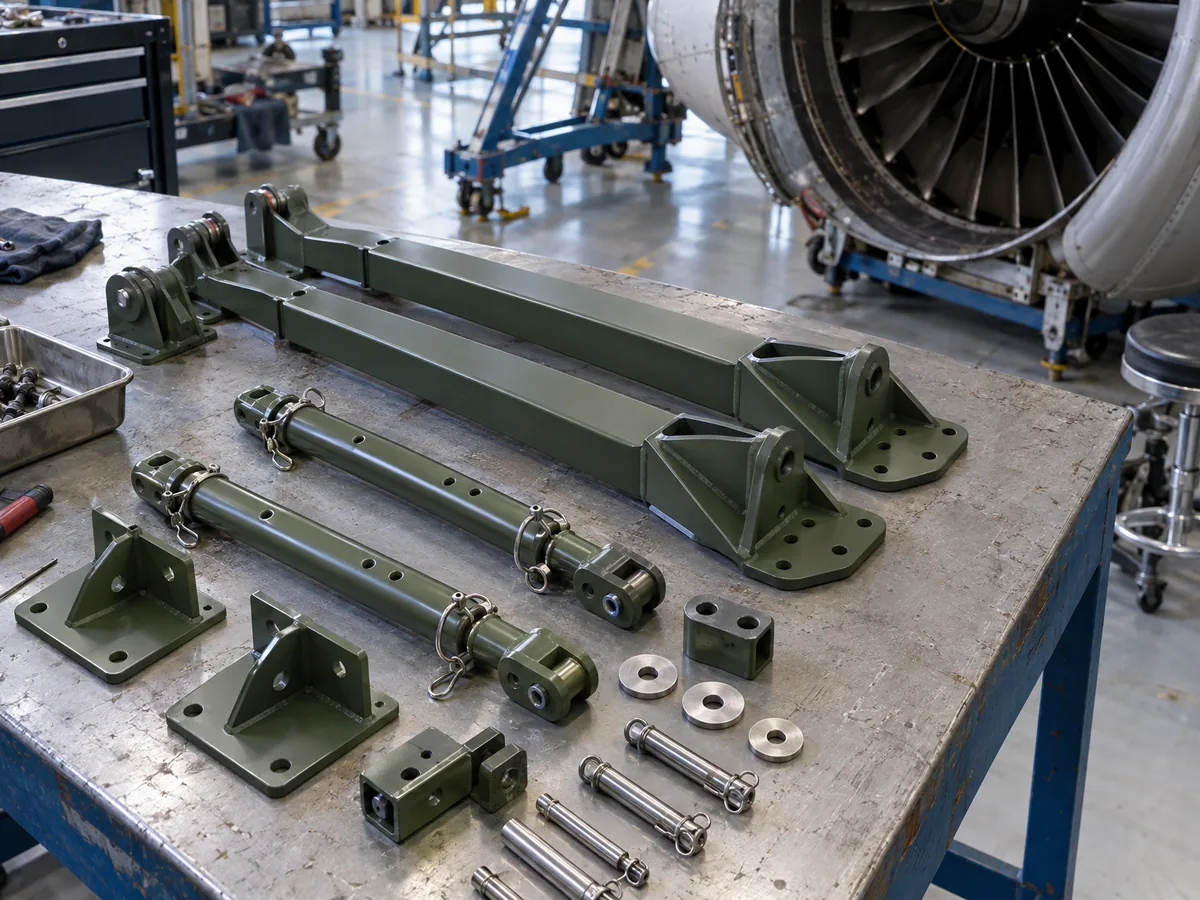
A published example of hold-open equipment comes from RH Aero. Its AIT family covers hold-open tooling for fan cowl and thrust reverser access during engine removal and installation. According to the manufacturer, each kit specifies left- and right-hand braces with turnbuckles, and model variants support either fan cowls or thrust reversers. The LH and RH braces with two turnbuckles are installed per the kit procedure before engine-change tasks.
| Aircraft (AIT coverage) | Engines |
|---|---|
| Airbus A318/A319/A320/A321 | CFM56-5A/-5B and V2500 |
| Airbus A340-200/-300 | CFM56-5C |
| Airbus A340-500/-600 | Trent 500 |
The manufacturer’s instruction is to apply the devices only to the listed aircraft and engine combinations to maintain correct geometry. The coverage the manufacturer lists includes Airbus types, so for other aircraft check the documentation of the specific kit. Before engine-change work, the matching sling and stand equipment is covered in our guide to aircraft engine slings.
Hold-open equipment covers the time the cowl is open. The documented risk on the other side of the job is a fan cowl that is not latched when the aircraft returns to service.
| Source | What it says |
|---|---|
| Airbus Safety first, April 2019 | Airbus states that in all reported cases of fan cowl door loss, the doors were not latched closed and secured following a maintenance task. Since July 2012, 14 such events in flight were reported to Airbus: 12 on the A320, one on the A330 and one on the A300, in most cases after the cowls were opened to check the IDG oil level. |
| Airbus Safety first, April 2019 | Leave unengaged latches in a position that makes it obvious they are not engaged, and latch the doors as soon as they are lowered. Airbus revised the AMM task “Opening/Closing of the Fan Cowls” on all Airbus aircraft to add a logbook entry, and an FCOM change requests a latching check from both sides of each engine. |
| FAA InFO 09013, 7/13/09 | Recommended to operators of the Airbus A319-132 and Bombardier CL-600-2B19 that maintenance personnel inform flight crews when fan cowls have been opened before flight. |
| EASA proposed special condition (Issue 1) | The initiating factor of cowl separation was most often a maintenance error, generally failure to properly close the latches, and the issue is not limited to the Airbus Single Aisle family. Some operational authorities have mandated double, independent checking of cowl closure. Thrust reverser cowls have shown satisfactory in-service experience and are not addressed by the proposal. |
| FAA AD 2025-04-02, Boeing 737 (public inspection version) | Issued after two fan blade-out events, it addresses maintenance errors such as an incompletely latched fan cowl. According to the AD, the solutions will consist of a re-designed fan cowl latch and keeper and high visibility paint on the interior of the IDG door, with a compliance deadline of December 31, 2029; service information for Airworthiness Limitation No. 4 had not yet been released when the AD was issued. |
| Item | Manufacturer field on the card | Location | Engine |
|---|---|---|---|
| CFM56-3 TR Hold Open Equipment | Hydro | Miami, FL | CFM56-3 |
| CFM56-7 TR Hold Open Equipment | Bootstrap Kit, Hydro | Miami, FL | CFM56-7 |
| Trent 800 Hold Open Eqpt Fan Cowl | Boeing, Trent 800 Hold Open EQPT | Miami, FL | Trent 800 |
| Trent 800 Hold Open Eqpt TR | Boeing, Trent 800 Hold Open EQPT | Miami, FL | Trent 800 |
The manufacturer column repeats the Manufacturer field of each card, which on some cards also contains entries such as “Bootstrap Kit” or “Trent 800 Hold Open EQPT”. For context on the engines: GE states that the CFM56 product line powers the Boeing 737 Classic and Next-Generation families, Boeing lists the CFM56-7B for the 737NG, and Rolls-Royce lists the Trent 800 for the Boeing 777 family. Our cards do not list weight, dimensions or part numbers for the hold-open kits, and they do not state whether the CFM56-3 and CFM56-7 TR kits also support the fan cowls.
Several practical questions also stay open in the sources we reviewed. They do not state a wind speed above which cowls must stay closed, they do not give cowl opening angles for the CFM56-3, CFM56-7 or Trent 800, they do not include Boeing published guidance on supporting 737 or 777 cowls, and they do not state when an aircraft needs separate ground equipment rather than its own hold-open provisions.
Working on CFM56-7 thrust reversers? The CFM56-7 TR hold-open equipment is listed as available in Miami, FL; request a quote on the product page.
RH Aero describes its AIT family as hold-open tooling for fan cowl and thrust reverser access during engine removal and installation. In that family, each kit specifies left- and right-hand braces with turnbuckles, and variants support either fan cowls or thrust reversers.
Yes. The FAA handbook states that while performing any type of maintenance, the reverser system must be mechanically locked out from deploying while personnel are in the area of the reverser system.
FAA SAFO 11003 for the Embraer ERJ-190 reports that a PDO actuator failure can cause the thrust reverser cowl door to come down on personnel. In high wind, the open cowling can flex enough to displace the actuator locking feature.
Check the documentation of the specific kit. RH Aero, for example, instructs that its AIT hold-open devices be applied only to the listed aircraft and engine combinations to maintain correct geometry, with separate variants for fan cowls and thrust reversers.
Airbus states that in all reported cases of fan cowl door loss, the doors were not latched closed and secured following a maintenance task; 14 such events in flight were reported to it since July 2012. EASA describes the initiating factor as most often a maintenance error, generally failure to properly close the latches.